

How to Unclog a Bathroom Sink Drain Without Chemicals
A slow bathroom sink is one of the most common household annoyances — and one of the most overtreated. The standard response is a bottle of chemical drain cleaner: harsh, expensive, bad for pipes, bad for septic systems, and bad for the waterways it eventually reaches. Most bathroom sink clogs don’t need any of that.
Here’s why: bathroom sink clogs are almost always the same thing. Hair, soap scum, and toothpaste bind together into a sludgy mass, usually within the first few inches of the drain or in the curved P-trap underneath. That’s a physical clog, and physical clogs respond to physical methods — methods that cost little, use no harsh chemicals, and work just as well when done in the right order.
This guide walks you through those methods from gentlest to most involved, so you start simple and only escalate if you need to.
Table of Contents
- What You’re Dealing With
- Why Skip the Chemical Drain Cleaner
- What You’ll Need
- Method 1: Clear the Stopper and Visible Hair
- Method 2: Plunge It
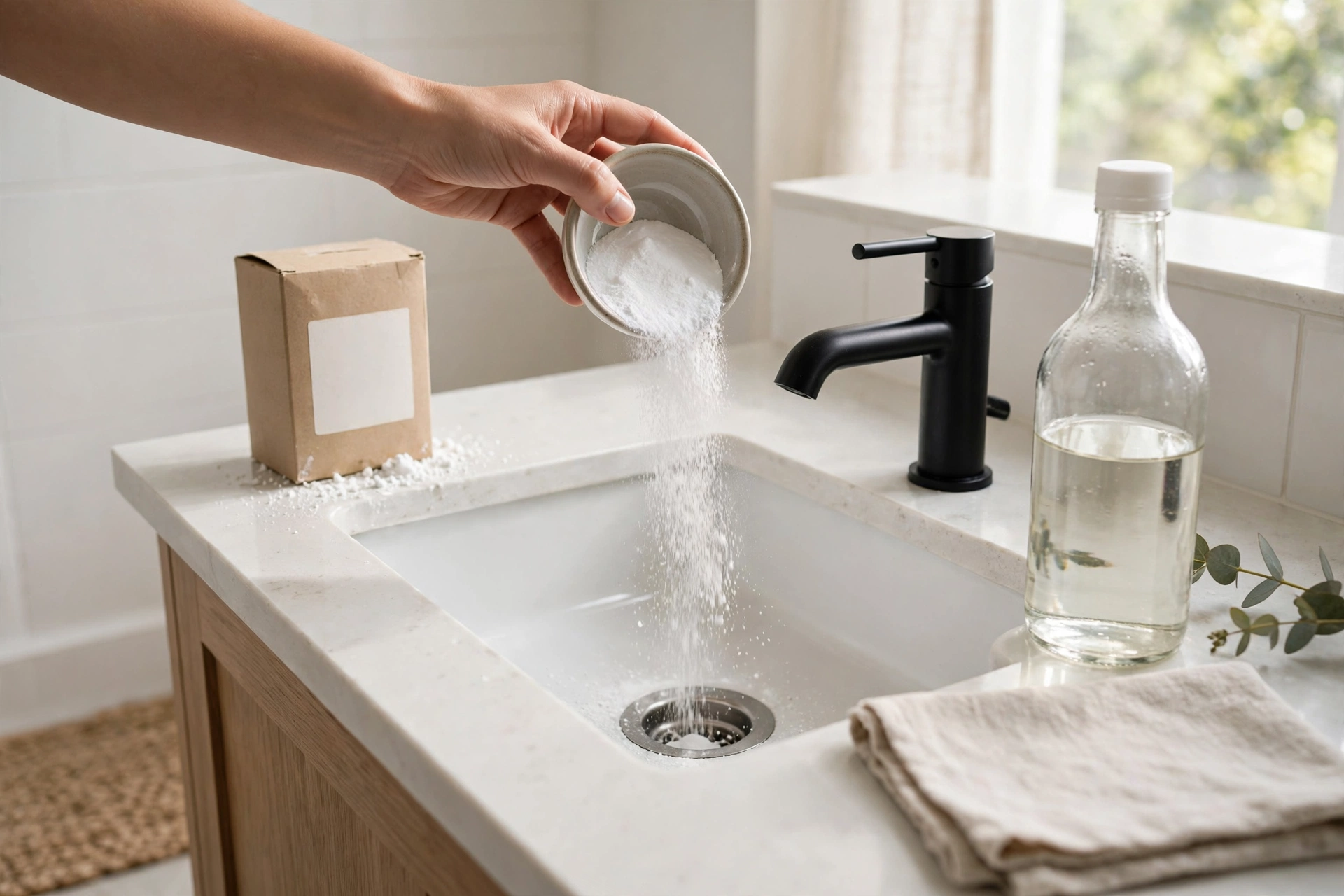
- Method 3: Baking Soda, Vinegar, and Hot Water
- Method 4: The Zip Tool or Drain Snake
- Method 5: Remove and Clean the P-Trap
- When to Call a Plumber
- Keeping Drains Clear
- Frequently Asked Questions
What You’re Dealing With
Understanding the clog helps you pick the right method. In a bathroom sink, the usual suspects combine into a predictable recipe:
- Hair wraps around the stopper mechanism and the inside of the drain, forming a net.
- Soap scum — the waxy residue of bar soap reacting with hard water minerals — coats that net and everything around it.
- Toothpaste, shaving cream, and skincare products add to the buildup over weeks and months.
The result is a narrowing pipe rather than a single solid blockage, which is why the sink often drains slowly for weeks before stopping noticeably. The good news: this kind of clog sits close to the surface in most cases. You rarely need to go deep to fix it.
Why Skip the Chemical Drain Cleaner
It’s worth being explicit about this, because the chemical bottle is marketed as the easy answer. Three problems:
They often don’t work on this type of clog. Caustic cleaners are designed to dissolve organic matter, but a hair-and-soap-scum mass is stubborn stuff. The cleaner may sit on top of the clog, partially eat through, and leave you with the same slow drain plus a sink full of caustic water.
They damage plumbing over time. The heat generated by chemical reactions can soften PVC pipes and corrode older metal ones. Repeated use is especially hard on the rubber washers and slip nuts under your sink.
They create a hazard for the next step. If the chemical cleaner fails — and it often does — everything you try afterward involves reaching into or disassembling a drain full of caustic liquid. Plumbers consistently warn against this: a P-trap full of drain cleaner is a chemical burn waiting to happen.
Mechanical and natural methods avoid all three problems. They also align with the broader goal of sustainable living habits — fewer harsh chemicals manufactured, purchased, and washed into the water system.
What You’ll Need
You probably own most of this already:
- Rubber gloves
- A cup-style sink plunger (flat bottom, not a toilet flange plunger)
- Baking soda and white vinegar
- A kettle of hot water
- A plastic zip drain tool (a few dollars at any hardware store — the single best purchase for this job)
- Bucket, old towels, and an adjustable wrench or pliers (for the P-trap method)
- An old toothbrush or small bottle brush
Method 1: Clear the Stopper and Visible Hair
Start here — it resolves a surprising number of slow drains in under five minutes.
Many bathroom sinks have a pop-up stopper operated by a rod under the sink. Hair wraps around this mechanism constantly. Pull the stopper up and out (some lift straight out; others need the pivot rod underneath disconnected first — loosen the retaining nut, slide the rod out, then lift the stopper). You’ll likely find a unpleasant clump of hair and scum attached. Remove it, scrub the stopper with an old toothbrush, and rinse.
While the stopper is out, shine a flashlight down the drain. If you can see or reach hair with tweezers or needle-nose pliers, pull it out. Reinstall the stopper and run hot water for a minute. If the sink drains normally, you’re done — this was the whole problem.

Method 2: Plunge It
If the drain is still slow, reach for the plunger — but use it correctly, because technique matters more than force.
- Remove the stopper if you haven’t already.
- If your sink has an overflow opening (the small hole near the top of the basin), plug it with a wet rag. Without this, pressure escapes through the overflow instead of pushing against the clog.
- Run enough water to cover the plunger’s cup — about an inch or two in the basin.
- Place the cup firmly over the drain and pump vigorously up and down 10–15 times, keeping the seal intact.
- Pull the plunger away sharply on the last stroke and watch the water. If it drops, the clog moved.
Repeat two or three times if needed. Plunging works best on soft, partial clogs — exactly the soap-scum-and-hair kind. If three rounds change nothing, move on; the clog needs a different approach.
Method 3: Baking Soda, Vinegar, and Hot Water
This is the classic natural drain treatment. Be realistic about what it does: the fizzing reaction loosens soap scum and light buildup, and the hot water flushes it away. It works well on slow drains and mild clogs. It will not dissolve a solid hairball — that’s what Method 4 is for.
- If there’s standing water in the sink, bail most of it out with a cup so the mixture reaches the clog rather than diluting in the basin.
- Pour ½ cup of baking soda directly into the drain. Use a chopstick or the handle of a wooden spoon to push it down past the drain opening.
- Follow with 1 cup of white vinegar, poured slowly. It will fizz — that’s the reaction working.
- Cover the drain with a rag or stopper to keep the fizzing directed downward, and let it sit for 15–20 minutes.
- Meanwhile, boil a kettle of water. Pour it down the drain in a steady stream to flush everything through.
One caution: use very hot tap water rather than a full rolling boil if your drain pipes are PVC — extreme heat can soften plastic pipes. For metal pipes, boiling water is fine.
Repeat once if the drain improved but isn’t fully clear. If there’s no improvement at all, the clog is likely a solid mass that needs mechanical removal.
Method 4: The Zip Tool or Drain Snake
When chemistry won’t cut it, go mechanical. A plastic zip tool — a flat, barbed strip about 20 inches long — costs a few dollars and is purpose-built for exactly this job: hooking hair out of bathroom drains.
- Feed the zip tool straight down the drain as far as it will go. You’ll feel resistance when it hits the clog or the bend of the trap.
- Twist it slightly and pull it back up slowly. The barbs catch hair and gunk.
- Be prepared: what comes up is unpleasant. That’s the point — it’s the clog, leaving your pipes.
- Repeat until the tool comes up clean, then flush with hot water.
For clogs deeper than the zip tool can reach, a hand-crank drain auger (drain snake) works the same way with more reach. Feed it in while turning the handle clockwise; when you feel resistance, you’ve found the clog — keep turning to break it up or hook it, then retract slowly. A basic 25-foot hand auger costs around $25–$30 and handles most household clogs.

Method 5: Remove and Clean the P-Trap
If the clog is in the trap itself — the U-shaped bend in the pipe under the sink — the most thorough fix is to take it apart and clean it directly. This sounds intimidating but takes about fifteen minutes.
The P-trap’s curve holds water at all times, which is what blocks sewer gases from entering your home. That same curve is where debris settles, making it the most common clog location in the whole drain line.
- Clear under the sink and place a bucket directly beneath the trap. Lay towels on the cabinet floor.
- Put on gloves. The trap contains standing water and decomposing gunk.
- Loosen the two slip nuts — one where the trap meets the tailpiece coming down from the sink, one where it meets the wall pipe. Most are hand-tight; use pliers gently if needed, but don’t crack plastic fittings by overtightening tools.
- Lower the trap into the bucket and let the water drain out. Dump the contents — you’ll see exactly what was blocking the drain.
- Scrub the inside of the trap with a bottle brush or old toothbrush, then rinse it thoroughly in another sink or with a hose.
- Check the washers on the slip nuts. If they’re cracked or flattened, replace them — they’re pennies at the hardware store and the most common source of post-reassembly drips.
- Reattach the trap by hand-tightening both slip nuts. Snug is enough; overtightening cracks plastic.
- Run the faucet and check for leaks at both connections. Tighten slightly if you see drips.
If the trap is clean and the drain is still slow, the clog is further down the line — in the wall pipe or beyond. That’s auger territory (feed it into the open wall pipe while the trap is off), or plumber territory if you’re not comfortable going further.
When to Call a Plumber
These five methods handle the vast majority of bathroom sink clogs. Bring in a professional when:
- Multiple drains are slow or backing up at once — that points to a main-line problem, not a single sink.
- You smell sewage coming from the drain, which can indicate a venting issue or a deeper blockage.
- The clog returns within days of a thorough cleaning — something structural may be wrong (a sagging pipe section, root intrusion, or heavy scale buildup).
- You’ve used chemical drain cleaner and it didn’t work — tell the plumber upfront so they can take precautions. Never mix methods after chemicals are in the pipes.
- You’re not comfortable disassembling plumbing. There’s no prize for forcing it; a service call for a simple clog is inexpensive compared to a cracked pipe or a flooded cabinet.
Keeping Drains Clear
An unclogged drain is a maintenance opportunity. A few habits prevent the next clog:
- Use a drain screen or hair catcher. A $3 mesh screen over the drain catches hair before it enters the pipes. Empty it weekly — it takes seconds and prevents most clogs entirely.
- Run hot water after heavy use. After shaving or washing out styling products, run hot tap water for 30 seconds to flush residue through before it cools and solidifies.
- Monthly baking soda and vinegar flush. The Method 3 treatment works as prevention too — a monthly flush keeps soap scum from building up.
- Brush hair before showering or washing up at the sink. Less loose hair near the drain means less hair in the drain. Simple, free, effective.
- Avoid pouring grease, oils, or coffee grounds down any sink. They solidify in pipes and turn a manageable clog into a stubborn one.
These small habits compound — the same way water-saving bathroom upgrades compound into lower bills, a few minutes of drain prevention compounds into years without a plumber visit. And if a slow drain has you rethinking the whole bathroom, a budget bathroom makeover might be the project that makes the room feel new again.
Frequently Asked Questions
Does baking soda and vinegar really unclog drains? It helps with slow drains and soap-scum buildup — the fizzing loosens residue and hot water flushes it away. It’s not strong enough for a solid hair clog, though. Think of it as maintenance and mild-clog treatment, not a miracle cure.
Is it safe to use boiling water in a bathroom sink drain? For metal pipes, yes. For PVC pipes, use very hot tap water instead — a full rolling boil can soften plastic over time. When in doubt, hot tap water is the safer choice.
Can I use a toilet plunger on a sink? Use a cup-style sink plunger (flat bottom) rather than a toilet plunger with a flange — the flange won’t seal properly on a flat sink drain. They’re inexpensive and worth owning separately.
Why does my bathroom sink clog so often? The combination of hair, soap scum, and personal-care products is uniquely clog-prone, and bathroom sinks have narrow drains with stopper mechanisms that catch debris. A drain screen prevents most recurrences.
How often should I clean the P-trap? If your drains run clear, you don’t need to disassemble it on a schedule. But if you have long hair in the household or very hard water, a yearly trap cleaning prevents the slow buildup that eventually becomes a clog.
Are “natural” drain cleaners from the store better than DIY methods? Enzyme-based drain cleaners are gentler than caustic ones and can help with organic buildup over time, but they’re slow and won’t clear an existing solid clog. For an active clog, mechanical removal beats any pour-in product.
Conclusion
A clogged bathroom sink looks like a problem that requires harsh chemicals or a plumber’s bill. In practice, it’s usually a hairball sitting a few inches down the pipe — and a $3 zip tool, a plunger used correctly, or fifteen minutes with the P-trap resolves it completely.
The escalation order matters. Start with the stopper, try the plunger, use baking soda and vinegar for buildup, go mechanical for solid clogs, and open the trap when nothing else reaches the problem. Each step is cheap, chemical-free, and teaches you a little more about how your home’s plumbing actually works.
And once the water flows freely again, the $3 drain screen is the real hero of this story. Prevention is always easier than the cure — especially when the cure involves fishing hair out of a pipe with your own hands.
Sources and further reading:
Engineer Fix — How to Unclog a P-Trap Under Your Sink (P-trap function, plunger technique, baking soda/vinegar method, chemical cleaner warnings)
WLS-TV/ABC7 (via Internewscast) — Step-by-Step Guide to Cleaning Your P-Trap (P-trap removal and reinstallation procedure)
Dr. Rooter Lexington — Unclog a Bathroom Sink Drain Without Chemicals (natural methods: baking soda/vinegar ratios, zip tool use)
Green Building Canada — How to Unclog a Bathroom Sink Naturally (natural method steps and safety notes)

Welcome to Homeblesh! I'm a professional content writer with over five years of experience creating well-researched, practical, and reader-focused content for clients on Upwork and Fiverr. Now, I've dedicated my expertise to building Homeblesh, where I share helpful guides, honest recommendations, and actionable tips based on careful research and industry knowledge. My goal is to provide accurate, trustworthy information to help you make informed decisions while delivering clear, useful, and easy-to-understand content.
- Muhammad Imran

- Muhammad Imran

- Muhammad Imran

- Muhammad Imran


