

The Ultimate Fall Home Maintenance Checklist: 25 Tasks Before Winter
October is the one month when procrastination costs real money. A clogged gutter becomes a foundation leak. A neglected furnace becomes a midnight breakdown in January. A garden hose left attached becomes a burst pipe inside your wall.
The good news: almost every expensive winter surprise is preventable with a few weekends of straightforward work. This checklist covers 25 specific tasks, organized by area of the house, so you can work through them in order and walk into winter confident that your home is sealed, heated, drained, and safe.
Table of Contents
- Exterior and Roof: 5 Tasks
- Windows and Doors: 3 Tasks
- Heating and Cooling: 4 Tasks
- Plumbing and Water: 4 Tasks
- Fire and Home Safety: 4 Tasks
- Yard and Garden: 3 Tasks
- Interior Efficiency: 2 Tasks
- Your October Game Plan
- Frequently Asked Questions
Exterior and Roof: 5 Tasks
Your roof and exterior take the worst of winter. Start outside while the weather is still workable.
1. Inspect the roof from the ground and the attic. Walk around your house and look for missing, cracked, or curling shingles, plus damaged flashing around chimneys and vents. Then check the attic for water stains or daylight peeking through. If you spot trouble on a steep or high roof, call a roofer rather than climbing up yourself.
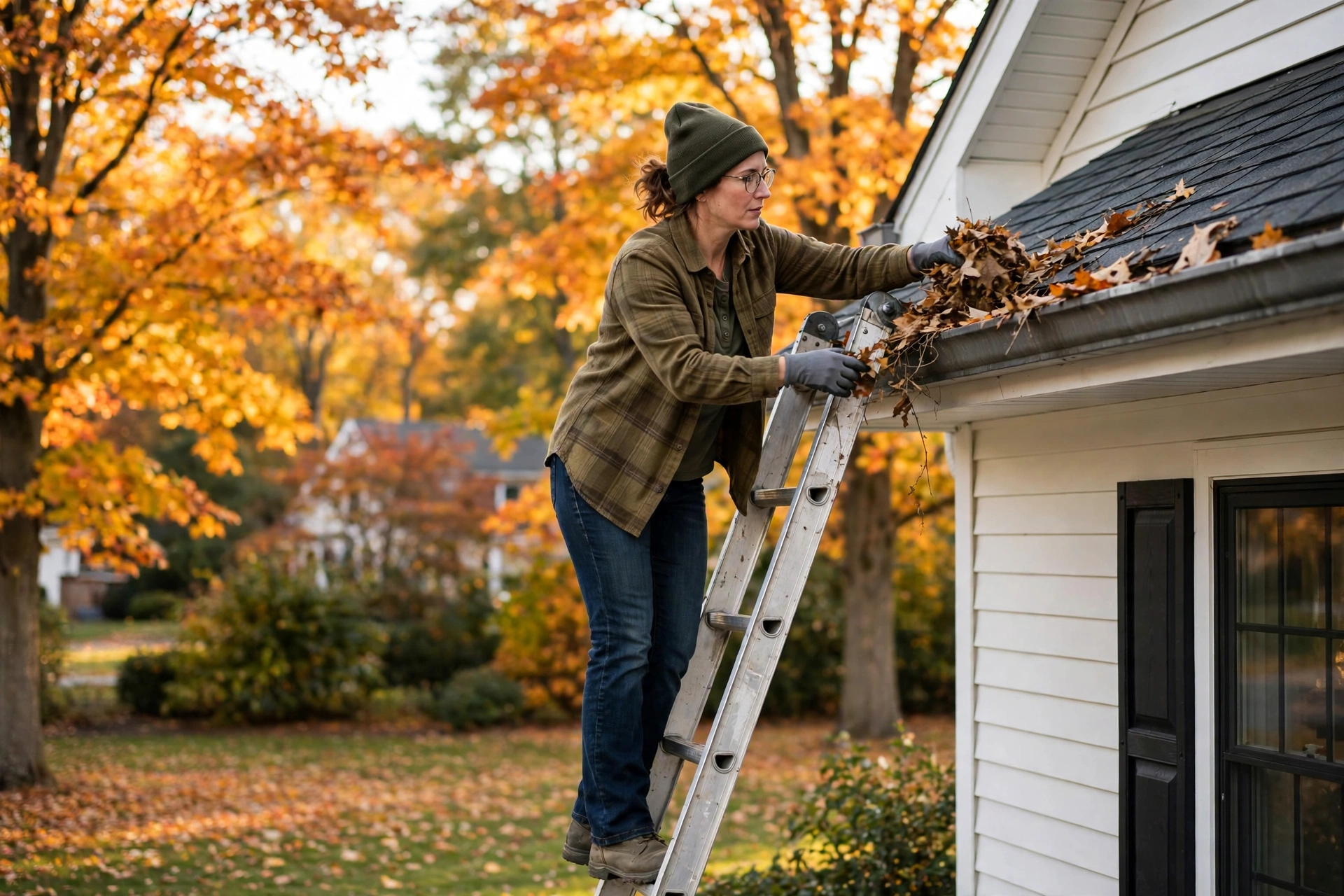
2. Clean the gutters and downspouts. Wait until most leaves have fallen, then scoop out debris and flush the gutters with a hose. Clogged gutters send water over the edge and toward your foundation, where freeze-thaw cycles turn small problems into cracked walls.
3. Point downspouts away from the house. Water should discharge at least four to six feet from the foundation. Add inexpensive downspout extenders where it pools near the walls. This single fix prevents more basement moisture problems than almost any other.
4. Inspect siding, trim, and exterior caulk. Look for cracked or missing caulk around windows, doors, and where siding meets trim. Scrape out the old material and apply fresh exterior-grade caulk. Sealing these gaps is one of the cheapest ways to cut drafts.
5. Check the chimney and book a sweep. If you burn wood, have the chimney inspected and cleaned before the first fire of the season. Creosote buildup is a genuine fire hazard, and sweeps book up fast once cold weather arrives.
Windows and Doors: 3 Tasks
Windows and doors are where heated air escapes most noticeably. A few hours here pays off every month on your heating bill.
6. Test and replace weatherstripping. Close each exterior door on a dollar bill. If it slides out easily, the seal is weak. Self-adhesive foam weatherstripping costs a few dollars per door and installs in minutes.
7. Caulk gaps around window frames. On a windy day, hold a lit incense stick near window edges and watch for smoke movement. Seal any leaks with exterior caulk. Inside, removable window-insulation film adds an extra barrier on especially drafty windows.
8. Swap screens for storm windows. If your home has combination windows, switch them over now. For homes without storm windows, heavy insulating curtains on north-facing windows are a practical alternative.

Heating and Cooling: 4 Tasks
Your heating system is about to work harder than it does all year. Give it attention before it matters.
9. Schedule a furnace or heat pump tune-up. A yearly professional service catches failing igniters, dirty burners, and airflow problems before they become emergency calls. Technicians’ schedules fill quickly in late fall, so book early in October.
10. Replace the HVAC filter. A clogged filter forces the system to work harder and circulates dust through the house. Check the filter monthly during heating season and replace it as needed. This is the simplest heating task on this entire list.
11. Test the thermostat in heat mode. Run the system for a full cycle and confirm every room warms up. If your thermostat is old and manual, this is a good moment to consider installing a smart thermostat, which can automatically lower the temperature while you sleep or are away.
12. Reverse ceiling fans to clockwise. Warm air rises and pools at the ceiling. Running fans on low in reverse (clockwise) pushes that warm air back down into the room, letting you feel comfortable at a slightly lower thermostat setting.

Plumbing and Water: 4 Tasks
Frozen pipes are the most expensive item on this list to ignore. A single burst pipe can cause thousands of dollars in water damage.
13. Disconnect, drain, and store garden hoses. Water trapped in a connected hose can back up into the faucet and freeze inside the wall. Disconnect every hose, drain it, and store it for winter.
14. Shut off exterior faucets. If your home has interior shutoff valves for outdoor spigots, close them and drain the line. Add insulated faucet covers for extra protection, especially on north-facing walls.
15. Insulate exposed pipes. Wrap pipes in unheated spaces — garages, attics, crawl spaces, and basements — with foam pipe insulation. It is cheap, it slides on in seconds, and it is the difference between a pipe that survives a cold snap and one that does not.
16. Find and label your main water shutoff. If a pipe does burst, knowing exactly where to shut off the water saves minutes and thousands of dollars. Make sure every adult in the house knows the location. While you are at it, check that the valve actually turns.
Fire and Home Safety: 4 Tasks
October is Fire Prevention Month, which makes it the natural time for the safety checks most of us postpone. Fire Prevention Week runs October 4–10 in 2026, so there is no better reminder.
17. Test smoke alarms and replace batteries. Press the test button on every smoke alarm. Replace batteries in any unit that uses them, and replace any alarm older than ten years — check the manufacture date on the back. Smoke alarms should be on every level of the home, inside each bedroom, and outside sleeping areas.
18. Test carbon monoxide detectors. CO is colorless and odorless, and heating season is peak risk season. Test each detector, replace batteries as needed, and make sure there is one near sleeping areas and on every level. If a unit with a sealed battery starts chirping, replace the whole unit.
19. Clean the dryer vent. Pull the dryer out and vacuum the vent hose and the exterior vent cap. Lint buildup restricts airflow, makes the dryer work harder, and is a genuine fire risk. Do this at least once a year.
20. Check the fire extinguisher and review your escape plan. Confirm the extinguisher’s pressure gauge is in the green zone and that everyone in the household knows two ways out of each room. It takes ten minutes and it matters.
Yard and Garden: 3 Tasks
Your yard needs to be put to bed properly if you want it to wake up healthy in spring.
21. Winterize the irrigation system. Drain sprinkler lines before the first hard freeze — water left in the lines expands and cracks pipes and valves. If you installed a DIY smart irrigation system, follow the manufacturer’s blowout procedure and shut the controller down for the season.
22. Rake, mulch-mow, or compost the leaves. A thick mat of wet leaves smothers grass over winter. Mulch-mow them into the lawn with a mower, or add them to your compost pile. Either way, they are free organic matter, not waste.
23. Trim trees and store outdoor gear. Cut back branches that hang over the roof or near power lines — heavy snow and ice turn them into hazards. Clean and store patio furniture, grills, and garden tools so they survive the winter intact.
Interior Efficiency: 2 Tasks
Small interior habits compound over a whole heating season.
24. Check attic insulation. Pop your head into the attic. If you can see the tops of the ceiling joists, you likely need more insulation — energy experts note that a large majority of US homes are under-insulated. Adding insulation to reach the recommended level for your climate is one of the highest-return upgrades a homeowner can make.
25. Set a winter thermostat schedule. The Department of Energy’s long-standing guidance is simple: keep the thermostat as low as comfortable while you are home and awake, and set it back while you sleep or are away. A programmable or smart thermostat can handle this automatically, and the savings add up to a meaningful percentage of your heating bill over the season. Pair this with simple habits — closing doors to unused rooms, opening south-facing curtains on sunny days — and the house stays comfortable while the system works less.
Your October Game Plan
Twenty-five tasks sounds like a lot until you spread them across the month. Here is one realistic way to schedule them:
| Weekend | Focus | Tasks |
|---|---|---|
| Weekend 1 | Outside the house | 1–5 (roof, gutters, siding, chimney) |
| Weekend 2 | Sealing and heating | 6–12 (windows, weatherstripping, furnace, fans) |
| Weekend 3 | Water and safety | 13–20 (hoses, pipes, alarms, dryer vent) |
| Weekend 4 | Yard and interior | 21–25 (irrigation, leaves, insulation, thermostat) |
The order matters. Exterior work goes first because daylight shrinks and weather turns. Safety checks land in the middle so they are done before heating season peaks. None of these tasks require advanced skills — most are afternoon projects, and several pair well with the budget-friendly DIY projects for beginners you may already have planned. Keeping the house itself tidy through the season is easier when you fold these jobs into your weekly cleaning routine rather than treating maintenance as a separate ordeal.
Frequently Asked Questions
When should I start fall home maintenance? Start in early to mid-October in most US climates. The goal is to finish exterior and roof work before the first hard freeze, which arrives anywhere from late October to December depending on your region. Interior tasks like alarm checks and filter changes can be done any time.
What is the most important fall maintenance task? Protecting your plumbing from freezing. A burst pipe causes more damage, faster, than almost anything else on this list. Disconnecting hoses and insulating exposed pipes takes an afternoon and prevents the single most expensive winter failure.
How much does fall home maintenance cost? Most of the 25 tasks cost little or nothing beyond basic supplies — caulk, weatherstripping, filters, and pipe insulation typically total well under $100. The professional items (furnace tune-up, chimney sweep) usually run $100–$300 each but prevent far costlier emergencies.
Can I do all of this myself? Most of it, yes. The DIY-friendly tasks are clearly the majority here. Call a professional for roof work you cannot safely inspect from the ground or a ladder, chimney cleaning, furnace service, and any electrical or gas work you are not qualified to handle.
Do I really need to winterize my sprinkler system? Yes, in any climate where the ground freezes. Water trapped in sprinkler lines expands when it freezes and cracks pipes, valves, and sprinkler heads. Draining or blowing out the system is standard practice and far cheaper than spring repairs.
What should renters do from this checklist? Test smoke and CO alarms, replace the HVAC filter if you have access to it, report drafts and leaks to your landlord in writing, and reverse ceiling fans. The structural tasks — roof, chimney, insulation — belong to the property owner, but flagging problems early protects your deposit and your comfort.
Conclusion
Winter does not negotiate. It finds every gap in your weatherstripping, every clogged gutter, and every uninsulated pipe, and it charges you for each one — in repair bills, energy costs, or both.
The fall home maintenance checklist above is not about perfection. It is about spending a few October weekends on the tasks with the biggest payoff: keeping water out, keeping heat in, keeping pipes intact, and keeping your household safe. Do the exterior work first, the heating and plumbing next, and the safety checks before the cold truly settles in.
Come spring, you will notice the difference — not just in lower bills and fewer surprises, but in how little you had to think about your house all winter. That is the real reward of maintenance done on time: a home that simply works, season after season.
Sources and further reading:
U.S. Department of Energy, Energy Saver — Energy-Saving Hacks to Weather the Winter
Midwest Energy Cooperative — Winter Energy-Saving Tips
Dollar Energy Fund — Fall Energy-Saving Tips (citing Energy.gov)
Dial One Security — October Is Fire Prevention Month

Welcome to Homeblesh! I'm a professional content writer with over five years of experience creating well-researched, practical, and reader-focused content for clients on Upwork and Fiverr. Now, I've dedicated my expertise to building Homeblesh, where I share helpful guides, honest recommendations, and actionable tips based on careful research and industry knowledge. My goal is to provide accurate, trustworthy information to help you make informed decisions while delivering clear, useful, and easy-to-understand content.
- Muhammad Imran

- Muhammad Imran

- Muhammad Imran

- Muhammad Imran


