Sustainable living is one of those topics that can feel overwhelming the moment you start researching it. The full picture of what it means to live sustainably includes energy systems, supply chains, food production, water cycles, and global carbon emissions.
And it can quickly start to feel like something that only people with unlimited time and a dedicated lifestyle could realistically pursue.
But here is the truth: the most impactful simple sustainable living habits for busy homeowners are not complicated, expensive, or time-consuming. They are small, consistent, high-return actions that slot into the routines you already have. Switching a light bulb. Fixing a dripping tap.
Carrying a reusable bag. Meal planning before the weekly shop. These are not grand gestures. They are sustainable living practices that compound over time to have meaningful environmental and financial impacts.
This guide covers every category of easy, sustainable habits for homeowners who do not have hours to spend researching or weeks to redesign their entire lifestyle.
Progress over perfection is the operating principle here, and every single action on this list is a genuine example of sustainability in practice.

Table of contents
Why Sustainable Living Habits Matters for Every Homeowner?

Before diving into the habits themselves, it helps to understand why household-level action is such an important part of the sustainability picture overall.
1. Individual Action Drives Collective Change
A common objection to personal sustainable living is the idea that individual choices are too small to matter compared to the scale of industrial pollution and corporate emissions.
This framing misses a critical dynamic. Consumer behavior drives market behavior. When households switch to energy-efficient appliances, demand for inefficient ones drops.
When reusable products outsell single-use ones, manufacturers respond. The sustainable lifestyle choices made in millions of homes collectively shift what gets produced, how it gets produced, and what gets invested in next.
2. The Financial Case Is Immediate and Ongoing
Many of the best examples of sustainable living at home are also the most financially sensible choices available. LED bulbs use less energy and last longer than incandescent alternatives.
Low-flow fixtures reduce water bills. Meal planning reduces food waste and grocery spending. Smart thermostats cut heating and cooling costs measurably. Living sustainably is not a sacrifice. For most households, it is a net financial gain from the first month of implementation.
3. Small Habits Are the Most Reliable Ones
The behavioral science behind habit formation is consistent on one point: small, easy actions that attach to existing routines are far more likely to stick than large, effortful changes that require significant motivation.
This is why the simple sustainable living habits for busy homeowners in this guide are specifically chosen for their low barrier to entry. They are easy enough to start today and simple enough to maintain indefinitely.
Category 1: Energy Efficiency Habits

Energy use is the area where most households have the most immediate and measurable opportunity to live more sustainably. These are some of the clearest examples of sustainable practices available for any home.
1. Switch Every Incandescent Bulb to LED
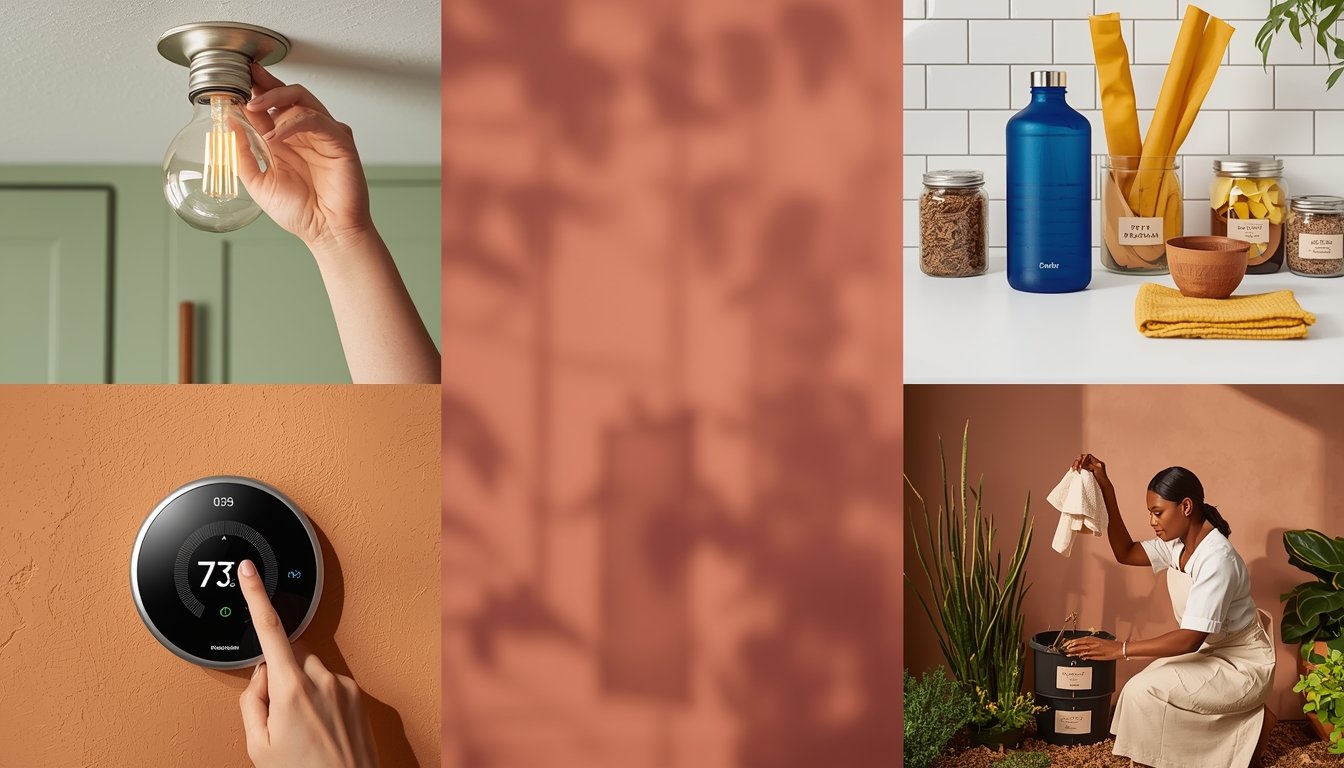
This is one of the most cited examples of sustainable practice in home energy efficiency, and it earns that reputation. LED bulbs use between 80 and 90 percent less energy than traditional incandescent alternatives and last significantly longer, meaning fewer replacements and less waste over time.
For a busy homeowner, this is a one-time action with a permanent ongoing benefit. Replace bulbs as they burn out rather than all at once to spread the minor cost across time. Within one to two years, the energy savings will more than cover the cost of every replacement.
2. Install a Smart Thermostat
A smart thermostat is one of the most financially compelling sustainability examples available for any homeowner.
By automating heating and cooling based on your actual schedule, occupancy, and preferences, a smart thermostat eliminates the energy waste of heating or cooling an empty home.
The savings are measurable: smart thermostats reduce heating costs by around 12 percent and cooling costs by around 15 percent in most homes.
Installation takes under an hour in most cases and the device pays for itself within the first year of use.
This is exactly the kind of example of sustainable living that delivers environmental and financial returns simultaneously without requiring any ongoing effort after setup.
3. Eliminate Phantom Power Drain
Phantom power, also called standby power, is the electricity consumed by electronics and appliances that are plugged in but not actively in use.
Televisions, computers, gaming consoles, chargers, and kitchen appliances all draw a quiet but continuous stream of power even when switched off.
Using smart power strips that cut power to an entire cluster of devices at once is a practical example of sustainable practice that requires almost no behavioral change. Set the strip to turn off automatically at a scheduled time each evening and the phantom drain disappears with zero daily effort.
4. Wash Clothes in Cold Water
Switching from warm or hot water cycles to cold water for laundry is one of the simplest sustainable living examples in any home. Around 90 percent of the energy used by a washing machine goes toward heating the water.
Cold water washes deliver equivalent cleaning results for everyday laundry while dramatically reducing energy consumption per cycle.
As a bonus, cold water is gentler on fabric fibers, meaning clothes last longer, need replacing less frequently, and generate less textile waste over time.
5. Air Dry Laundry When Possible
Line-drying or using a drying rack instead of a tumble dryer when time and weather allow is a straightforward, sustainable practice that reduces energy use and extends the life of every garment.
Even air-drying laundry two or three days per week instead of seven delivers a meaningful reduction in dryer energy consumption over the year.
Category 2: Water Conservation Habits

Water is a finite resource, and the bathroom and kitchen together account for the greatest opportunity to reduce household water consumption. These examples of sustainability at home are high-impact and low-effort.
1. Install Low-Flow Fixtures Throughout the Home
WaterSense-certified low-flow showerheads and faucet aerators reduce water flow by up to 50 percent compared to standard fixtures, without reducing pressure or usability.
This is one of the clearest examples of sustainable home improvement available, delivering immediate water savings from the day of installation with no behavioral change required.
A full set of aerators for bathroom and kitchen taps costs very little and installs in minutes. When combined with a low-flow showerhead, a typical household can save thousands of liters of water annually through this single upgrade.
2. Fix Leaks as Soon as They Appear
A dripping tap or a running toilet is often treated as a minor inconvenience rather than the significant source of waste it actually is. A single dripping tap can waste thousands of gallons of water annually.
A running toilet can lose hundreds of gallons per day. Fixing these issues promptly is one of the highest-return sustainable living practices available to any homeowner because the cost of repair is almost always trivial compared to the ongoing water waste if left unaddressed.
3. Shorten Showers by Even One Minute
Reducing shower duration by a single minute per shower saves up to 15 liters per shower, depending on the showerhead. Scaled across a household and a full year, this small behavioral shift delivers a significant total water reduction.
A waterproof timer, a playlist timed to your target shower length, or simply a conscious decision to be more intentional are all that is needed to consistently implement this sustainable example.
Category 3: Waste Reduction Habits

Reducing the volume of waste a household generates is one of the most visible and accessible areas of sustainable living, and many of the best strategies require no ongoing cost once the initial swap is made.
1. Replace Single-Use Plastics with Reusables
Single-use plastic is one of the most prominent sustainability examples of a product category that offers a better alternative in almost every application. Plastic wrap has been replaced by reusable silicone covers or beeswax wraps.
Plastic water bottles replaced by a quality reusable bottle. Plastic grocery bags replaced by cloth totes. Disposable coffee cups replaced by a reusable travel mug.
Each of these swaps is a one-time decision that eliminates ongoing waste permanently. Combined, they represent a significant reduction in the plastic waste generated by an average household every year.
2. Switch from Paper Towels to Washable Alternatives
Paper towels are one of the most overlooked sources of ongoing household waste. Switching to Swedish dishcloths, cotton cloths, or repurposed old T-shirts for cleaning and spill management eliminates paper towel consumption entirely.
These washable alternatives are more absorbent than paper towels, last for months or years with proper care, and are compostable at the end of their useful life.
This is a sustainable-living example that saves money over time as paper towel purchases disappear from the shopping list entirely.
3. Start a Small Compost System
Composting food scraps is one of the most impactful examples for sustainability at the household level. Food waste in landfills generates methane, a greenhouse gas significantly more potent than carbon dioxide.
Composting diverts that waste and converts it into nutrient-rich fertilizer for garden beds and potted plants.
A small countertop compost bin for vegetable peels, coffee grounds, eggshells, and fruit scraps requires no outdoor space and minimal management.
Emptying it into an outdoor bin or a municipal composting collection weekly is all the maintenance required. For busy homeowners, this is one of the most practical sustainable practices examples that delivers genuine environmental value with very little time investment.
4. Go Paperless for Bills and Documents
Opting into paperless billing, digital bank statements, and email receipts eliminates a consistent stream of paper waste with a single account change per service.
This is one of the simplest examples of sustainable living available to any homeowner regardless of lifestyle or location, and it also reduces the clutter of physical mail accumulating in the home.
Category 4: Smart Shopping and Consumption Habits
How and what a household buys has a significant impact on both personal waste generation and broader supply chain sustainability.
1. Prioritize Secondhand Before Buying New
Buying secondhand furniture, appliances, clothing, and home decor is one of the most financially and environmentally compelling sustainable examples available to any homeowner.
Every secondhand purchase reduces demand for new production, keeps an existing item out of landfill, and almost always costs significantly less than an equivalent new item.
Online marketplaces, local thrift stores, and community buy-and-sell groups make secondhand shopping more accessible than ever in 2026. Making secondhand the default first option rather than a last resort is a habit shift that pays dividends in both sustainability and savings.
2. Meal Plan Before Every Weekly Shop
Food waste is one of the most significant and most preventable sources of household environmental impact. The average household discards a substantial amount of food every week, food that required land, water, energy, and transportation to produce.
Meal planning before the weekly grocery shop is a straightforward example of a sustainable practice that directly reduces waste by ensuring what is bought matches what will actually be eaten.
Checking the pantry and refrigerator before shopping prevents duplicate purchases. Writing a specific meal plan for the week reduces impulse buying of items that will go unused.
These habits together reduce food waste, grocery spending, and packaging waste associated with unnecessary purchases.
3. Buy in Bulk to Reduce Packaging
Choosing bulk-bin shopping for dry goods like grains, nuts, seeds, coffee, and cleaning products significantly reduces the single-use packaging waste associated with individually wrapped products. Bringing your own reusable containers to bulk shops eliminates packaging entirely for those categories.
Where bulk shopping is not available locally, buying larger quantities of frequently used products reduces the total packaging waste per unit of product consumed. This is a practical sustainable lifestyle habit that integrates naturally into the existing shopping routine with minimal additional effort.
Category 5: Sustainable Landscaping and Cleaning Habits
The garden and the cleaning routine are two areas where simple swaps deliver immediate sustainability benefits.
1. Plant Native and Drought-Resistant Species
Replacing water-hungry ornamental plants with native, drought-resistant species in the garden is one of the most impactful sustainable living practices available to homeowners with any outdoor space.
Native plants are adapted to local rainfall patterns, require significantly less supplemental watering, need fewer or no synthetic fertilizers, and support local pollinators and wildlife in ways that non-native ornamentals cannot.
This is a one-time gardening decision that permanently reduces both water consumption and garden chemical use for as long as those plants are in the ground.
2. Make DIY Cleaning Products from Pantry Ingredients
Commercial cleaning products almost universally come in single-use plastic packaging and contain synthetic chemicals that require energy to produce and create environmental harm when they reach waterways.
A simple set of DIY cleaning solutions made from white vinegar, baking soda, citrus peels, and tea tree oil handles the vast majority of household cleaning tasks just as effectively.
A basic multipurpose cleaner using water, white vinegar, and a few drops of tea tree or lavender oil costs almost nothing to make, cleans effectively on most surfaces.
And eliminates the packaging waste and chemical content of multiple commercial products simultaneously. This is a genuinely practical example of sustainability that any homeowner can implement today with ingredients already in the kitchen.
3. Bring Houseplants Inside for Natural Air Filtration
Adding houseplants to living areas is one of the most pleasant sustainable environmental improvements that also enhance a home’s aesthetic.
Plants like spider plants, peace lilies, and pothos actively filter indoor air pollutants including formaldehyde and benzene, which are commonly present in homes from furniture, cleaning products, and building materials.
A few well-placed houseplants in the main living and sleeping areas improve indoor air quality naturally, reduce the need for synthetic air fresheners, and bring the organic, living quality of nature into an interior environment.
Short Takeaways
Living sustainably as a busy homeowner does not require a lifestyle overhaul. It requires consistent, small choices that build on each other over time. Here is the quick version of every category covered:
- Switch to LED bulbs and install a smart thermostat for immediate, effortless energy savings
- Add low-flow fixtures and fix leaks to cut water consumption without any behavioral change
- Replace single-use items with reusable alternatives one swap at a time
- Meal plan before every grocery shop to eliminate food waste and reduce packaging
- Start a small compost bin for food scraps to divert waste from landfill
- Plant native garden species and make DIY cleaners to reduce chemical and water use
- Choose secondhand before new for furniture, decor, and appliances
Frequently Asked Questions
Q: What are the easiest sustainable living habits to start with as a busy homeowner?
The easiest entry points are switching to LED bulbs, installing faucet aerators, carrying a reusable water bottle, and going paperless for bills. All of these are one-time changes that require no ongoing effort and deliver immediate results.
Q: Are sustainable living practices more expensive than conventional habits?
In most cases, sustainable habits cost less over time. LED bulbs, low-flow fixtures, reusable products, meal planning, and DIY cleaning supplies all reduce ongoing spending compared to their conventional alternatives. The upfront investment is typically small and recovers quickly.
Q: What is the single most impactful sustainable habit for a homeowner?
Energy efficiency improvements, particularly a smart thermostat and LED lighting, deliver the highest measurable impact for most households. Reducing food waste through meal planning runs a close second both in environmental impact and financial savings.
Q: How do I start living sustainably without feeling overwhelmed?
Pick one category from this guide and implement one habit from it this week. Once it feels natural, add another. Sustainable living is a direction, not a destination. Consistent small progress is more valuable than an occasional grand gesture.
Q: Can sustainable living really make a difference at the individual household level?
Yes, meaningfully. Household energy and water use, food choices, waste generation, and purchasing decisions collectively account for a significant portion of total consumer environmental impact.
Individual habits at scale drive market demand and policy priorities. Every household that adopts sustainable practices contributes to a demonstrable collective shift.

Welcome to Homeblesh! I'm a professional content writer with over five years of experience creating well-researched, practical, and reader-focused content for clients on Upwork and Fiverr. Now, I've dedicated my expertise to building Homeblesh, where I share helpful guides, honest recommendations, and actionable tips based on careful research and industry knowledge. My goal is to provide accurate, trustworthy information to help you make informed decisions while delivering clear, useful, and easy-to-understand content.
- Muhammad Imran

- Muhammad Imran

- Muhammad Imran

- Muhammad Imran