

How to Fix a Running Toilet: A Beginner’s Step-by-Step DIY Guide
You know the sound. A faint, endless hiss from the bathroom, like the toilet is whispering to itself all night. Most people live with it for weeks before doing anything about it, partly because it seems harmless and partly because plumbing feels intimidating.
It is neither harmless nor intimidating. According to the EPA’s WaterSense program, a running toilet can waste about 200 gallons of water every single day — roughly 6,000 gallons a month. On a metered water bill, that shows up fast. The repair, on the other hand, usually costs less than $15 in parts and takes under half an hour. This guide walks you through diagnosing the exact cause first, then fixing it step by step.
Table of Contents
- Why Your Toilet Keeps Running
- What You’ll Need
- Before You Start: Two Ground Rules
- Fix 1: The Flapper (Most Common Cause)
- Fix 2: The Lift Chain
- Fix 3: The Float and Water Level
- Fix 4: The Fill Valve
- When to Call a Plumber
- Keeping It Fixed
- Frequently Asked Questions
Why Your Toilet Keeps Running
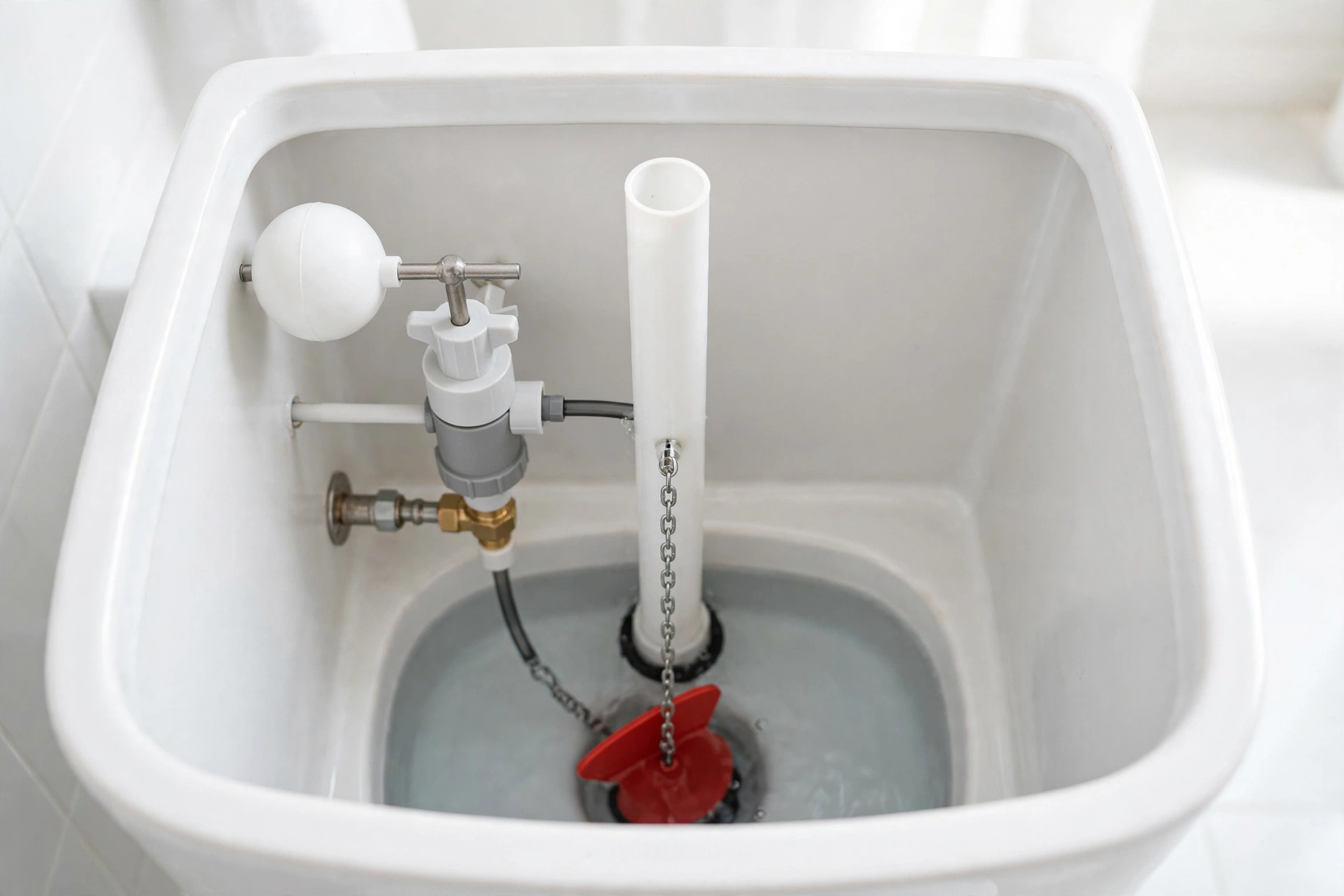
A toilet tank is a simple machine with four parts that can fail. Before buying anything, spend two minutes figuring out which one is yours. Take the lid off the tank, set it somewhere safe (porcelain lids crack easily), and watch what happens after a flush.
Start with the food coloring test. Drop a few drops of food coloring into the tank water and wait 15 minutes without flushing. If color appears in the bowl, water is leaking from the tank into the bowl — the problem is at the flapper or the flush valve seat. This test is recommended by the EPA’s WaterSense program and costs essentially nothing.
Now match your symptom to the cause:
| What you see or hear | Likely cause | The fix |
|---|---|---|
| Water trickling into the bowl; tank refills every few minutes (“ghost flushing”) | Worn flapper | Fix 1 |
| Handle feels loose or you have to jiggle it to stop the running | Chain too long, tangled, or disconnected | Fix 2 |
| Water visibly spilling into the overflow tube in the center of the tank | Float set too high | Fix 3 |
| Tank never quite fills; constant hissing from the left side of the tank | Worn fill valve | Fix 4 |
Work through them in this order. The flapper accounts for the large majority of running toilets, so most people never get past Fix 1.

What You’ll Need
Gather everything before you start. None of this is expensive:
- A universal toilet flapper (about $5–$10 at any hardware store; most are labeled 2-inch, which fits the majority of toilets)
- A replacement fill valve (about $10–$15; buy one only if Fix 1–3 don’t solve it)
- Adjustable wrench or pliers
- Old towels and a small bucket or bowl
- Sponge
- Rubber gloves (optional but sensible — tank water is clean supply water, but mineral sludge is unpleasant)
Total cost for the most common repair: under $15. That is the entire budget for this project, which makes it one of the cheapest beginner DIY projects you can take on.
Before You Start: Two Ground Rules
Know where your shutoff valve is. There is a small valve on the wall or floor behind the toilet, where the supply line connects. Turn it clockwise to close it. If it has not been turned in years and feels stuck, don’t force it — spray it with penetrating oil, wait ten minutes, and try again gently. If it still won’t budge, you can shut off water to the whole house at the main valve instead.
Tank water is clean. It comes straight from your home’s supply line, the same water that fills the bowl. You can put your hands in the tank without worry. The water in the bowl is a different story — keep your work to the tank.

Fix 1: The Flapper (Most Common Cause)
The flapper is the rubber disc at the bottom of the tank that seals the drain to the bowl. Every flush lifts it; every refill depends on it sealing again. Over time, minerals and in-tank cleaning tablets make the rubber stiff, warped, or slimy, and water starts leaking past it. When the tank level drops, the fill valve kicks on to top it up — that is the running you hear.
How to replace it:
- Turn off the water at the shutoff valve behind the toilet, then flush and hold the handle down to drain as much of the tank as possible. Soak up the remainder with a sponge.
- Unhook the lift chain from the flush lever arm.
- Remove the old flapper. It attaches to two small pegs on the sides of the overflow tube — slide or unclip the rubber ears off the pegs.
- Wipe the flush valve seat (the ring the flapper sits on) with a cloth. Mineral buildup here prevents a good seal even with a new flapper.
- Install the new flapper. Slide its ears onto the same pegs, positioning it squarely over the drain opening.
- Reconnect the chain to the flush lever, leaving about half an inch of slack. Too tight and it holds the flapper open; too loose and it tangles underneath. Test the range of motion with your hand before moving on.
- Turn the water back on and let the tank refill. Flush twice and listen. If the hissing stops and the tank stays full, you are done.
If your toilet uses a tower-style or canister flush valve instead of a flapper (common in some newer models), the principle is identical: the seal at the bottom of the tower wears out and gets replaced as a unit. The packaging will say which type it fits.
Fix 2: The Lift Chain
Sometimes the flapper is fine but the chain connecting it to the flush handle is the problem. A chain that is too short holds the flapper slightly open at all times. A chain that is too long can slip underneath the flapper and prop it open.
With the tank full, look at the chain while nobody is touching the handle. It should hang with a gentle curve — roughly half an inch of slack. If it is taut, move the clip to a link further from the lever to add slack. If it is so long that it piles up, shorten it by moving the clip closer. Flush and watch it work: the chain should lift the flapper fully, then let it drop flat and seal.
This fix costs nothing and takes two minutes. Check it whenever you replace a flapper, because a new flapper with a badly adjusted chain will still run.
Fix 3: The Float and Water Level
The float tells the fill valve when to stop. If the water level is set too high, water spills continuously into the overflow tube — the tall open pipe in the middle of the tank — and the valve never shuts off.
Look at the water line relative to the top of the overflow tube. The water should stop about one inch below the top of that tube. If it is at or above the top, lower the float:
- Ball float (older toilets): the hollow ball on a metal arm. Gently bend the arm downward to lower the water level.
- Cup float (newer toilets): the plastic cup that slides on the fill valve shaft. Squeeze the spring clip on the side and slide the cup down, or turn the adjustment screw counterclockwise, depending on the model.
Flush, let the tank refill, and check the level again. Adjust in small increments — a quarter inch at a time is plenty.
Fix 4: The Fill Valve
If the flapper seals, the chain is right, and the float is set correctly, but the tank still hisses and never quite stops filling, the fill valve itself is worn out. This is the tall assembly on the left side of the tank. Replacing it takes about twenty minutes and one tool.
- Turn off the water and flush to drain the tank. Sponge out the remaining water.
- Place a bucket under the tank where the supply line connects underneath.
- Disconnect the supply line from the bottom of the fill valve with an adjustable wrench.
- Unscrew the plastic locknut under the tank that holds the valve in place, then lift the old valve out.
- Set the new valve’s height. Most universal valves twist to adjust — the top of the valve should sit roughly one inch below the top of the overflow tube. The critical line marked on the valve must end up above the overflow tube’s top.
- Insert the new valve through the tank hole, slide the rubber washer on, and hand-tighten the locknut underneath. Give it an extra quarter-turn with pliers — snug, not crushed.
- Reconnect the supply line and clip the small refill tube into the overflow tube. Make sure the refill tube doesn’t extend below the water line, or it will siphon water continuously.
- Turn the water on, let the tank fill, and check for leaks at every connection. Flush twice and confirm the fill stops at the right level.
When to Call a Plumber
These four fixes resolve the overwhelming majority of running toilets. Call a professional if:
- Water is leaking from the base of the toilet or the tank bolts, not just running inside the tank
- You see cracks in the tank or bowl porcelain
- The shutoff valve is corroded, leaking, or won’t turn
- The toilet has an unusual mechanism (dual-flush buttons, pressure-assist, or smart toilet) that doesn’t match this guide
- You’ve replaced the flapper and fill valve and it still runs — the flush valve seat itself may be damaged
There is no shame in stopping here. Knowing which jobs are yours and which belong to a licensed plumber is part of being a competent DIYer, not a failure of one.
Keeping It Fixed
A flapper typically lasts three to five years. Two habits extend that life. First, avoid drop-in tank cleaning tablets — the concentrated bleach degrades rubber parts far faster than normal. Clean the bowl directly instead. Second, when you notice the first signs of ghost flushing or a handle that needs jiggling, fix it promptly. A small leak becomes a big water bill quickly: at 200 gallons a day, even a few weeks of delay wastes thousands of gallons.
If your toilet is more than twenty years old and uses 3.5 gallons or more per flush, consider that the repair might be a good moment to think bigger. Modern WaterSense-labeled toilets use 1.28 gallons per flush or less, and the EPA estimates they can cut a household’s toilet water use by 20 to 60 percent. Pair that with other water-saving bathroom upgrades and the bathroom becomes one of the cheapest rooms in the house to run. And if the running toilet has you looking at the bathroom with fresh eyes, you might find inspiration in a budget bathroom makeover or a roundup of weekend bathroom projects under $500.
Frequently Asked Questions
How much water does a running toilet waste? About 200 gallons per day, according to the EPA’s WaterSense program — roughly 6,000 gallons a month. That is enough to noticeably increase a metered water bill within a single billing cycle.
What is the most common cause of a running toilet? A worn flapper. The rubber seal at the bottom of the tank degrades over time from minerals and cleaning chemicals, letting water leak into the bowl. Replacing it costs $5–$10 and resolves most cases.
Can I fix a running toilet without turning off the water? For chain and float adjustments, yes — you don’t need to drain anything. For flapper or fill valve replacement, turn the water off first. Working on a live supply line risks a mess and makes the job harder.
Why does my toilet run every few minutes but then stop? That is “ghost flushing” — the classic symptom of a slow flapper leak. Water seeps into the bowl, the tank level drops slightly, and the fill valve tops it up. Replace the flapper.
How do I know if my flapper is 2-inch or 3-inch? Measure the drain opening the flapper covers, or take the old flapper to the hardware store. Most residential toilets use 2-inch flappers; some newer high-efficiency models use 3-inch.
Is it safe to put my hands in the toilet tank? Yes. Tank water comes directly from your home’s clean supply line. Wear gloves if you prefer, but there is nothing unsanitary about the tank itself.
Conclusion
A running toilet is one of those problems that feels like it belongs to plumbers until you open the tank and see how simple the mechanism is. Diagnose first with the food coloring test, fix the flapper in most cases, adjust the chain and float when needed, and replace the fill valve when the other fixes don’t hold.
The whole job typically costs less than a pizza and saves thousands of gallons of water. More importantly, it teaches you something useful: your home’s systems are understandable, and most of them are fixable with basic tools and a little patience. That confidence carries into every project after this one.
Sources and further reading:
U.S. EPA WaterSense — US Indoor Water Use (running toilet wastes ~200 gallons/day; WaterSense toilets use 1.28 gpf or less)
Denver Water — Stop Your Running Toilet During Fix a Leak Week (flapper as leading cause; food coloring test; cost impact)
Roto-Rooter — How to Replace a Toilet Flapper Valve (flapper replacement procedure)
House Digest — 2 Toilet Parts You Should Replace Every 5 Years (fill valve replacement procedure)

Welcome to Homeblesh! I'm a professional content writer with over five years of experience creating well-researched, practical, and reader-focused content for clients on Upwork and Fiverr. Now, I've dedicated my expertise to building Homeblesh, where I share helpful guides, honest recommendations, and actionable tips based on careful research and industry knowledge. My goal is to provide accurate, trustworthy information to help you make informed decisions while delivering clear, useful, and easy-to-understand content.
- Muhammad Imran

- Muhammad Imran

- Muhammad Imran

- Muhammad Imran


