

A smart thermostat and smart TRVs solve different heating problems, and buying the wrong one can leave rooms too hot, too cold, or both at once. This article explains what each system does, where each one works best, and when using both together makes sense.
You will learn how to check compatibility, avoid the common thermostat and TRV clash, and choose by household type rather than by features alone. The short answer is simple. A smart thermostat controls heating for the whole home from one location, while smart TRVs control heating room by room, radiator by radiator. Many homes do well with one system, while larger or uneven homes often benefit from a combination. This guide compares costs, compatibility, and household layouts in plain terms.
What Each System Does in Plain Terms
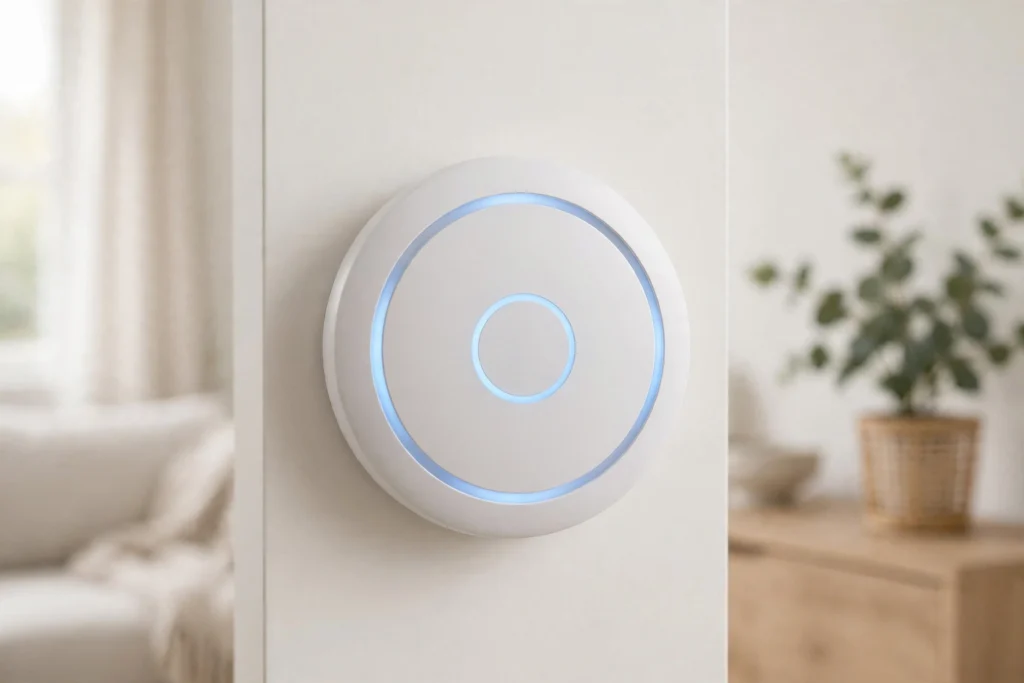
A smart thermostat replaces or upgrades the main heating control. It tells the boiler or heat source when to run, based on the temperature in its room and the schedule you set. You can usually change settings from a phone app.
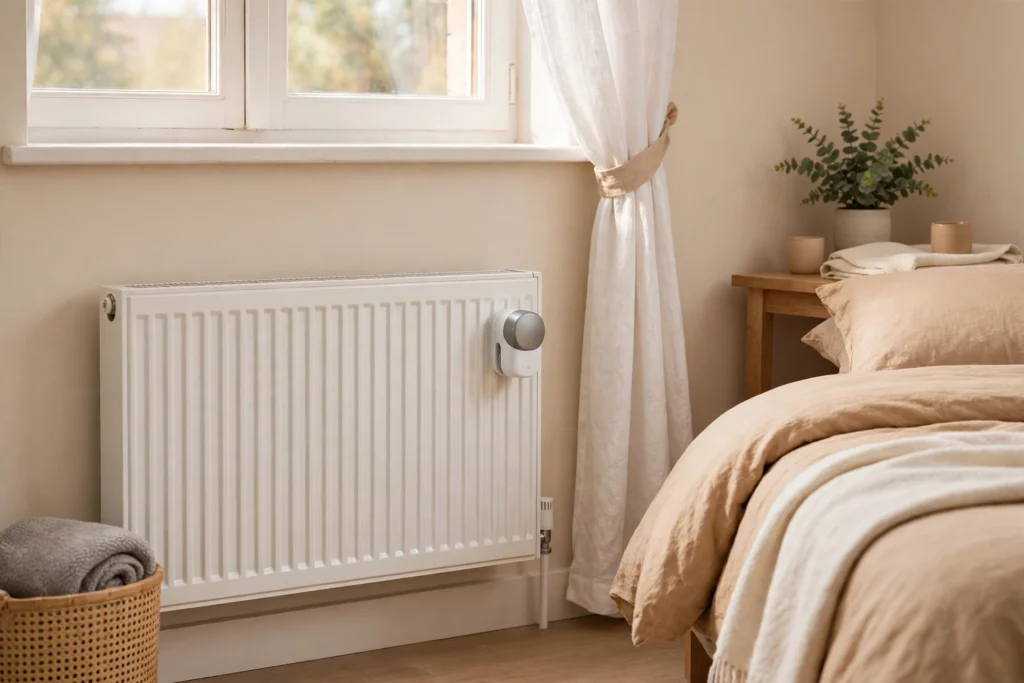
A smart TRV is a motorised valve that fits on a radiator in place of a standard thermostatic radiator valve. It opens and closes that radiator to reach the temperature set for that room. In short, the thermostat decides whether heating runs at all, while a TRV decides whether one radiator joins in.
How a Smart Thermostat Controls the Boiler
A smart thermostat reads the temperature in its location and compares it with your target temperature. When the room is below target during a scheduled heating period, it calls for heat. When the room reaches target, it tells the system to stop.
This suits homes where most rooms follow a similar pattern. Its weakness is that it only knows about its own room, so other rooms may end up warmer or cooler than you want.
How Smart TRVs Control Each Radiator
Smart TRVs add local control to individual radiators. You can set a bedroom cooler overnight, keep a home office warm during work hours, and leave a rarely used room low, so empty rooms do not need full heat.
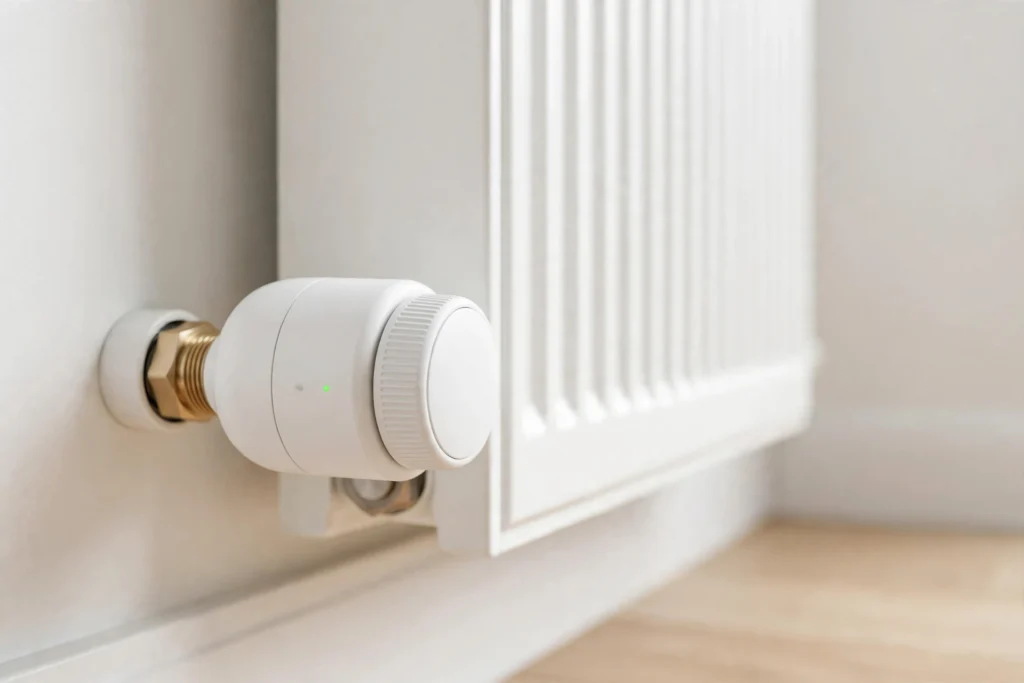
Smart TRVs do not replace boiler control. The boiler still needs a call for heat, usually from the main thermostat or heating controller. If the main system is off, a smart TRV cannot heat its radiator on its own.
Compatibility: Check Before You Buy
Compatibility varies, so check manufacturer guidance for your exact setup before buying.
- Combi boiler: Many smart controls work with combi boilers, but check wiring and control type.
- System boiler: Often compatible, though hot water controls may stay separate.
- Conventional boiler: May need extra care around tanks and cylinders.
- Heat pump: Controls can behave differently with heat pumps, so use controls approved for heat pump use.
- Underfloor heating: Smart TRVs do not control underfloor zones, so check for an underfloor system.
- Electric heating: Standard boiler controls and TRVs do not apply to most electric heaters.
Also check valve size, wireless range, and whether a hub is needed.
Household Layouts: Where Each Approach Makes Sense
Small flat with one main room
A smart thermostat often covers this layout well. With one main living space and a short hallway to the bedrooms, one temperature reading can represent much of the home.
Family home with unused rooms
Smart TRVs often make the bigger difference here. A guest room or study may sit empty for hours, while the kitchen and living room stay busy, so room control keeps busy rooms comfortable and unused rooms lower.
Home office
A home office is a classic case for a smart TRV. It may need heat during work hours when the rest of the house is empty, or overheat from sun and a closed door.

Multi storey home
Heat rises, so upstairs rooms often run warmer than downstairs rooms. Smart TRVs can help balance this, by holding back upstairs radiators while downstairs rooms catch up.
Rooms that run hot or cold
A cold north facing room or a sunny room may need different treatment. Smart TRVs give that room its own setting, while a thermostat alone would need a compromise temperature.
Using Both Together, Without a Clash
Using both together can give the best of both systems. The thermostat manages the overall schedule and boiler calls, while TRVs fine tune each room. Costs vary by home, system, and number of radiators.

One rule matters more than any other. The room with the main thermostat must not also have a smart TRV fighting it. If the TRV closes the radiator in the thermostat room, that room may stay cool, so the thermostat keeps calling for heat.
To avoid this clash, leave the thermostat room on a standard valve or use the maker’s recommended setup. Fit smart TRVs in bedrooms, offices, and unused rooms, and keep the main schedule simple.
Renter Considerations
Renters often find smart TRVs easier than a smart thermostat. A TRV usually fits on an existing radiator valve and can often be removed when moving out. Always check tenancy terms first, and keep the original parts safe.
A smart thermostat can involve wiring, wall mounting, or changes to the heating controller. That may need landlord permission, and in some homes it may not be allowed. Ask before buying, and restore the original setup when you leave, unless agreed otherwise.
Installation and Safety
Smart TRV fitting is often presented as a beginner friendly job, but it still needs care. Turn the heating off first, follow the manufacturer instructions, and check for leaks after fitting. If a valve is stuck or leaking, stop and get help rather than forcing it.
Gas and boiler work must be left to a qualified professional. Do not open a boiler, alter gas pipework, or rewire heating controls unless qualified. If your thermostat needs wiring changes, book a qualified heating engineer.
Decision Guide by Household Type
Use this guide as a starting point, then check compatibility for your system.
- Small flat, similar room use: Start with a smart thermostat, and add a TRV only for a hot or cold room.
- Family home, several unused rooms: Consider smart TRVs for unused rooms, plus a thermostat for overall control.
- Home office, different hours: Add a smart TRV to the office first, so it can follow a work schedule.
- Multi storey home, uneven temperatures: Consider a thermostat plus TRVs, with care in the thermostat room.
- Rented home, no wiring changes: Check tenancy terms, then consider smart TRVs as the reversible option.
- Heat pump or underfloor heating: Choose controls made for your system, and get advice first.
FAQ
Do smart TRVs work without a smart thermostat?
They can control individual radiators, but they still need the main heating system to run. In many setups, the main thermostat provides that call for heat.
Can I use a smart thermostat and smart TRVs together?
Yes, and many homes do. Keep the main schedule on the thermostat, use TRVs for room control, and avoid a smart TRV in the thermostat room that fights the main control.
Will these controls save energy?
They may help by heating rooms only when needed, but results vary by home, system, habits, and setup. Do not rely on a promised saving.
What should renters check first?
Check tenancy terms and landlord permission, especially for wiring. Keep original parts, and restore the setup when moving out unless agreed otherwise.
Conclusion
A smart thermostat controls the whole home from one point, while smart TRVs control each radiator on its own. The first suits simple layouts and shared schedules. The second suits homes where rooms are used differently, run at different temperatures, or sit empty for long periods.
Used together, with the thermostat room protected from a clash, they can give simple overall control and room level comfort. Before buying, check compatibility, count the radiators to control, and consider tenancy rules if you rent.
Start with the rooms where control will make the clearest difference, test over a few days, and adjust one setting at a time. That careful approach helps you choose without overspending, and gives you control that fits the home you actually live in.
Sponsored · RecommendedSomething worth a look before you goHandpicked for HomeBlesh readers. Tap to explore it.Explore Now