

Every homeowner deserves a backyard that feels like a private retreat. Whether you are relaxing on the patio, entertaining guests, or simply enjoying a quiet moment outdoors, the last thing you want is to feel overlooked by neighbors or exposed to street traffic.
DIY privacy screens and trellis panels offer an affordable, stylish, and highly customizable solution to this universal outdoor living challenge.
From classic wooden slatted panels to decorative laser-cut metal screens, climbing plant trellises, and mobile planter-based barriers, the range of options available to the modern DIY enthusiast has never been more exciting.
And unlike a full fence installation, most privacy screen projects can be completed over a single weekend with basic tools, moderate skill, and a budget that suits your circumstances.
In this comprehensive guide, we explore the best DIY privacy screens and trellis panel ideas for backyards, balconies, and patios. Each idea includes practical guidance on materials, installation approach, and design considerations to help you choose the right solution for your space and make it a reality with confidence.
Table of Contents
Why DIY Privacy Screens Are the Smart Choice?
Before diving into specific ideas, it is worth understanding why DIY privacy screens have become such a popular choice for homeowners looking to improve their outdoor spaces.
A professionally installed privacy fence can cost thousands of dollars or pounds, depending on height, material, and the size of the area to be screened.
A well-executed DIY privacy screen delivers equivalent visual coverage and aesthetic appeal at a fraction of that cost, often using materials available from standard home improvement stores or even reclaimed from other projects.
Privacy screens are also significantly more flexible than fixed fencing. Many designs are modular or freestanding, allowing you to reposition them seasonally, take them with you if you move, or reconfigure the layout of your outdoor space as your needs change.
This flexibility makes them particularly valuable for renters, apartment dwellers with balconies, and homeowners who prefer not to commit to a permanent structural change.
There is also a design dimension that standard fencing rarely achieves. A thoughtfully designed DIY privacy screen can be a genuine piece of outdoor art, introducing texture, pattern, colour, and living greenery into the backyard in a way that enhances rather than merely encloses the space.
Important First Step: Check Local Regulations
Before beginning any privacy screen or trellis project, always verify local building codes and any homeowner association rules that apply to your property. Regulations governing fence and screen heights vary significantly between municipalities and neighbourhoods, and non-compliant structures can result in costly removal requirements.
In most residential areas, rear garden fencing up to 6 feet in height is permitted without planning permission or a building permit.
Screens positioned on boundaries adjacent to streets or pavements are often subject to lower height limits. If in doubt, a quick call to your local planning authority will save significant time and expense further down the line.
Best DIY Privacy Screens and Trellis Panel Ideas
1. Horizontal Cedar Slat Privacy Screen
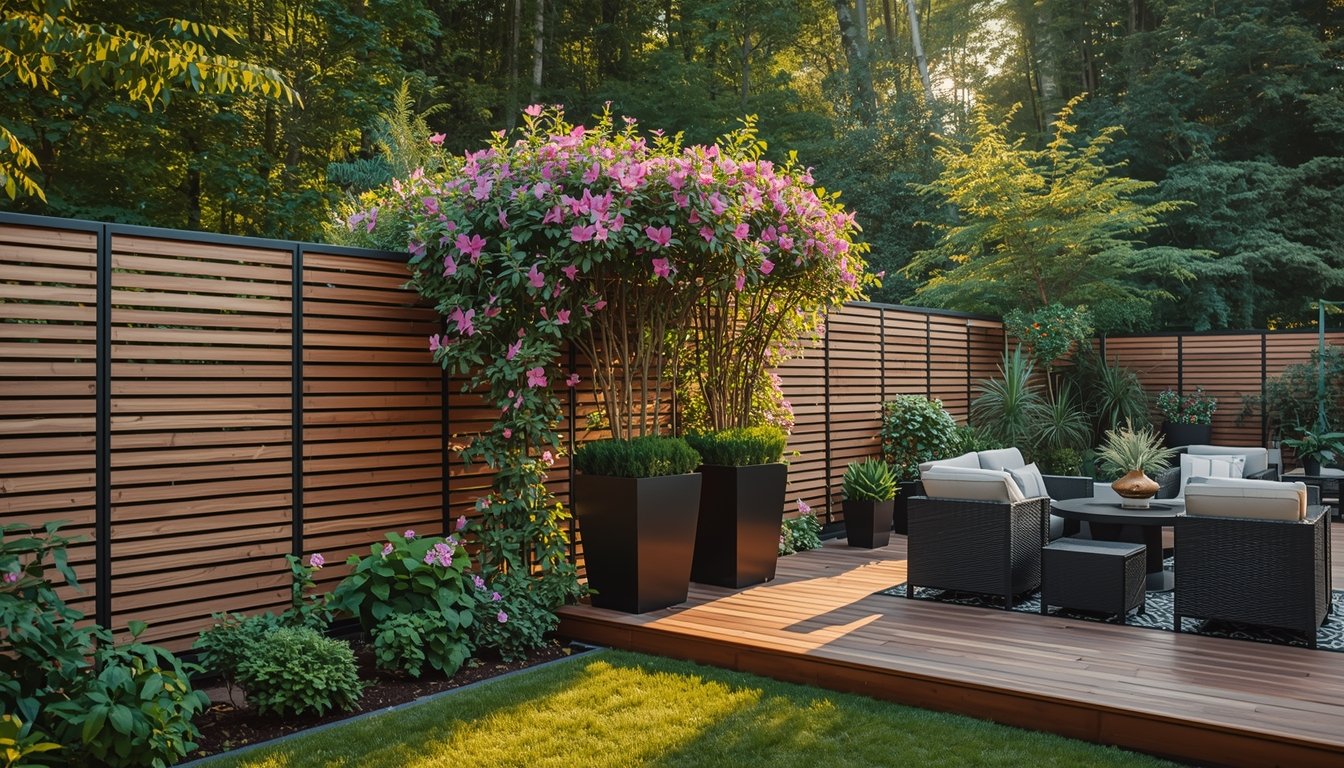
The horizontal cedar slat privacy screen is one of the most popular and enduringly stylish DIY privacy solutions available. Its clean lines and warm natural tones work equally well in contemporary garden settings and more traditional outdoor spaces, making it one of the most versatile fencing ideas for privacy across a wide range of property styles.
Cedar is the material of choice for this type of screen because it is naturally resistant to rot, insects, and moisture without requiring chemical treatment. Its warm reddish-brown tone weathers beautifully to a silver-grey patina over time, or can be maintained with regular application of exterior timber oil or stain.
To build a horizontal cedar slat screen, you will need to set sturdy posts into concrete-filled holes at regular intervals, typically 6 to 8 feet apart depending on the span of each panel. Horizontal slats are then fixed to the posts using exterior-grade screws, with a small gap left between each slat to allow for timber expansion and to permit airflow and filtered light through the screen.
The spacing between slats is a key design decision. Closely spaced slats with gaps of half an inch or less provide near-solid privacy coverage. Wider gaps of 1 to 2 inches create a more open, breezy aesthetic that allows more light through while still significantly reducing visibility from neighboring properties. This is a particularly popular choice as a fence topper for privacy atop an existing lower fence or wall.
2. Trellis with Climbing Plants
A trellis for privacy is one of the most beautiful and sustainable solutions available to any gardener or outdoor enthusiast. Rather than creating a hard visual barrier, a planted trellis grows into its role over time, developing into a living green wall that provides genuine privacy while adding tremendous ecological and aesthetic value to the garden.
Classic lattice trellis panels fixed to posts or mounted on an existing fence or wall provide an immediate structural framework onto which climbing plants establish themselves quickly. Within a single growing season, vigorous climbers like clematis, honeysuckle, climbing roses, wisteria, and evergreen ivy can cover a substantial trellis panel and begin delivering meaningful screening.
For year-round coverage, prioritise evergreen climbers such as ivy, star jasmine, or pyracantha. If seasonal interest and fragrance matter more to you than uninterrupted coverage, deciduous climbers like wisteria and climbing roses offer spectacular spring and summer displays even if they lose their leaves in winter.
Garden trellis ideas need not be limited to simple lattice panels. Fan-shaped trellises, obelisks, and freestanding trellis frames all offer distinctive visual forms that become features in their own right even before planting fills them out. A row of matching obelisks planted with the same climbing rose along a garden boundary creates a formal, elegant privacy solution that doubles as a signature garden design element.
3. Decorative Laser-Cut Metal Screens
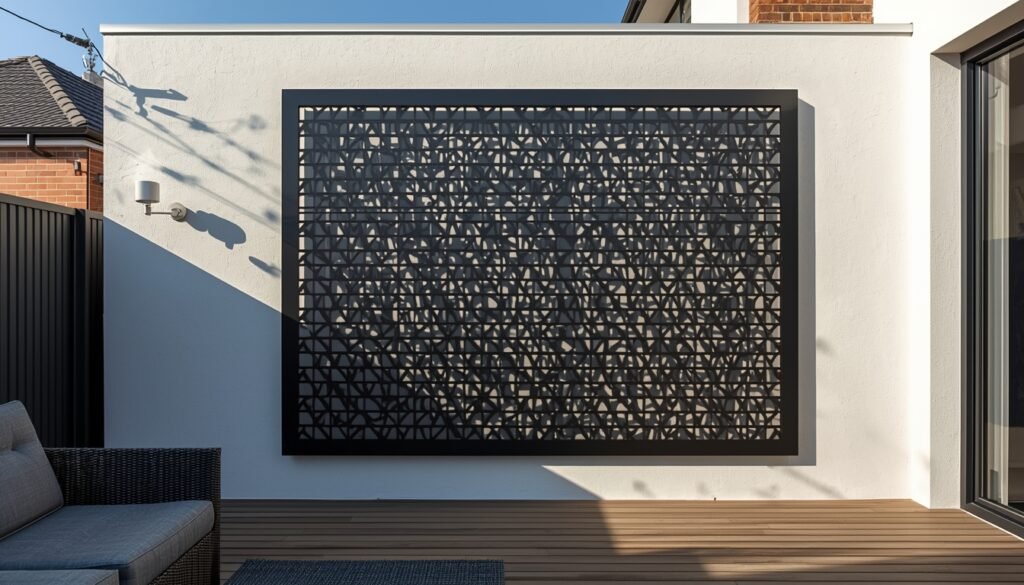
For homeowners who want a privacy screen that functions as a genuine piece of outdoor art, decorative laser-cut metal screens represent the premium end of the DIY privacy panel spectrum. Available in a vast range of geometric and botanical patterns, these panels introduce intricate visual interest that transforms a simple privacy barrier into a design statement.
Steel and aluminium are the most commonly used metals for laser-cut privacy screens. Powder-coated aluminum panels are lightweight, fully weatherproof, and available in a wide range of colors from classic black and anthracite grey to bolder tones. Corten steel panels develop a distinctive rust patina over time that many designers consider one of the most beautiful finishes available in outdoor material.
While pre-fabricated laser-cut screens can be purchased and installed as a straightforward DIY project using basic fixing hardware, creative makers can also commission custom designs cut from their own artwork through metal fabrication services that have become increasingly accessible and affordable.
Laser-cut metal privacy panels work particularly well as a privacy wall for patio spaces, positioned as a single statement panel behind a seating area or used in series along a boundary to create a continuous decorative screen. Their open, patterned nature provides visual privacy without blocking light, making them ideal for smaller patios where maintaining a sense of openness is important.
4. Bamboo and Reed Roll Screens
Bamboo privacy screens offer one of the best combinations of affordability, eco-friendliness, and visual appeal available in the DIY privacy screen category. Bamboo and reed roll panels are available from garden centres and home improvement stores in standard widths and heights, and can be attached directly to an existing fence frame, pergola, or custom post-and-rail structure with simple wire ties or staples.
As a natural material, bamboo brings warmth, texture, and an organic quality to outdoor spaces that synthetic materials struggle to replicate. It pairs beautifully with tropical and coastal garden styles, but its neutral, earthy tones also complement more contemporary settings when used with restraint.
One of the most practical applications for bamboo panels is as a balcony privacy screen or balcony screen privacy solution for apartment dwellers. A bamboo roll panel fixed to balcony railings with cable ties takes under an hour to install, costs very little, and immediately transforms an exposed balcony into a genuinely private outdoor sanctuary.
For longevity, choose kiln-dried bamboo panels treated with a UV-resistant coating and store them under cover during extended periods of very wet weather. Untreated bamboo can develop surface mould in persistently damp conditions, so an annual application of outdoor bamboo oil or a sealant significantly extends the panels’ lifespan.
5. Planter Box Privacy Screens
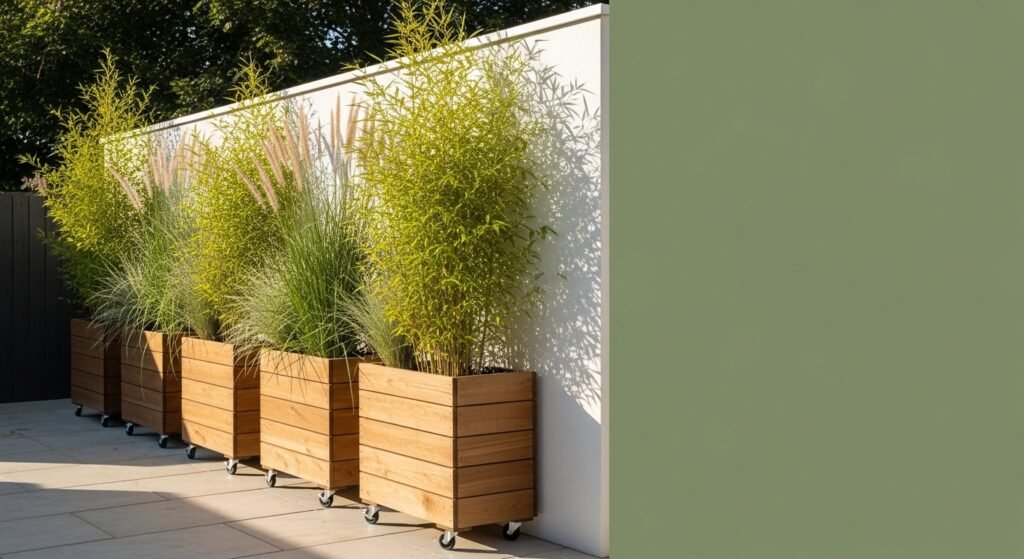
Planter box privacy screens are among the most creative and flexible DIY privacy solutions available, combining the structural coverage of a hard screen with the living beauty of container planting to create a mobile, modular privacy barrier that can be repositioned as needed.
The basic concept involves constructing or purchasing tall raised planter boxes on casters and filling them with upright, columnar plants for screening. Bamboo planted in deep, narrow containers grows rapidly into an effective living screen. Tall ornamental grasses, columnar evergreen shrubs, and standard-trained topiary are all effective choices depending on the level of formality and the speed of coverage required.
For a more immediate result, combine the planter boxes with a trellis panel fixed to the back of each planter and plant climbing plants at the base. This hybrid approach gives you both the instant coverage of the hard trellis structure and the eventual beauty of a fully planted living screen.
These mobile patio privacy screens are ideal for renters who cannot make permanent changes to a property and for homeowners who want the flexibility to open up or enclose their outdoor space seasonally. A row of six or eight planter boxes fitted with matching trellis panels creates a substantial privacy wall for patio use that can be assembled or dismantled in under an hour.
6. Corrugated Metal Panel Screens
Corrugated metal panels mounted within a timber or steel frame offer a distinctive industrial-modern aesthetic that has gained significant popularity in contemporary garden design. The combination of raw metal texture with the warmth of timber framing creates a visual contrast that feels genuinely designed rather than simply functional.
Galvanised corrugated steel sheets are inexpensive, extremely durable, and require minimal maintenance beyond an occasional rinse to remove surface dirt. They can be left in their natural galvanized finish, painted with exterior metal paint in any color, or allowed to develop a weathered patina over time.
To build a corrugated metal privacy screen, construct a simple timber frame from pressure-treated lumber using standard post-and-rail joinery, then fix the corrugated panels to the frame using appropriate metal fixings. The frame provides the structural integrity while the metal panels deliver the screening coverage and visual character.
This style works particularly well as a privacy fence topper installed above an existing lower masonry or timber fence to bring it up to full privacy height, or as a standalone freestanding screen positioned to block a specific sightline without creating a continuous boundary structure. As fence toppers for privacy go, corrugated metal is one of the most weather-resistant and low-maintenance options available.
7. Willow and Hazel Hurdle Panels
Willow and hazel hurdle panels are a traditional form of woven natural screening with a history stretching back centuries in British and European garden design. Handwoven from sustainably harvested willow or hazel branches, hurdle panels have a beautifully organic, textural quality that introduces genuine countryside character into the garden.
Available in standard 6-foot by 6-foot panels from garden centres and specialist suppliers, hurdle panels are one of the quickest and easiest privacy panel options to install. They simply slot between posts or can be wired to an existing fence structure without any specialist tools or skills.
Their natural material means they biodegrade over time, typically lasting 5 to 10 years depending on conditions. This relatively short lifespan is offset by their very low cost, their entirely natural and sustainable composition, and the fact that they can be composted at the end of their life rather than going to landfill.
Hurdle panels pair especially beautifully with cottage garden planting schemes, wildflower meadow borders, and any garden style that prioritises natural, organic aesthetics over precision and geometry. Training climbing plants through the woven structure further softens the panels and eventually creates a wholly living privacy screen as vegetation fills every gap.
8. Vertical Plank Privacy Wall
A vertical plank privacy wall is the natural companion to the horizontal cedar slat screen discussed earlier, offering a more traditional, fence-like aesthetic that suits classic garden settings and properties with period architectural character.
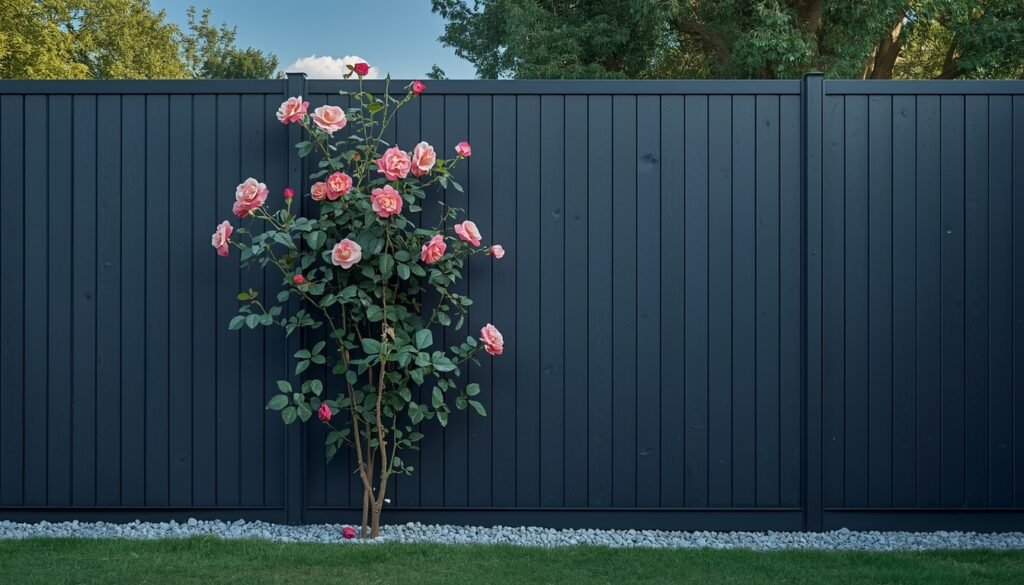
The construction principle is similar: posts set in concrete-filled holes are connected by horizontal rails, but the planks are fixed vertically rather than horizontally. Vertical planking tends to create a slightly more formal, structured appearance and can make a garden feel taller and more enclosed, which suits smaller gardens where a sense of height and containment is desired.
For the most attractive result, use tongue-and-groove or shiplap boards that interlock at the edges to create a clean, seamless surface. These also provide more complete privacy coverage than simple butted planks, which can develop gaps as the timber dries and shrinks over time.
Cedar, redwood, and pressure-treated pine are all excellent material choices for vertical plank screens. Finish with an exterior timber stain in your preferred tone, whether that is a natural wood colour, a fashionable dark grey or black for a contemporary look, or a traditional green or brown that blends the screen into the surrounding planting.
9. Repurposed Shelving Unit Screen
One of the most creative and budget-conscious DIY privacy screen ideas involves repurposing a tall freestanding shelving unit as a garden screen and display feature simultaneously. This approach transforms a functional object into a decorative privacy panel that is unique, characterful, and endlessly customisable.
A robust timber or metal shelving unit positioned at the edge of a patio creates an instant partial screen while providing surface area for potted plants, lanterns, outdoor books, decorative objects, and gardening accessories. The combination of screening, display, and storage creates a true multifunctional element that earns its place in even a compact outdoor space.
For maximum coverage, fill the shelving unit with a mix of dense potted plants at the upper levels and larger containers at the base. Trailing plants spilling from upper shelves and climbing plants rooted at the base and trained upward through the structure will gradually increase the screen’s density over the growing season.
Coat any timber shelving with an exterior wood preservative before placing it outdoors, and ensure the unit is stable and adequately weighted at the base to prevent tipping in windy conditions. Anchor freestanding units to an adjacent wall or fence wherever possible for additional security.
10. Post-and-Lattice Privacy Trellis
The post-and-lattice trellis is the most classic and widely recognised form of garden trellis privacy solution, combining structural simplicity with enormous planting potential to create a privacy screen that improves in beauty and effectiveness year upon year.
Diamond lattice trellis panels fixed between posts create an immediate light-filtering screen with a traditional garden character that suits a wide range of property styles. Their open structure allows air and light to pass through freely, making them ideal for patio privacy screens, where a solid barrier would feel oppressive and dark.
Ideas for trellis in garden settings extend well beyond the simple boundary application. A freestanding post-and-lattice trellis positioned at a 90-degree angle to a patio can define the edge of an outdoor dining zone without fully enclosing it. A pair of lattice panels flanking a garden gateway creates an elegant framed entrance that feels architectural and considered.
For the fastest and most dramatic visual transformation, plant fast-growing annual climbers such as sweet peas, nasturtiums, and morning glory at the base of a new lattice trellis in spring. These will cover the structure entirely within a single season, providing a lush green backdrop that transitions gracefully to the slower-establishing perennial climbers planted alongside them.
11. Hanging Panel Screen for Pergolas and Existing Structures
For homeowners who already have a pergola, garden wall, or other overhead structure, hanging panel screens offer a simple, non-invasive way to add privacy coverage without digging holes or setting posts. Decorative screens, fabric panels, bamboo rolls, or custom-made wooden panels can all be hung from an existing structure using hooks, chains, or cable ties.
This approach is particularly effective as a patio privacy screen solution for covered outdoor dining areas or living spaces where the pergola structure already defines the zone and hanging screens simply complete the enclosure on the open sides.
Fabric panels in heavy outdoor canvas or solution-dyed acrylic can be hung like curtains for a soft, residential quality, drawn aside when not needed and closed for privacy during use. Wooden hanging panels introduce a more structural, architectural quality and can be made to any custom size and pattern to suit the specific dimensions of the pergola opening.
The reversible nature of this approach makes it ideal for those who wish to experiment with different screening solutions before committing to a permanent installation.
12. Gabion Wall Privacy Screen
A gabion wall is a structure formed by filling wire mesh cages with stones, pebbles, or recycled materials to create a dense, heavy, and visually striking boundary or privacy screen. Originally an engineering solution used in civil construction and erosion control, gabion walls have found a strong following in contemporary garden design for their raw, industrial character and exceptional durability.
Building a DIY gabion privacy screen requires purchasing prefabricated wire cages in your desired dimensions, positioning them in their final location, and filling them with the aggregate of your choice. Large smooth river pebbles create a refined, contemporary aesthetic. Rough quarry stone gives a more rustic, natural feel. Reclaimed brick or broken concrete offers a sustainable option with genuine character.
Gabion screens are extremely heavy once filled and fully self-supporting, requiring no post-and-hole foundations, though they should be positioned on a firm, level surface. Their mass also provides useful acoustic attenuation, helping to reduce noise transmission from adjacent roads or properties.
Planting trailing and creeping plants at the top and sides of a gabion wall softens its hard edges over time and integrates it visually into the wider garden planting scheme. Combined with a trellis panel mounted on top, a gabion base creates a privacy wall for patio settings that is both structurally impressive and visually layered.
Key Tips for a Successful DIY Privacy Screen Build
Getting the installation right is just as important as choosing the right design. A few key principles make the difference between a screen that stands strong for years and one that fails at the first serious wind.
Post depth and stability are the most critical factors in any post-and-panel privacy screen. Posts should be set to a depth of at least one third of their total length, ideally in concrete-filled holes with a gravel drainage layer at the base to prevent water pooling. Use a spirit level to ensure posts are perfectly vertical before the concrete sets, as even a slight lean becomes very noticeable once panels are attached.
Material choice should always account for the specific weather conditions in your area. Coastal gardens exposed to salt air require either naturally corrosion-resistant materials like cedar and aluminium, or regular maintenance of any ferrous metal components. Shaded gardens with poor airflow are prone to mould and require materials that tolerate damp conditions without deteriorating rapidly.
Consider incorporating a water feature alongside your privacy screen to manage noise from neighbouring properties. The sound of running water masks ambient noise effectively and adds a sensory dimension to the outdoor space that enhances the feeling of seclusion that the privacy screen creates structurally.
Conclusion
DIY privacy screens and trellis panels represent one of the most rewarding and accessible categories of outdoor improvement project. Whether you choose the warmth of horizontal cedar slats, the living beauty of a climbing plant trellis, the artistry of laser-cut metal privacy panels, or the simplicity of bamboo roll screening, there is a solution perfectly suited to your space, your style, and your budget.
The ideas explored in this guide range from quick weekend installs achievable by complete beginners to more ambitious projects that reward those with greater building experience and a larger materials budget. What unites them all is their ability to transform an exposed, overlooked outdoor space into a genuinely private, personal retreat that feels entirely your own.
Start with the project that excites you most, build with quality materials, install with care, and enjoy the profound difference that well-designed privacy makes to the pleasure and usability of your outdoor space every single day.

Welcome to Homeblesh! I'm a professional content writer with over five years of experience creating well-researched, practical, and reader-focused content for clients on Upwork and Fiverr. Now, I've dedicated my expertise to building Homeblesh, where I share helpful guides, honest recommendations, and actionable tips based on careful research and industry knowledge. My goal is to provide accurate, trustworthy information to help you make informed decisions while delivering clear, useful, and easy-to-understand content.
- Muhammad Imran

- Muhammad Imran

- Muhammad Imran

- Muhammad Imran


