

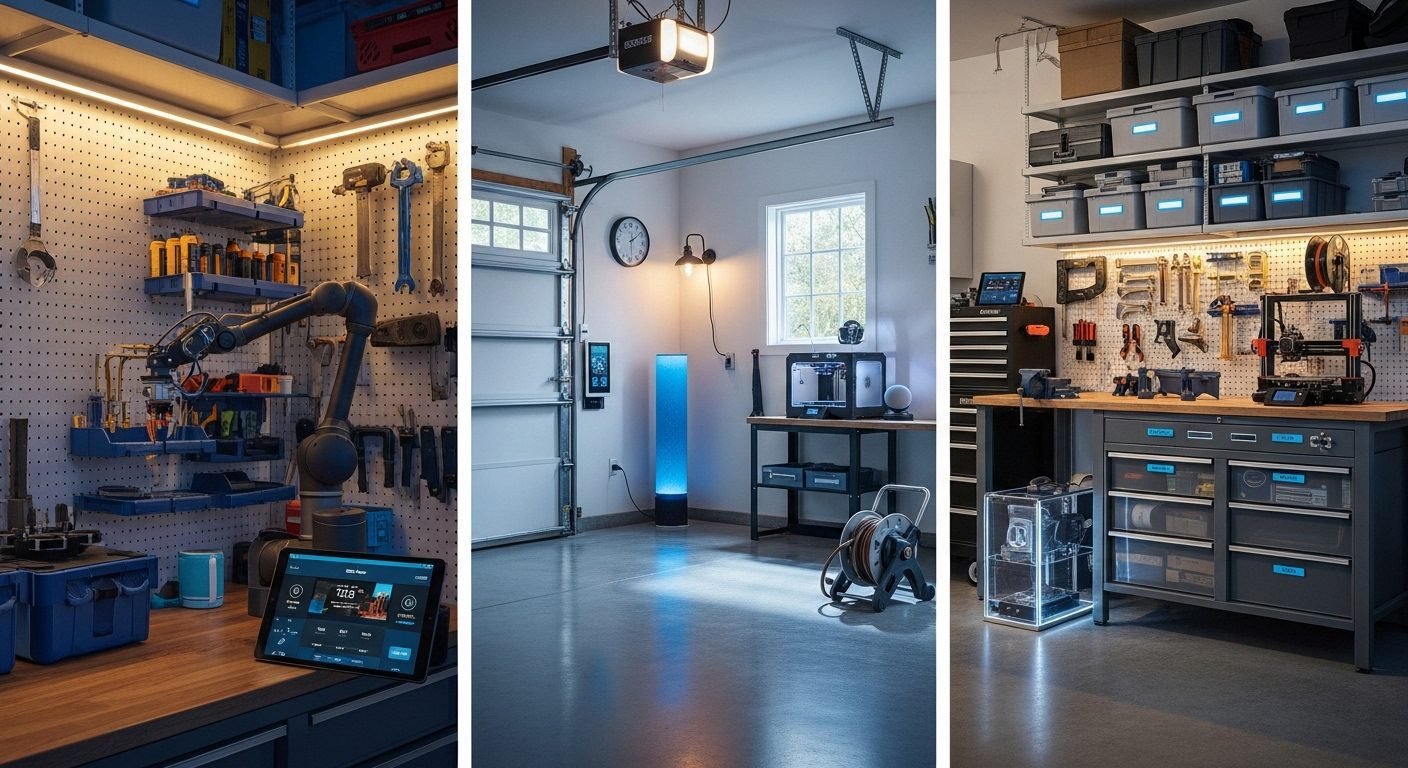
Whether you use your garage as a workshop, storage space, or daily parking area, automation can dramatically improve convenience, security, and energy efficiency.
The good news? You do not need to be an electrician or a tech expert to get started. With affordable smart home components and a bit of weekend effort, you can build a highly functional automated garage or shed that works smarter, not harder.
In this guide, we explore the 15 best DIY garage and shed automation ideas that are practical, budget-friendly, and scalable for any skill level.
Table of contents
Why Automate Your Garage or Shed?
Before diving into the ideas, it is worth understanding why garage and shed automation is growing in popularity worldwide. Modern homeowners are looking for ways to:
- Reduce energy waste from lights and heaters left on accidentally
- Improve security with remote monitoring and smart locks
- Save time on repetitive manual tasks
- Increase the resale value of their property
- Create a more comfortable and organised workspace
With platforms like Home Assistant, Google Home, Amazon Alexa, and Apple HomeKit becoming increasingly accessible, setting up a DIY smart garage has never been more achievable or affordable.
15 Best DIY Garage and Shed Automation Ideas

1. Smart Garage Door Opener
The most impactful upgrade you can make
A smart garage door opener lets you open and close your garage door and monitor it from anywhere in the world using a smartphone app. Devices like the Meross Smart Garage Door Opener or the Chamberlain myQ system can be retrofitted to most existing garage doors without replacing the entire mechanism.
What you need: A Wi-Fi-enabled garage door controller, a tilt or contact sensor, and a smartphone.
Key benefits: Remote access, delivery monitoring, automatic closing if you forget, and real-time alerts if the door is left open.
2. Automated Lighting with Motion Sensors
Never fumble for a light switch again
Installing motion-activated smart lights in your garage or shed is one of the simplest and most satisfying automation upgrades. PIR (Passive Infrared) motion sensors paired with smart LED bulbs or strips can detect movement and instantly illuminate the space.
You can program lights to turn off automatically after a set period of inactivity, ideal for workshops where your hands are often full. Smart lighting systems like Philips Hue, LIFX, and basic Zigbee bulbs also offer voice control integration.
Pro tip: Use colour temperature tuning to switch between warm ambient light for relaxing and cool daylight tones for detailed work tasks.
3. Raspberry Pi or Arduino-Based Control Hub
Build your own brain for the shed
For tech-savvy DIY enthusiasts, building a Raspberry Pi or Arduino control hub is a rewarding project that gives you complete local control over all your automation systems. Using free platforms like Home Assistant or OpenHAB, you can manage everything from lighting and temperature to door locks and cameras — all without relying on cloud services.
Why local control matters: It works even during internet outages and keeps your data private.
A basic Raspberry Pi 4 with a SD card, a few relay boards, and some sensors can automate multiple functions across your entire garage or outbuilding for under £60/$70.
4. Smart Plug Integrations for Power Tools and Equipment
Cut standby power waste instantly
Smart plugs are one of the easiest entry points into garage automation. Simply insert a smart plug between your wall outlet and any device — a workbench lamp, a battery charger, a space heater — and control it remotely via app or voice.
Some smart plugs also include energy monitoring, so you can track exactly how much power your garage equipment is consuming. This is especially useful for identifying phantom loads and reducing electricity bills.
Compatible with: Amazon Alexa, Google Assistant, Apple HomeKit (depending on brand).
5. Automated Ventilation and Air Quality Monitoring
Keep your workspace safe and breathable
Garages and sheds are prone to accumulating harmful fumes from paints, solvents, vehicle exhaust, and even carbon monoxide from petrol-powered tools. A DIY automated ventilation system uses air quality sensors (CO, VOC, particulate matter) connected to smart relays that automatically trigger extractor fans when dangerous levels are detected.
Sensors like the MQ-7 (carbon monoxide) or the BME680 (temperature, humidity, VOC) can be wired to an Arduino or Raspberry Pi to create a reliable safety system for a fraction of the cost of proprietary systems.
6. Smart Security Camera System
Keep an eye on your valuables 24/7
A DIY smart camera setup using cameras like the Wyze Cam, Reolink, or even a repurposed old smartphone running Alfred Camera app gives you round-the-clock surveillance of your garage or shed. Integrate with motion-triggered alerts and you will receive a notification the moment anyone approaches your space.
For advanced users, locally-hosted solutions using Frigate NVR with an AI object detection model (running on a Raspberry Pi or old PC) can distinguish between humans, vehicles, and animals — drastically reducing false alerts.
7. Automated Smart Lock for Shed and Side Doors
Keyless entry for your outbuildings
Smart locks are no longer limited to front doors. Affordable options like the Nuki Smart Lock, Yale Conexis, or even DIY builds using solenoid locks and keypads allow you to control access to your garage and shed digitally.
Set up unique pin codes for family members, contractors, or delivery drivers. Grant time-limited access and revoke it instantly from your phone. Integration with your smart camera means the door can only unlock when the correct face or code is confirmed.
8. Temperature and Humidity Automation
Protect your tools and equipment year-round
Extreme temperature swings and excess humidity are the enemies of power tools, vehicles, and stored equipment. A smart thermostat or temperature controller paired with a small heater or dehumidifier can maintain an optimal environment inside your garage or shed automatically.
Use sensors like the DHT22 or SHT31 connected to a home automation hub to trigger heating or cooling when thresholds are crossed. This is particularly important if you store classic cars, fine woodworking materials, or sensitive electronics in your outbuilding.
9. DIY Automated Irrigation for Garden Sheds
Water your garden on a smart schedule
If your shed doubles as a garden hub, automating your irrigation system is a natural next step. Using a smart irrigation controller like the Rachio 3 or building your own with solenoid valves and a microcontroller, you can water your garden at optimal times based on weather data, soil moisture sensors, and custom schedules.
This eliminates water waste, keeps plants healthy without manual effort, and can be controlled remotely when you are away on holiday.
10. Automated Workbench Power Strip
Power up your bench with a single command
Create a smart workbench power strip by wiring multiple individually switchable smart plugs, or by using a multi-channel smart relay board. Assign each socket to a different tool — bandsaw, table lamp, phone charger — and create “scenes” that power up your workspace with a single voice command or button press.
“Alexa, start workshop mode” can simultaneously turn on your bench light, activate your Bluetooth speaker, and power up your dust extractor — saving you the ritual of individually switching on every device.
11. Smart Intercom and Doorbell for the Garage
Know exactly who is at your garage door
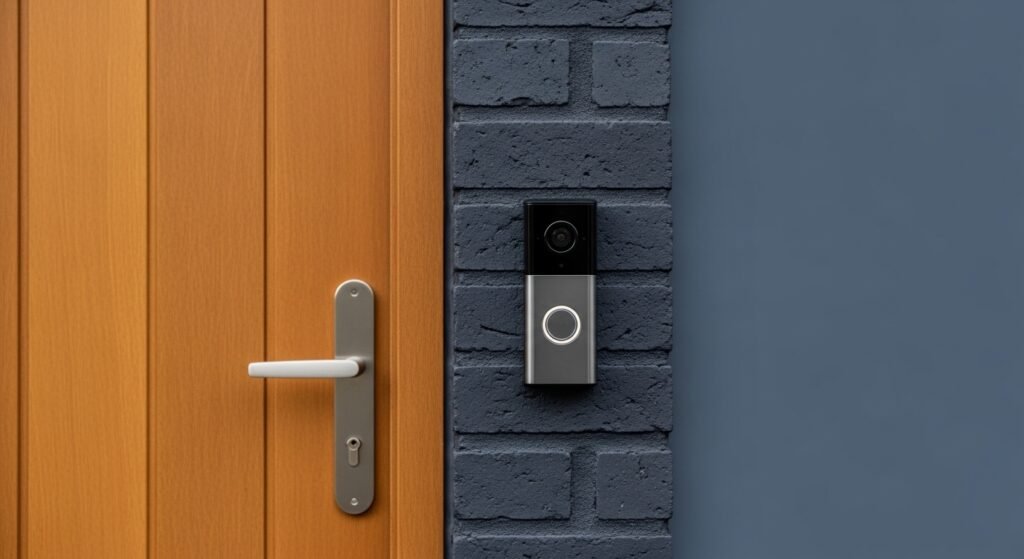
A video doorbell or intercom connected to your home Wi-Fi lets you see and speak to anyone at your garage entrance from your phone, smart display, or TV. Brands like Ring, Eufy, or Doorbird offer weatherproof options designed for outbuilding use.
This is especially useful for workshops where you might be wearing hearing protection and cannot hear someone knocking, or for monitoring delivery drivers dropping off parcels while you are away.
12. Vehicle Detection and Parking Assist Automation
Perfect parking, every single time
Use an ultrasonic distance sensor (like the HC-SR04) or a laser rangefinder mounted on the back wall of your garage to detect when a car is entering. Connect it to a traffic-light-style LED indicator or a buzzer that signals when to stop. When the green light turns red, you know your car is in exactly the right position.
For multi-car garages, this system can be replicated per bay. Advanced setups integrate with a camera system to track vehicles, trigger lighting changes, and log entry/exit times.
13. Automated Roller Blind or Sun Shade
Control light and temperature passively
Large garage windows are great for natural light but can turn the space into a greenhouse in summer. An automated roller blind system using a small DC motor, a microcontroller, and a timer or light sensor can deploy shade automatically when sunlight intensity exceeds a threshold and retract it in the evening.
This is an elegant and relatively simple build that significantly improves working comfort and helps regulate the internal temperature of your shed throughout the day.
14. Voice-Controlled Audio and Intercom System
Turn your workshop into an entertainment zone
A garage or shed workshop can be a lonely space. Set up a voice-controlled audio system using a Raspberry Pi with Mopidy or a spare Amazon Echo Dot. Stream music, podcasts, and radio hands-free while your hands are occupied with tools.
For multi-building setups, create an intercom channel between house and shed so family members can reach you without having to walk outside. This also adds a safety dimension you can call for assistance in the event of a workshop accident.
15. Automated Energy Dashboard and Monitoring Panel
See exactly where your energy goes
Install a whole-shed energy monitoring system using a device like the Emporia Vue, Shelly EM, or a CT clamp sensor connected to a Raspberry Pi. Track real-time and historical power consumption for every circuit in your garage.
Display this data on a custom dashboard built in Home Assistant, Grafana, or even a simple wall-mounted tablet. Spot inefficiencies, identify devices left on unnecessarily, and work toward reducing your garage’s carbon footprint.
This kind of data visibility is transformative — most DIY builders who install energy monitoring are surprised by how much standby power is wasted on devices they assumed were idle.
Getting Started: Recommended Platforms and Tools
If you are new to garage automation, here are the best platforms to start with:
- Home Assistant: Open-source, locally hosted, works with virtually every smart device. Best for privacy-conscious builders and power users.
- Amazon Alexa Ecosystem: Easy to set up, excellent voice control, wide device compatibility. Best for beginners.
- Google Home: Intuitive interface, strong integration with Android, excellent for routines and automation triggers.
- Apple HomeKit: Best for iOS users who want tight, secure integration with iPhone and iPad.
For hardware, begin with a single smart plug or motion sensor and expand gradually. You do not need to automate everything at once the best smart garages are built iteratively over months, not in a single weekend.
Safety Considerations for DIY Garage Automation
When automating a garage or shed, always keep the following in mind:
- Electrical safety: If wiring new circuits or hardwiring smart switches, consult a qualified electrician. Do not attempt to modify main consumer units without professional guidance.
- Fire risk: Avoid running smart plugs at their maximum rated load. Use the appropriate fused plugs for each device.
- Carbon monoxide: Always install a CO detector if petrol-powered vehicles or tools are used in the space.
- Water ingress: Use IP-rated (weatherproof) sensors and cameras for any outdoor or damp locations.
- Data security: Use strong, unique passwords on all connected devices and keep firmware up to date regularly.
Conclusion
Automating your garage or shed is one of the most rewarding DIY projects a homeowner can undertake. Whether you begin with a simple smart plug and motion light or go all-in with a full Home Assistant control hub, every upgrade adds genuine value to your daily life.
The 15 ideas explored in this guide cover the full spectrum from beginner-friendly to advanced builds giving you a clear roadmap no matter where you are starting from.
The technology is more accessible and affordable than ever, and the community of DIY smart home enthusiasts worldwide means help and inspiration are always just a forum post away.
Start small, think big, and enjoy the process of building a garage or shed that truly works for you.

Welcome to Homeblesh! I'm a professional content writer with over five years of experience creating well-researched, practical, and reader-focused content for clients on Upwork and Fiverr. Now, I've dedicated my expertise to building Homeblesh, where I share helpful guides, honest recommendations, and actionable tips based on careful research and industry knowledge. My goal is to provide accurate, trustworthy information to help you make informed decisions while delivering clear, useful, and easy-to-understand content.
- Muhammad Imran

- Muhammad Imran

- Muhammad Imran

- Muhammad Imran


