

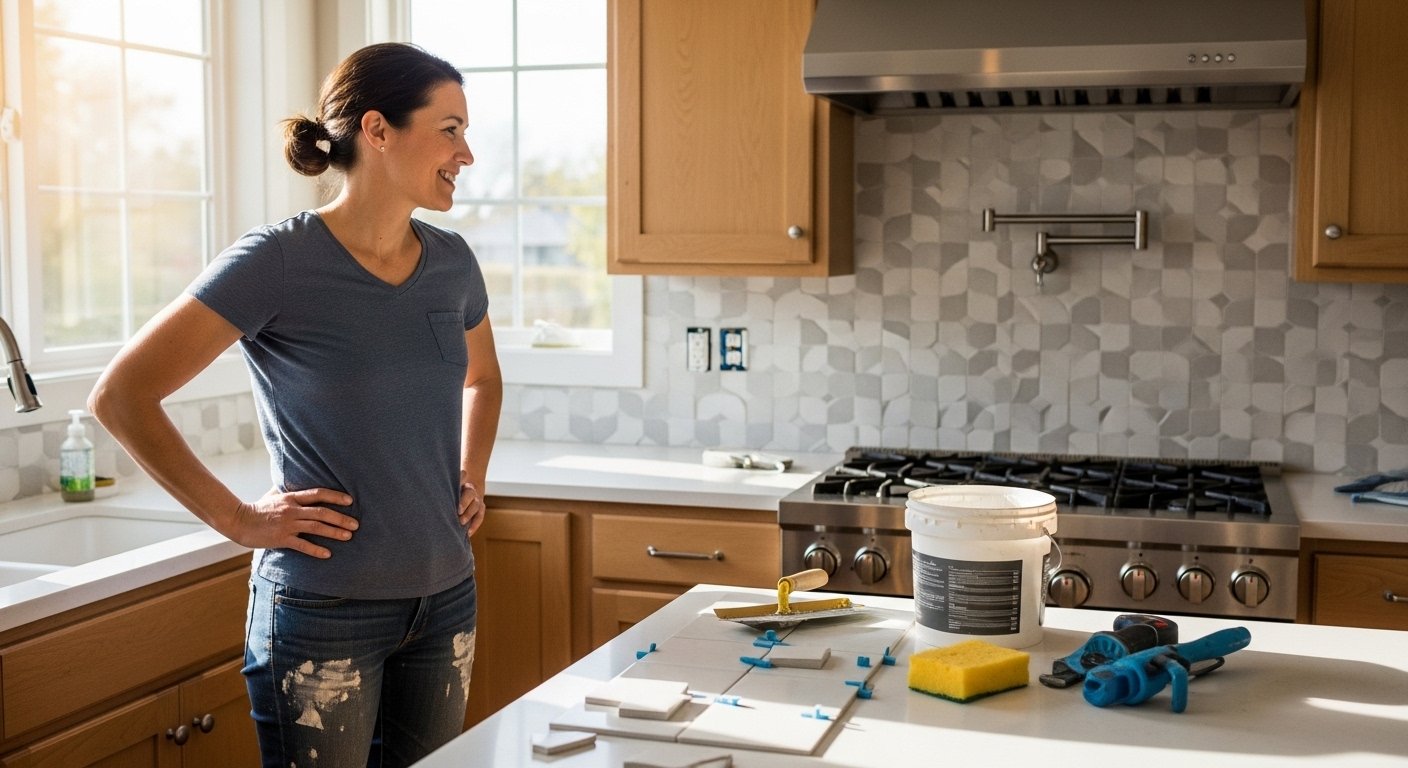
It started with a coffee stain splattered across the chipped, faded tile backsplash behind the stove, a reminder of too many rushed mornings and not enough attention to detail.
One glance at the backsplash area, and I thought, I can do better. If you’ve found yourself staring at outdated ceramic tile or peeling drywall near the countertop.
If you’re wondering how to revamp your kitchen without breaking the bank, you’re in the right place. A DIY kitchen backsplash isn’t just a home upgrade. It’s a creative, hands-on way to add personality and value.
If you’re grabbing pre-mixed tile adhesive from Home Depot, cutting backsplash tile with a trusty tile cutter, or wiping excess grout with a sponge, this guide will walk you through each step of the backsplash installation process.
From choosing your tiles to smoothing the edges beneath your cabinets and above the floor, let’s dive into how to install a tile backsplash like a pro with confidence.
Table of contents
What is a Kitchen Backsplash?
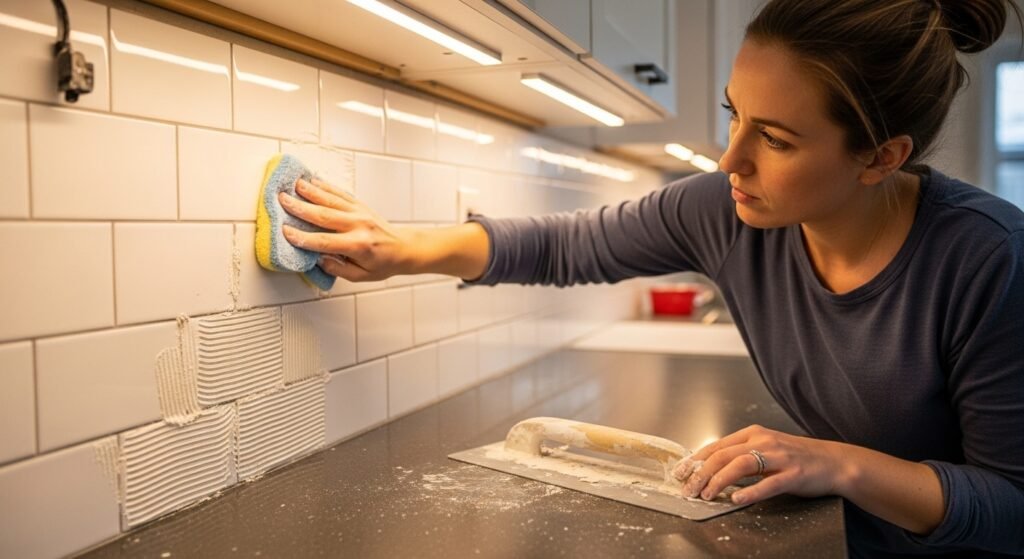
A kitchen backsplash is the stylish, protective wall space usually located behind your stove or sink, shielding your kitchen from splashes, spills, and grease.
A DIY backsplash is a great project for creating a backsplash. With some extra tile and a tile saw, you can create stunning tile backsplashes. When tiling a backsplash, cutting tiles at a 45-degree angle creates a professional tile edge.
Installing a backsplash with new tile is a game-changer. So, unleash your creativity with these DIY backsplash ideas and give your kitchen a dazzling new look! A beautiful backsplash in a kitchen truly completes the space.
Planning Your Kitchen Backsplash DIY Adventure

Before you dive into tile installation and mix up your thinset, it’s essential to set the stage for a smooth and successful backsplash project.
Thoughtful planning saves time, money, and stress, and it also ensures your final result looks professional and polished.
If you’re flipping through magazines or scrolling through endless DIY kitchen backsplash ideas on Pinterest, this stage helps you turn inspiration into action. Let’s break it down.
1. Setting Your Vision
The first step in updating your kitchen starts with choosing the right style for your space. Do you want the clean, classic look of white subway tile?
Or maybe a more modern feel with mosaic glass or textured natural stone? Each material brings its character to your kitchen backsplashes, and now’s the time to explore.
Creating a mood board can help visualize your dream design. Grab magazine clippings, color swatches, and tile samples, or pin your favorites online.
Pay attention to how the tile interacts with your countertop, cabinets, and flooring. This is your chance to personalize your kitchen boldly and creatively.
2. Measuring & Material Calculation
Once your vision is clear, it’s time to measure the backsplash area. Use a measuring tape to measure the height and length of each section, then multiply these measurements to determine the total square feet of tile needed. Don’t forget to account for curves, slopes, and small corners.
Pro tip: always add at least 10% extra for tile pieces you’ll need to cut or might break while installing backsplash tiles. If you’re planning to use a tile that needs trimming or use a wet tile saw to fit tricky spots.
Those extras will be lifesavers. Lay a drop cloth before work begins, and keep a damp sponge nearby. You’re almost ready to learn how to install your kitchen backsplash like a pro.
Tools & Materials Checklist
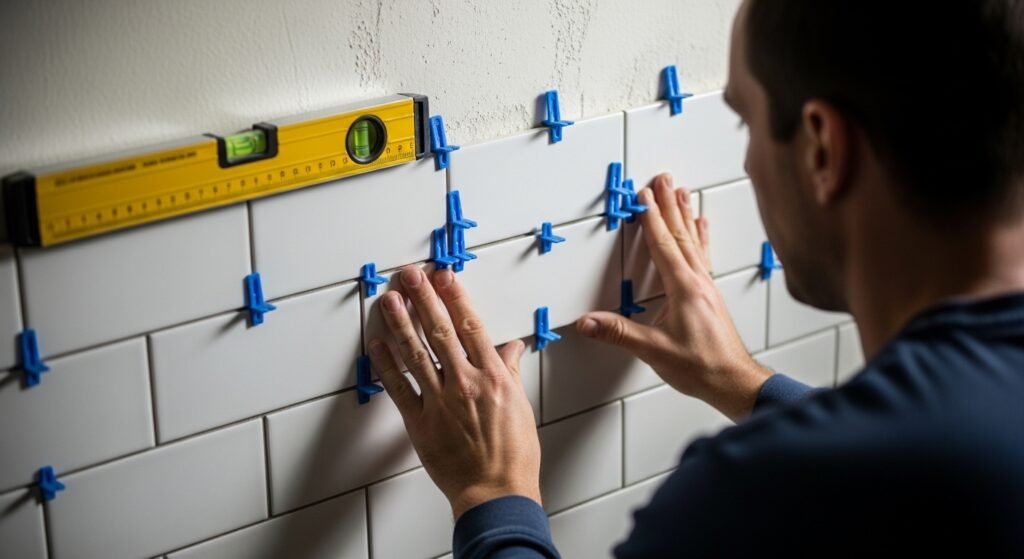
Ready to transform your kitchen with a stunning new backsplash? Embarking on this project is an exciting way to update your kitchen, and having the right gear is your first step toward success. If you want to tile like a pro, this checklist will ensure your installation is smooth, stylish, and spectacularly done.
Essential Tools for Your Tiling Triumph
Your toolkit is your best friend for perfect tile placement. Gather these items before you lay your tile:
- Measuring & Marking: A tape measure and a straight edge or a tile level are crucial for ensuring every tile is perfectly aligned. Don’t forget to remove each outlet cover.
- Cutting & Shaping: You’ll need a way to cut your tile, whether it’s a simple snap cutter for a ceramic tile backsplash or a wet saw when cutting natural stone to prevent chipping. A utility knife to cut around obstacles is also a must.
- Application & Finishing: Use a notched trowel to apply adhesive and a grout float at a 45-degree angle. Have a bucket and a sponge to wipe away messes; remember to clean as you go!
Must-Have Materials to Make it Magical
With your tools ready, it’s time for the fun part: the materials that will bring your design ideas to life!
- Tiles: Whether you love classic looks, such as subway tile, or prefer something unique, choose a style that’s easy to install.
- Adhesives & Grout: Select the right adhesive for the tile behind your stove. The type of grout you use will determine the final look. After it sets, wipe away excess grout for a polished finish.
- The Extras: Spacers are crucial for maintaining uniform lines. When you work in small sections, you’ll find it easier to create a professional-looking tile across the entire backsplash. Sealer is vital for materials like natural stone, as it prevents stains.
Step 1 – Preparation: Laying the Foundation
Ready to transform your kitchen with a stunning new backsplash? Before you even think about tile, the secret to a flawless finish lies in meticulous preparation.
Laying this groundwork is the most critical step for updating your kitchen. It ensures your ceramic tile backsplash not only looks professional but also lasts for years. Let’s get these walls ready for their close-up!
1. Safety First
Before you do anything else, march over to your breaker box and turn off all power to the kitchen outlets. You’ll be removing an outlet cover or two, and a shocking surprise is not on our list of design ideas! Gear up with safety goggles, gloves, and a dust mask, these are your essential superhero costume essentials for the project.
2. Stripping & Cleaning
Time to say goodbye to the old! Whether it’s dated tile or peeling paint, the entire backsplash area needs to be stripped bare. A utility knife can be handy in this situation. Once cleared, thoroughly clean the walls with a suitable degreaser and a sponge to wipe away years of kitchen grime, ensuring your new adhesive adheres perfectly.
3. Wall Repair & Priming
Now, channel your inner artist and patch any holes or imperfections, sanding them smooth with a straight edge for reference. Priming the wall is non-negotiable.
It seals the surface and provides the adhesive with a perfect canvas to grip, which is crucial when tiling. This simple step ensures that every single tile, such as subway tile, stays in place, guaranteeing your hard work pays off beautifully.
Step 2 – Applying the Adhesive
Now for the magic moment in updating your kitchen: laying the foundation for your gorgeous new backsplash! This is where your vision becomes a reality, one tile at a time. Getting the adhesive right is crucial to transforming your kitchen and ensuring your tiles stay put for years of admiration.
Selecting the Right Thin-Set Mortar
Deciding between mastic and thin-set can be tricky, but it’s actually quite simple. Mastic is a pre-mixed adhesive, great for a dry area ceramic tile backsplash. However, for most projects, especially those involving heavier tile.
Such as subway tile, or when tiling in moisture-prone areas, thin-set mortar is your champion. It’s a cement-based powder that you mix with water to create a much stronger, more durable bond. It’s essential for cutting natural stone to prevent chipping, as it provides superior support.
Mixing & Spreading
Your mixing consistency should be like smooth peanut butter, neither too runny nor too stiff. This ensures every tile has a solid grip. When you lay your tile, use a trowel and float at a 45-degree angle to create even ridges.
Remember to work in small sections; applying adhesive to the entire backsplash at once will cause it to dry out. Clean as you go using a damp sponge to wipe away any excess before it hardens. For perfect tile placement around obstacles, use a utility knife to cut mesh-backed tile sheets, ensuring a snug fit around each outlet cover. Keep that tile level for a professional finish!
Step 3 – Installing the Tiles
Here we go, it’s time to transform your kitchen! Step 3 is all about installing the tiles, the most rewarding part of updating your kitchen. This is where your vision for a beautiful new backsplash comes to life. Whether you’re using classic subway tile or intricate mosaics, careful tile placement is key.
1. Finding & Marking Your Reference Line
Your first move is to create a perfectly straight guide. Use a level and a straight edge to draw a reference line. This ensures that your first row of tiles, perhaps a chic design like a subway tile, starts perfectly level. Deciding where to lay your tile first, center or corner, anchors your entire design.
2. Tile Placement & Spacing
Now, let’s make your tile stick! Apply your adhesive and press each tile firmly, giving it a slight wiggle to ensure full contact. Use spacers to maintain consistent grout lines for that professional ceramic tile backsplash look. This careful tile placement guarantees a polished result.
3. Cutting Around Obstacles
You’ll inevitably need to cut your tile to fit around outlets. After removing the outlet cover, measure precisely. For mesh-backed tile, a utility knife is an effective tool for cutting the backing. When cutting natural stone to prevent chipping, a wet saw is your best friend, ensuring every tile behind an obstacle fits flawlessly.
4. Working Methodically
The secret to a flawless finish is to work in small sections. This helps maintain a perfectly level tile and prevents unevenness. Remember to clean as you go with a sponge to wipe away excess adhesive. This methodical approach is crucial whether you’re a seasoned pro or just learning to tile like one.
Step 4 – Grouting: Bringing It All Together
You’re in the home stretch of your kitchen backsplash DIY project! Grouting is the final flourish, the step that ties everything together, transforming individual tiles into a seamless, beautiful surface. It’s like the final brushstroke on a masterpiece, so let’s get it right and make your new backsplash truly shine.
1. Curing Time Check
Patience is a virtue, especially in these times. Before mixing grout, you must wait for the tile adhesive to cure completely. Rushing this step can lead to disaster. Give it the full recommended time, usually around 24 hours, to ensure your tiles are securely bonded and ready for the final phase.
2. Mixing & Applying Grout
Your goal is a grout consistency similar to smooth peanut butter. Once mixed, grab your grout float. The key is the float-diagonal technique: holding the float at a 45-degree angle, sweep it diagonally across the tiles. This method expertly packs the grout into every joint of your entire backsplash, ensuring a durable, water-resistant finish.
3. Cleaning & Haze Removal
After applying the grout, it’s time to clean as you go. Use a damp sponge to gently wipe away excess grout from the tile surface, being careful not to dislodge it from the joints. A light haze will form later; buff it away with a dry cloth to reveal your stunning, professionally finished backsplash.
Step 5 – Finishing Touches for a Polished Look
You’re on the home stretch! Step 5 is where the magic of your kitchen backsplash DIY project truly comes together. These finishing touches are the key to achieving a flawless, professional-grade look, transforming your hard work into a stunning and durable masterpiece.
1. Sealing the Grout
Once your grout has fully cured (check the manufacturer’s instructions, which typically specify 48-72 hours), it’s time to seal it. Applying a quality grout sealer is crucial; it acts as a shield, providing essential stain resistance and making future cleanup a breeze. This simple step ensures your beautiful backsplash remains pristine for years to come.
2. Caulking Edges & Seams
Where your new tile meets the countertop or cabinets, you need flexibility, which is where caulk comes in. Unlike rigid grout, seam caulk allows for slight movement. Apply a thin, steady bead along these edges, and then use a caulk tool or a wet finger to create a smooth, seamless transition.
3. Final Cleanup & Power-Up
The final reveal is moments away! Carefully remove any remaining spacers and touch up any paint on the surrounding walls. Now, you can safely restore power to your outlets and reinstall the covers. Take a moment to admire your incredible work. You did it.
FAQs
How long does a kitchen backsplash DIY project take?
Answer: In most kitchens, expect 2–3 weekends (prep, install, grout/seal).
Can I install tile over painted walls?
Answer: Only if the paint is fully adhered، otherwise, strip and prime.
What’s the best way to cut mosaic glass tiles?
Answer: A score‑and‑snap cutter designed for glass or a diamond‑blade wet saw.
How do I choose grout color?
Answer: Contrast for definition, or match for seamless look, but test samples!
Do I need to seal the tile itself?
Answer: Porous stones like marble need sealing; ceramic/glass do not.
Conclusion: From Blank Canvas to Backsplash Masterpiece
From a blank canvas to a backsplash masterpiece, you’ve conquered the kitchen backsplash DIY project! Stand back and soak in that immense satisfaction. You haven’t just updated a wall; you’ve infused your space with personality and instantly boosted your home’s value. This stunning focal point is a testament to your creativity and hard work.
Feeling proud? You should be! Inspire the DIY community by sharing photos of your gorgeous new kitchen with the hashtag #BacksplashMasterpiece. To help you begin your transformation, visit our website to download our downloadable tile layout planner and complete materials checklist.

Welcome to Homeblesh! I'm a professional content writer with over five years of experience creating well-researched, practical, and reader-focused content for clients on Upwork and Fiverr. Now, I've dedicated my expertise to building Homeblesh, where I share helpful guides, honest recommendations, and actionable tips based on careful research and industry knowledge. My goal is to provide accurate, trustworthy information to help you make informed decisions while delivering clear, useful, and easy-to-understand content.
- Muhammad Imran

- Muhammad Imran

- Muhammad Imran

- Muhammad Imran


2 Comments
Pingback: 10 Best Sustainable Bathroom Upgrades That Save Water - Home Blesh
Pingback: Smart Home Security: Installing DIY Camera Systems - Home Blesh