

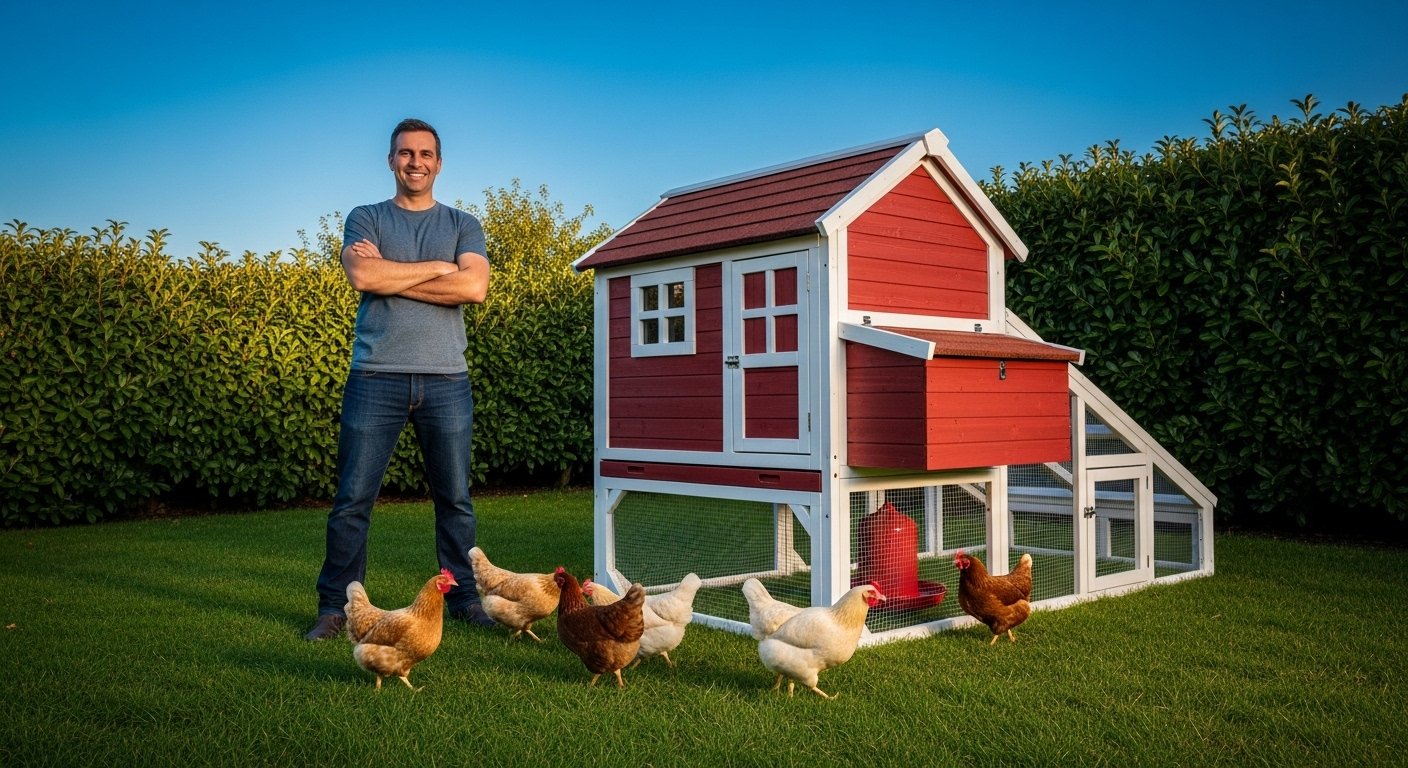
Store-bought coops often cost anywhere from $500 to over $2,000, and many of them start falling apart after just a couple of seasons. That’s frustrating when all you want is a safe, durable space for your chickens.
The good news? A well-built diy chicken coop can cost far less and last for years with the right approach.
If you’re planning to build a chicken coop in your backyard, it doesn’t have to be complicated. With basic materials and a smart design, you can create a sturdy coop that protects every hen in your flock while keeping maintenance simple.
From adding secure nesting boxes to installing proper roosting bars for a comfortable roost, every detail matters.
This guide will walk you through building a chicken coop with a solid frame, reliable roof, and practical layout. So your chickens stay safe, dry, and productive year-round.
Table of contents
What You’re Actually Building?
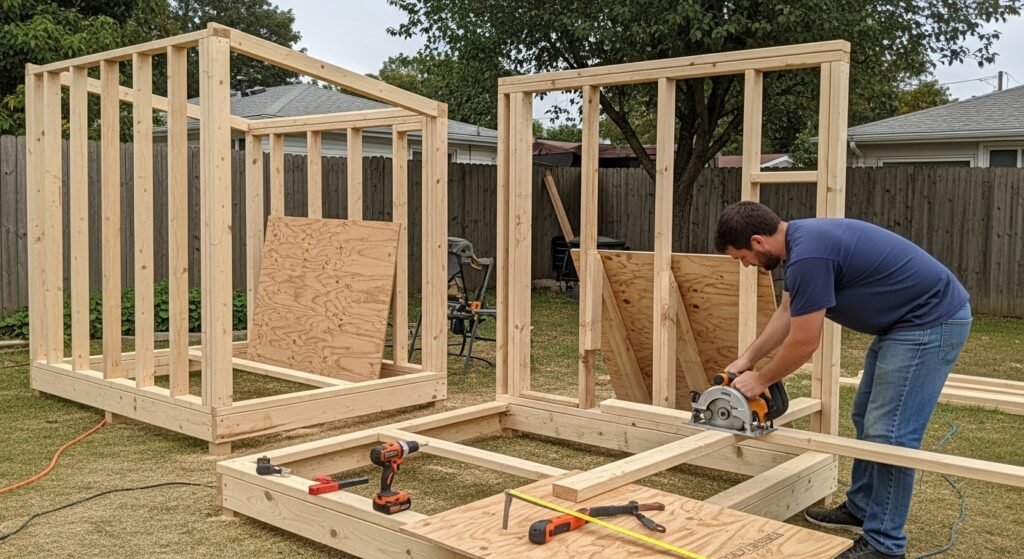
What you’re actually building isn’t just a shed, it’s a smart, secure home designed specifically for backyard chickens. A well-thought-out chicken coop plan combines protection, comfort, and efficiency in one compact space. Whether you’re raising chickens for eggs or as a hobby, the goal is to build one structure that works year-round.
- A Raised, Predator-Proof Coop: Built from a solid coop plan, elevated 8–12 inches to prevent moisture and pests ideal for housing 6 chickens or even up to 12 chickens.
- Framed Walls + Foundation: Strong 2×4 structure forming the base of your backyard chicken coop, ensuring durability and stability.
- Nesting Boxes: Cozy, dark spaces for egg-laying are essential in all diy chicken coop plans.
- Roosting Bars: Elevated sleeping areas that keep birds safe and comfortable at night.
- Attached Coop and Run: A secure chicken run for daily movement and safety.
- Roof + Access: Weatherproof roof and easy-access coop door for cleaning and care.
What can I do Before You Cut a Single Board?
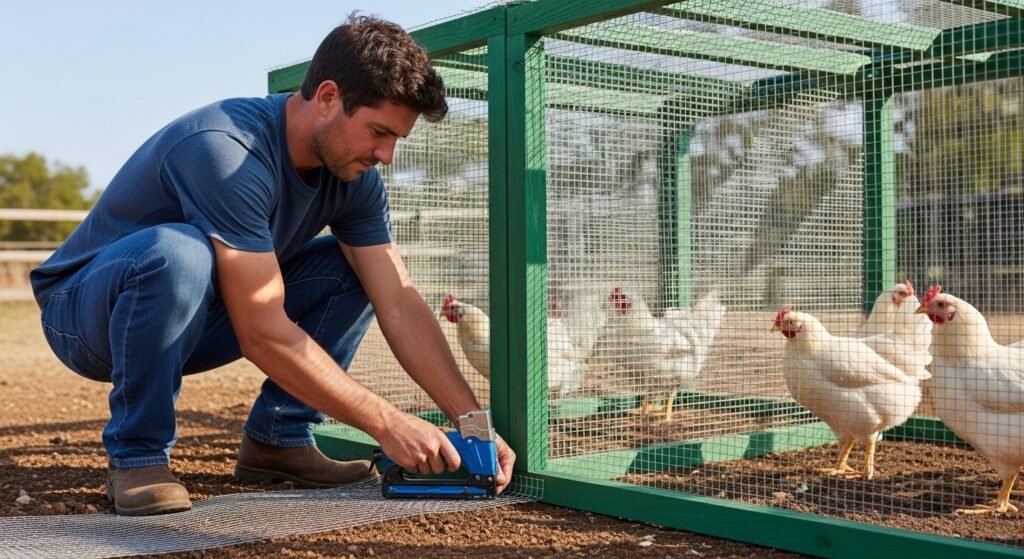
Before building a new chicken coop, smart chicken owners know that five minutes of planning saves five hours of fixing mistakes. Rushing straight to your material list and plywood without doing your homework first is how you end up with a backyard coop.
That’s the wrong size, in the wrong spot, or illegal on your own property. Whether you’re housing 8 chickens or scaling up for 10 chickens, here’s exactly what to sort out first:
- Check Local Rules: Verify HOA and zoning regulations before spending a single dollar on materials to build your coop
- Size It Right: Plan for 4 sq. ft. per bird inside and 8–10 sq. ft. in the enclosed run for a spacious, stress-free flock
- Pick the Right Spot: Choose high, well-drained ground with morning sun and easy access for daily feeding
- Design for Function: Sketch your layout, including the access door, nesting boxes, and ventilation, before you learn how to build
- Build Your Material List: Detail every cut of plywood and lumber needed, including creative options like pallet wood for framing, to eliminate waste when building the chicken coop
Materials and Tools — No Fluff
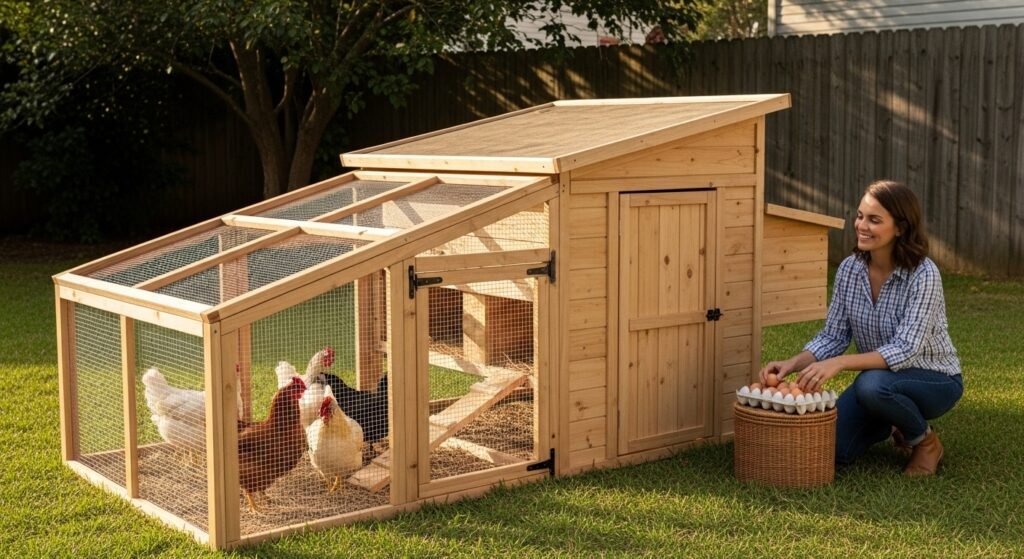
Before you build a hen house, having the right materials and tools makes the process smoother and more cost-effective. A well-planned setup ensures your feathered friends stay safe, comfortable, and protected year-round. Whether you’re building a small chicken coop or a barn-style chicken coop, focus on durability, safety, and easy cleaning from the start.
What You Need to Buy
- Pressure-treated 2x4s for strong framing and floor support
- 7/16″ plywood sheathing for walls and flooring
- Hardware cloth for a truly predator-proof structure
- Felt paper, drip edge, and shingles for a weather-resistant roof
- Exterior screws, framing nails, and gate latches for secure assembly
What You Need to Own or Borrow
- Circular saw, miter saw, and jigsaw for accurate cuts
- Framing nailer and impact driver to speed up your build
- Pocket hole jig, tape measure, and level for precision
These essentials support key chicken coop features like proper ventilation, a secure attached run, and even a mobile chicken setup if needed.
The Build — Step by Step (Simple but Technical)
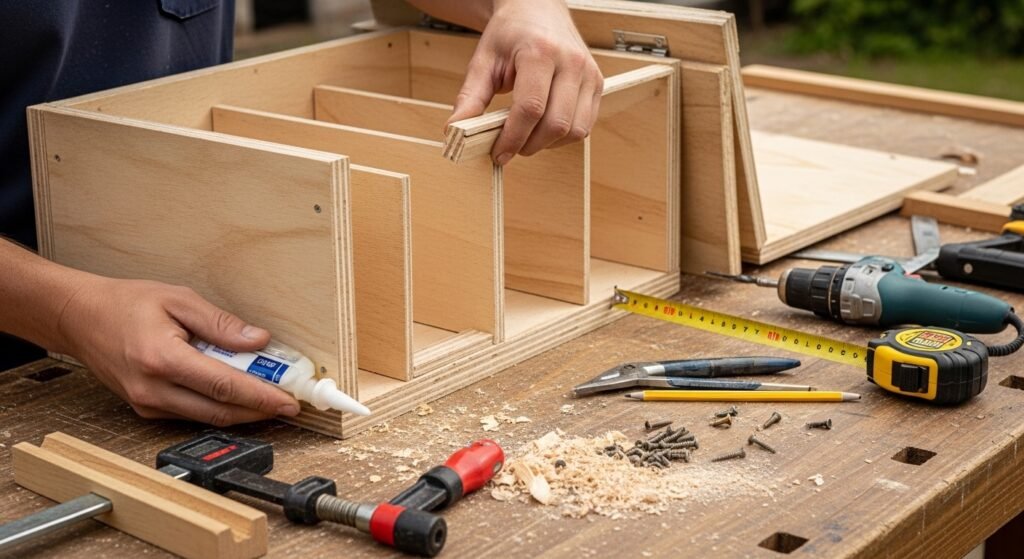
Building a diy chicken coop doesn’t require advanced carpentry, but it does require precision. Follow these step-by-step instructions carefully, and you’ll end up with a solid henhouse that protects your birds, improves egg production, and lasts for years far better than buying a pre-built setup.
1. Lay the Foundation
Start with pressure-treated 2×4 joists and stringers. Space joists evenly and secure them with exterior screws or framing nails. Top the frame with 7/16″ plywood to create a rigid floor. Raise the entire base a few inches off the ground using blocks or skids this is critical for predator-proofing and moisture control. A raised base also makes transport easy if you plan to build a mobile chicken design later. This is the backbone of your diy coop, so keep it level.
2. Frame and Stand the Walls
Build each wall flat on the ground using your cut list. Frame openings now not later for the entry door, large access door, chicken door, two windows, and exterior nesting box. Once assembled, lift and secure each wall to the base. Check for square before fastening. If you live in the city, this stage is also where you can adjust height or layout to meet local ordinance rules.
3. Install Roosting Bars
Add blocking between studs to support your roosting area. Install roosting bars 18–24 inches above the floor. This spacing works for both a small flock and a large chicken breed. Keep bars smooth and level chickens will sleep here every night, and poor placement leads to stress and messy dropping buildup below.
4. Sheath the Walls and Cut Openings
Attach plywood sheathing, ensuring all seams land directly on studs for strength. Once covered, use a jigsaw to cut out door and window openings cleanly. This method keeps your structure square and tight. Proper sheathing also improves insulation and helps keep predators out when paired with hardware cloth.
5. Build the Nesting Box
Construct the exterior nesting box using 2×2 framing and plywood. One box per three to four hens is ideal for consistent fresh eggs. Add dividers and a sloped or hinged roof lid for easy collection. Mount it slightly lower than the roost to encourage use. This is one of the most important chicken coop features for productivity.
6. Hang the Entry Door
Build a sturdy door using a 2×4 frame and plywood sheathing. Add a large access door for cleaning. This makes maintenance fast and efficient. For a farmhouse look, cut an arched top with a jigsaw. Install with heavy-duty hinges and a one-handed gate latch.
7. Frame and Shingle the Roof
Assemble roof panels on the ground. Sheath them, install drip edge, felt paper, and shingles from bottom to top. Lift panels onto the coop and secure from inside. Finish with a ridge cap. A solid roof ensures proper runoff and protects your birds in all seasons. This step completes the core structure your coop provides.
8. Frame the Run
Attach an attached enclosed run directly to the coop using exterior screws. Build it large enough a large run improves bird health. Cover all sides, including the top, with hardware cloth for full predator-proofing. Add a walk-in door for easy access. This area gives your flock safe outdoor space without risk.
Predator-Proofing — The Step Most Guides Skip
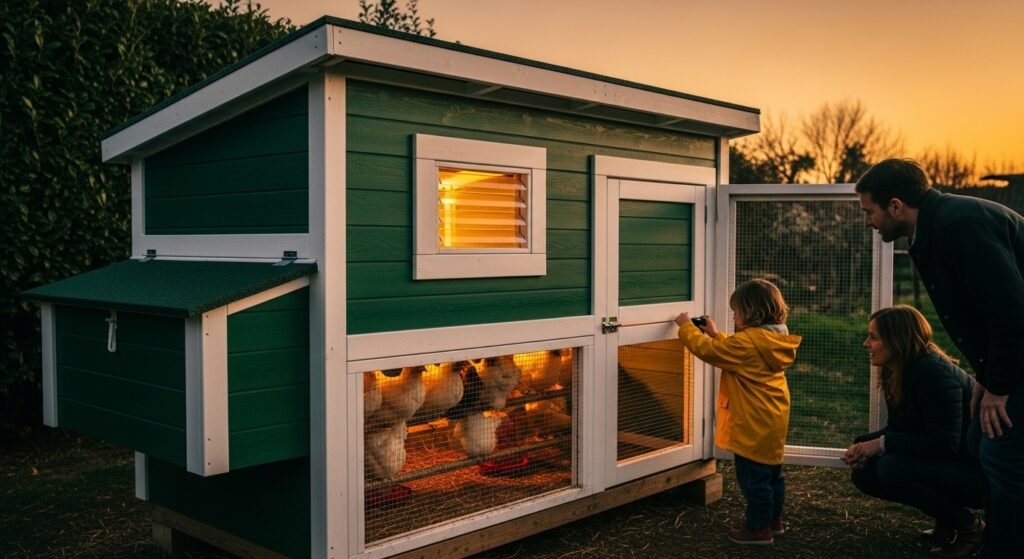
Predator-proofing is the step most people underestimate, yet it determines whether your coop succeeds or fails. Start by burying hardware cloth at least 12 inches into the ground around the run perimeter to stop digging predators like dogs or foxes. Extend it outward in an apron if needed for extra protection.
Every door should use two-step latches. Raccoons are surprisingly clever and can open simple hooks with ease. Finally, inspect the entire structure and seal any gap larger than half an inch. Small openings invite big problems, and even tiny weaknesses can compromise your flock’s safety overnight.
Finishing and Painting
Finishing and painting your coop is more than just appearance, it’s about long-term durability and safety. Start by filling all nail holes and gaps with exterior wood filler to prevent moisture from seeping in.
Choose a non-toxic exterior paint, since chickens naturally peck at surfaces and can ingest harmful chemicals if the wrong product is used.
Apply even coats to protect the wood from weather damage. Finally, seal the floor and base at least once a year. This simple step prevents rot, extends the life of your coop, and keeps the structure strong and sanitary.
What This Actually Costs
Building your own coop is where the real savings show up. A solid 4×6 setup with a 6-foot run typically costs between $300 and $800 in materials, depending on local prices and whether you reuse supplies. That same size and quality in a store-bought model can easily exceed $1,200, often with lower-grade materials.
When you factor in durability, customization, and long-term use, the value of going DIY becomes clear. You’re not just saving money upfront you’re investing in a stronger, longer-lasting structure that fits your needs without paying a premium for convenience.
Closing Line
Building a coop isn’t about complexity, it’s about following the right sequence and paying attention to the details you need to build it correctly. With a solid blueprint, proper fasteners, and smart material choices (even scrap wood), you can create the best chicken coop for your needs.
If it is your first coop or one of many chicken coop ideas you’ve explored, success comes from consistency and care. There’s a lot of diy freedom in this project, but don’t skip essentials like predator-proofing. Stick to the basics, and you’ll end up building a coop that’s strong, safe, and built to last.

Welcome to Homeblesh! I'm a professional content writer with over five years of experience creating well-researched, practical, and reader-focused content for clients on Upwork and Fiverr. Now, I've dedicated my expertise to building Homeblesh, where I share helpful guides, honest recommendations, and actionable tips based on careful research and industry knowledge. My goal is to provide accurate, trustworthy information to help you make informed decisions while delivering clear, useful, and easy-to-understand content.
- Muhammad Imran

- Muhammad Imran

- Muhammad Imran

- Muhammad Imran


2 Comments
Pingback: How to Build a DIY Compost Bin at Home: Step-by-Step Guide - Home Blesh
Pingback: Easy Rainwater Harvesting Ideas for Home Gardens - Home Blesh