
A toilet that keeps running after a flush often points to a simple fault. In many homes, that fault is a worn flapper, not a failed fill valve. Telling the difference can save time, water, and an unnecessary part replacement.
This article explains how the main cistern parts work together, then shows the clues that point to the flapper or to the fill valve. You will get a safe diagnostic sequence, guidance on matching a replacement flapper, and clear signs that it is time to call a plumber.
Before you buy anything, a short look inside the cistern can narrow the fault to one part. That check costs nothing, needs no tools for the first steps, and helps renters and beginners describe the problem clearly if they need help.
What a Running Toilet Actually Means
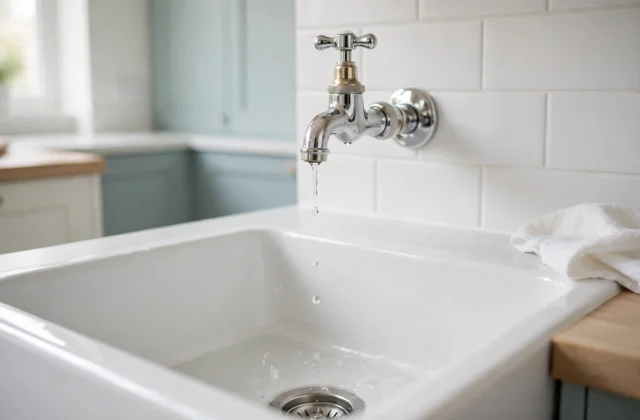
A running toilet keeps refilling, hissing, or trickling long after the flush should have finished. The cistern may refill in short bursts, or water may keep moving into the bowl without a flush. That constant movement is the key symptom, not just the sound.
The cause is usually a small failure in the seal or the shut off system. Water is either leaking into the bowl, or the cistern is overfilling into the overflow tube.
How the Main Parts Work Together
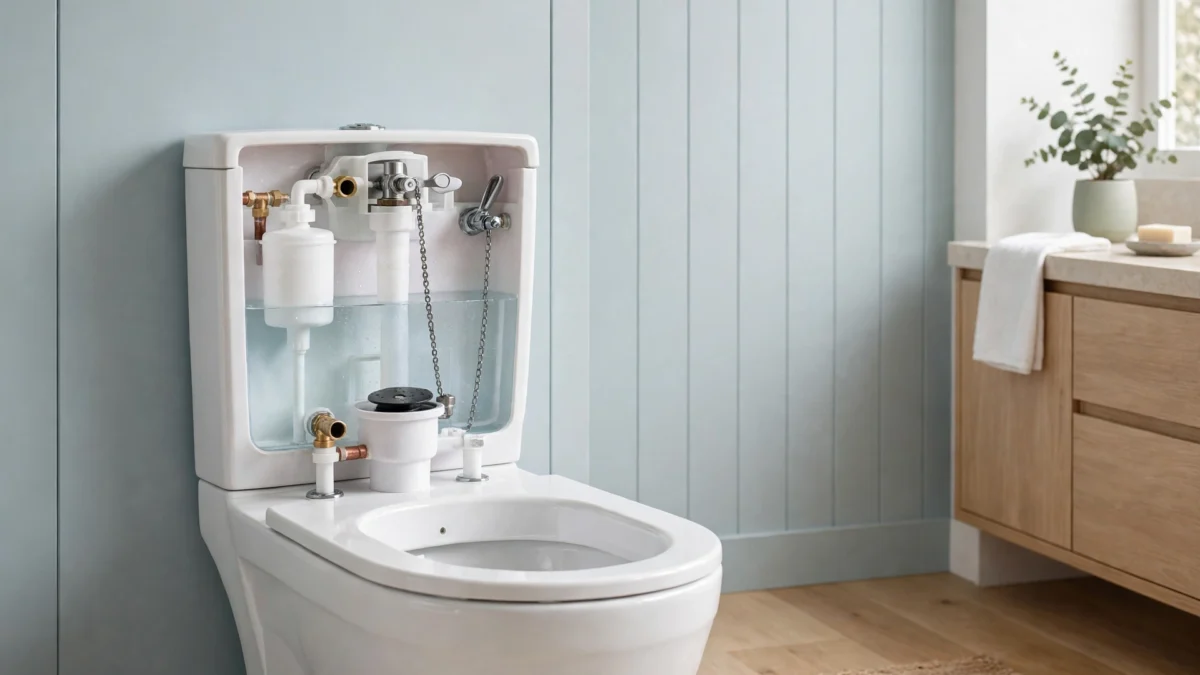
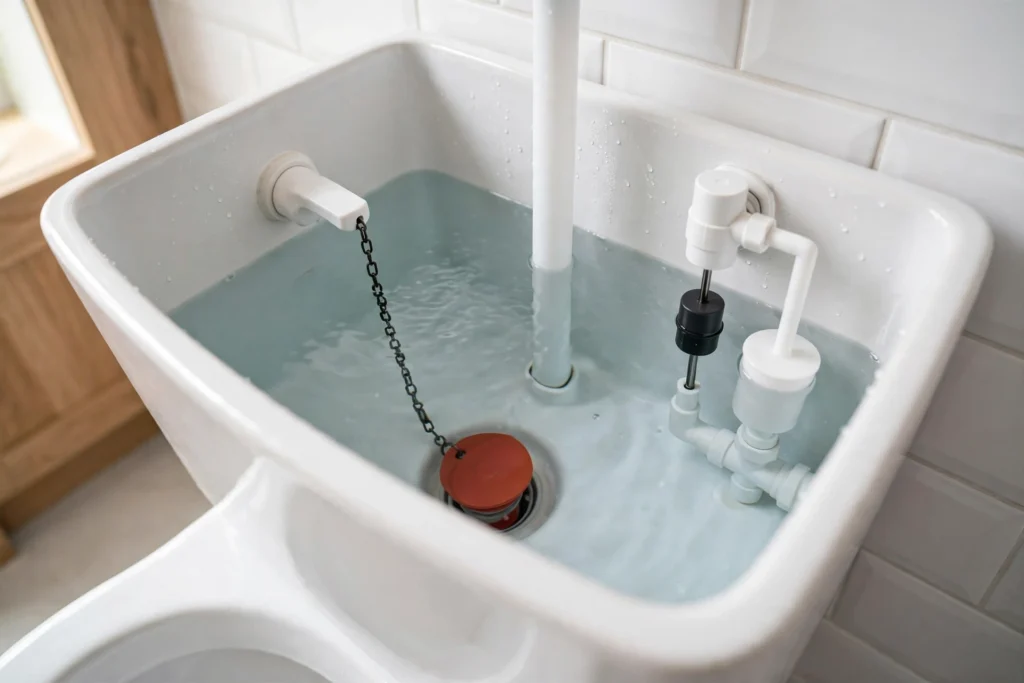
The cistern holds water ready for the next flush. When you press the handle or button, the flapper lifts and lets that water rush into the bowl. The flapper then drops back down and seals the outlet, so the cistern can refill.
The fill valve controls that refill. As water rises, a float rises with it, and at the set level the float tells the valve to shut off. The overflow tube sends excess water into the bowl if the level rises too high. The chain links the handle to the flapper and needs a little slack: too tight, and the flapper cannot seal; too loose, and it may not lift enough.
Flapper Clues to Look For
A worn flapper often leaves a quiet, steady clue. Water trickles from the cistern into the bowl even when no one has flushed. You may see faint ripples in the bowl, or hear the cistern refill briefly every few minutes as the level drops and tops up again.
A dye or food colouring test can confirm a flapper leak. Add a few drops to the cistern water, wait without flushing, and check the bowl. Colour in the bowl points to water passing the flapper seal. Use a small amount, guard against staining, and keep colouring away from children and pets.
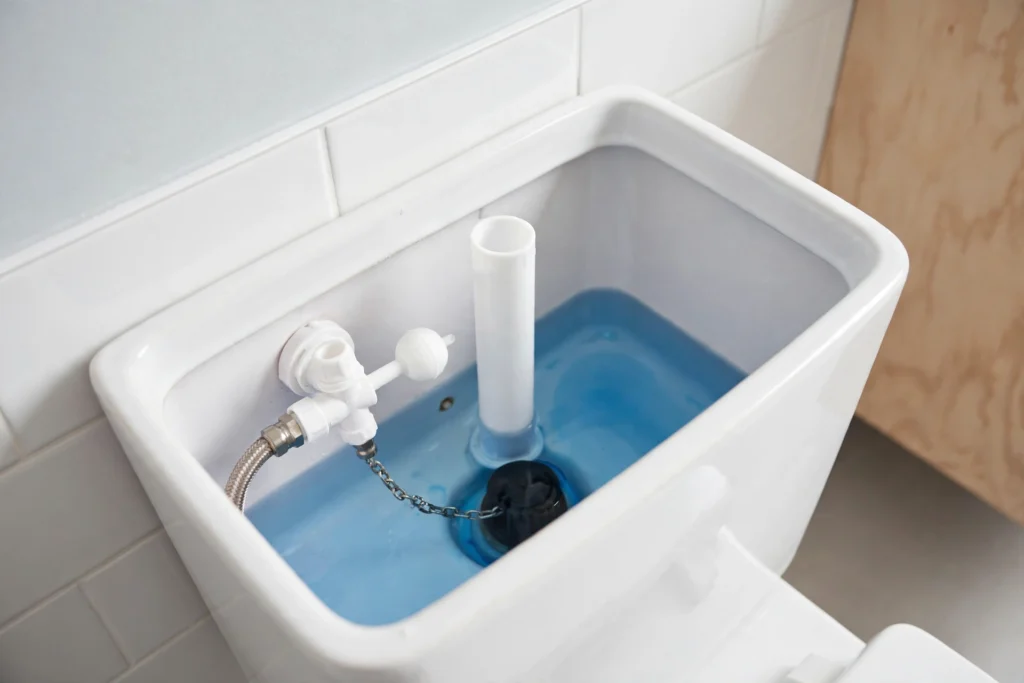
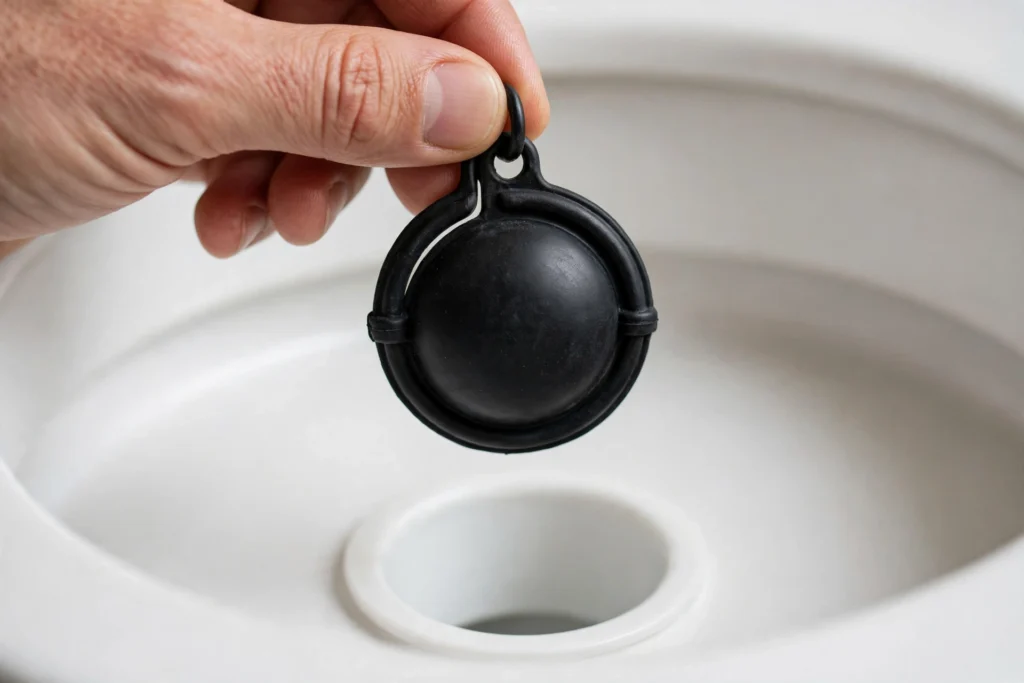
Other flapper clues are physical. A stiff, warped, blistered, or rough flapper may no longer sit flat. Mineral build up on the flapper or valve seat can also break the seal, as can a tangled, too short, or overlong chain.
Fill Valve Clues to Look For
A fill valve problem often looks different. The water level may sit too high and flow steadily into the overflow tube. If you lift the cistern lid and see water entering that open tube, the level needs attention before you blame the flapper.
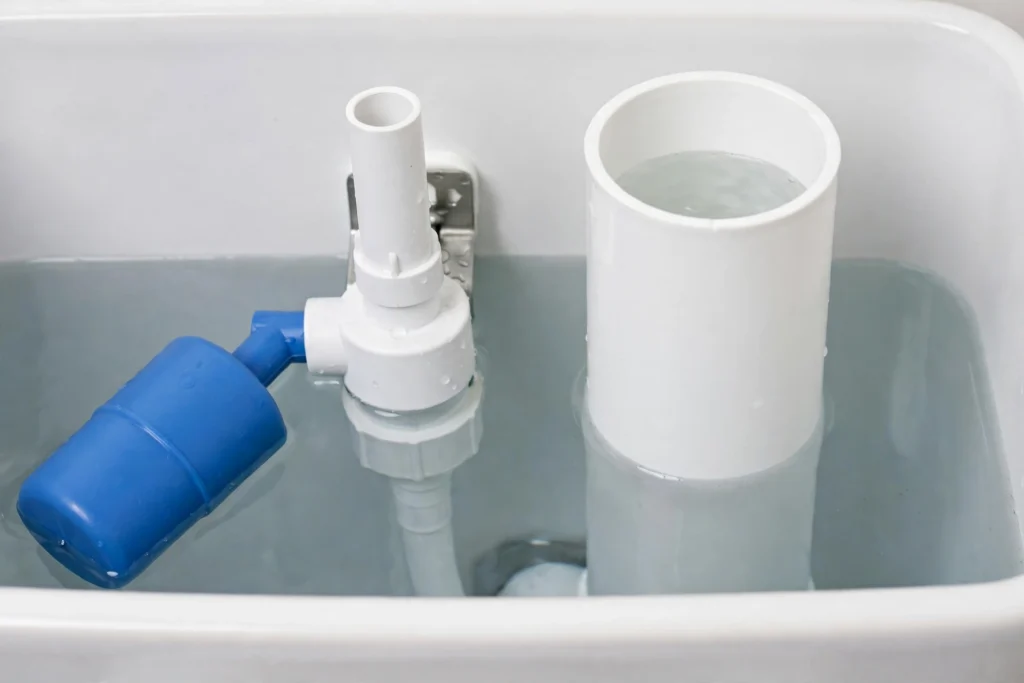
Sound can help too. A fill valve fault may cause hissing, a slow refill that never stops, or a valve that keeps running after the float has risen. The float may be stuck, bent, or set too high. The level should normally sit just below the top of the overflow tube.
A Safe Diagnostic Sequence
Turn off the toilet supply before internal checks or part changes. Follow manufacturer instructions, and check tenancy rules if you rent. Wash your hands after handling cistern parts.
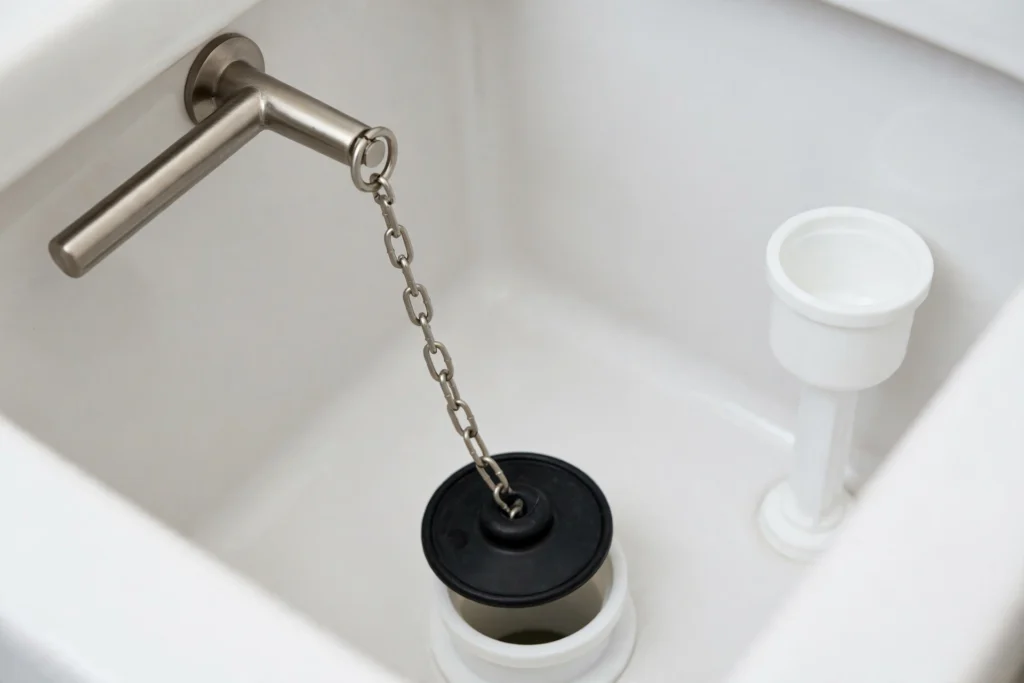
- Lift the lid carefully, note the water level, and check whether water is entering the overflow tube.
- Watch the bowl for a few minutes without flushing, and look for trickling, ripples, or short refill bursts.
- Try the dye or food colouring test if needed, using a small amount and waiting without flushing.
- Inspect the flapper for warping, stiffness, roughness, or mineral build up, and check the chain length and slack.
- Check the float for free movement, and note whether the fill valve shuts off cleanly at the set level.
- Adjust only the simple settings your model allows, such as chain slack or float height, then retest with one flush.
If the dye test is positive and the level is normal, the flapper is the likely fault. If the level is too high, start with the float and fill valve. Fix one thing at a time and retest.
How to Match a Replacement Flapper
Flappers are usually low cost, but cost varies by model, material, and retailer. The right match matters more than the lowest price, since a wrong size may leak from the first flush.
Note the flush outlet size, often shown in inches on packaging or in the manual. Check whether your toilet uses a standard rubber flapper, a canister seal, or a model specific seal. Take a photo of the old part if you need help at a shop, and compare shape, hinge points, and chain attachment. Fit it as instructed, restore a little chain slack, turn the supply back on, and check for a clean shut off.
When to Call a Plumber
Call a plumber if the cistern is cracked, the valve seat is damaged or pitted, or the flush mechanism is broken in a way you cannot identify. A damaged seat can make even a new flapper leak.
Also seek help if there is no working isolation valve, if the supply valve will not turn, or if water is leaking onto the floor. A persistent leak after the correct flapper is fitted and the level set correctly also needs professional diagnosis. A plumber can check the valve, float, seals, and seat together.
FAQ
Why does my toilet refill every few minutes?
That pattern often means water is leaking slowly past the flapper. As the level drops, the fill valve tops it up again, then the cycle repeats.
Does a high water level always mean a new fill valve?
No, not always. A float set too high or stuck in place can cause the same symptom. Check float movement and level first, following your model instructions.
Can I clean mineral build up from a flapper seal?
Light build up can sometimes be wiped away gently, but a stiff, warped, or rough flapper usually needs replacement.
Is it safe for renters to replace a flapper?
It can be simple and reversible, but tenancy rules vary. Check your agreement or ask your landlord or agent first. Turn off the supply, keep the old part until the new one works, and report any leak promptly.
Conclusion
A running toilet does not always mean a major repair. In many cases, the flapper is the quiet culprit, leaking just enough water to keep the fill valve cycling. A careful look at the water level, a bowl check, a dye test, and a flapper inspection can separate that fault from a fill valve problem.
That distinction matters for your budget and time. Replacing a flapper is typically small and straightforward when the part matches. Replacing a full valve without checking first can add work and cost, especially if the fault was only a worn seal or a tight chain.
Use the diagnostic sequence in order, change one thing at a time, and retest after each step. If the leak stops and the cistern fills and shuts off cleanly, you have found your answer. If the cistern is cracked, the seat is damaged, or the leak persists, call a plumber.
Sponsored · RecommendedSomething worth a look before you goHandpicked for HomeBlesh readers. Tap to explore it.Explore Now