

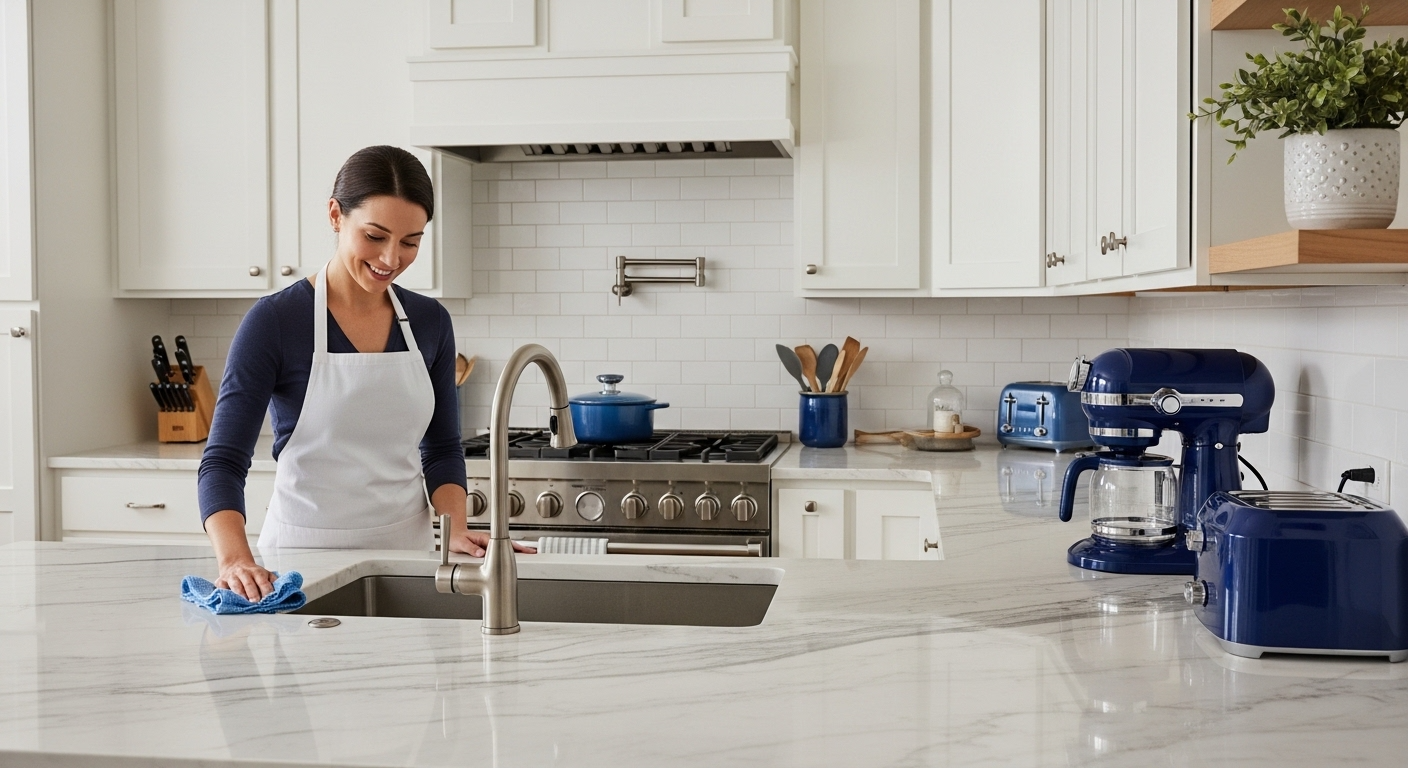
Picture this: It’s late afternoon on a Sunday, and you have an hour before guests are expected to arrive. You take a look around you and notice every inch of every surface, nook, cranny, unseen corner, and forgotten countertop that you’ve not paid attention to all week long.
You begin to feel panicked. Most people do not have difficulty with housekeeping tasks; their main difficulty is staying committed to completing them.
The secret to having a consistently tidy home is not to try to do all the deep cleaning in one great effort once a month.
But rather to create a weekly cleaning list/schedule that breaks the workload into small, easy-to-complete daily projects.
This guide will give you all the best advice and tools for cleaning your house so that you don’t become too tired, spend too much time cleaning, or have to hire a professional cleaner.
No matter if you are a parent who is way too busy with their day job and takes care of children, a full-time worker, or just plain doesn’t like to be cluttered, you too can benefit from this system.
Table of Contents
Why a Weekly Cleaning Routine Changes Everything?

Cleaning on an as-needed basis (only when you see dirt) can be tiring and inefficient; however, cleaning via a structured weekly schedule is more efficient than reactive cleaning because:
- Prevents buildup before it becomes overwhelming
- Reduces decision fatigue (you always know what to clean next)
- Creates a healthier living environment by limiting dust, allergens, and bacteria
- Saves time in the long run: 20 minutes a day beats a 4-hour Saturday scrub-down
According to ACI, households with regular cleaning schedules spend substantially less total time cleaning per week than households that clean based on necessity.
Expert Insight: Home organizing specialists usually suggest establishing an ongoing weekly schedule in combination with a reset ritual—this is when you spend about 10–15 minutes each evening picking up after yourself so that any small messes do not turn into larger messes.
Step 1: Set Up Your Cleaning Zone System
Before you create your cleaning schedule, break up your home into zones to create a modular cleaning routine. That allows one zone (area) to be cleaned over multiple days. So a single zone can be cleaned in one day instead of the entire home.
Recommended Zone Breakdown:
| Zone | Rooms/Areas |
|---|---|
| Zone 1 | Kitchen + Dining Area |
| Zone 2 | Bathrooms |
| Zone 3 | Living Room + Entryway |
| Zone 4 | Bedrooms |
| Zone 5 | Floors + Surfaces (Whole Home) |
Professional organizers and cleaning coaches have made a name for themselves with their use of a zone model, which is what usually forms the foundation of successful home management.
The following is a tested weekly cleaning schedule that takes approximately 20-30 minutes every day.
Step 2: Build Your 7-Day Weekly Cleaning Schedule
It is structured to be flexible to the realities of your life, while still allowing your home to be maintained at the same high level of cleanliness throughout the month.
Monday: Kitchen Reset
Because the kitchen is the busiest area of the home, beginning the week there will establish a precedent for the tips to come.
- Wipe down stovetop, countertops, and backsplash
- Clean the sink and faucet handles
- Wipe exterior of appliances (microwave, fridge, dishwasher)
- Empty and sanitize the trash can
- Sweep and mop the kitchen floor
An easy-to-access spray bottle of multi-purpose cleaner stored under the kitchen sink will lead to greater usage because it will be easy for you to grab.
Tuesday: Bathroom Deep-Clean
Bathrooms tend to be the most prominent place guests will notice. Cleaning the bathrooms every week eliminates soap scum, mildew, and bacteria from building up.
- Scrub the toilet (bowl, seat, base, and tank exterior)
- Clean the sink, faucet, and mirror
- Wipe down the shower walls or bathtub
- Replace or straighten towels
- Mop or scrub the floor
For homes with multiple bathrooms, switch which bathroom gets a complete deep-clean and which gets a quick refresh.)
Wednesday: Living Room + Common Areas
Midweek is a great time to address the spaces where your family actually lives.
- Dust all surfaces, shelves, and décor
- Wipe down light switches, remote controls, and door handles
- Fluff and straighten cushions and throws
- Vacuum sofas and upholstered chairs
- Clear clutter from coffee tables and side tables
[Internal Link Placeholder: “Best Natural Cleaning Products for Your Living Room”]
Thursday: Bedroom Refresh
A clean bedroom promotes better sleep and reduces anxiety. Studies from the National Sleep Foundation suggest that people who make their beds regularly report better sleep quality.
- Change bed linens (or straighten them and change fully every two weeks)
- Dust nightstands, dressers, and ceiling fans
- Organize bedroom surfaces and return misplaced items
- Vacuum or sweep the floor
- Declutter any clothing left on chairs or floors
Friday: Floors Throughout the Home
Dedicate Fridays to a complete floor pass so the house feels fresh heading into the weekend.
- Vacuum all carpets and rugs (including under furniture edges)
- Sweep hard floors in every room
- Mop kitchen, bathroom, and entryway hard floors
- Spot-clean any stains on carpet or area rugs
Voice Search Optimization: “What’s the best way to clean floors every week?” Sweep first, then vacuum carpets, then mop hard floors. Always work from the farthest corner toward the doorway.
Saturday: Laundry + Miscellaneous Tasks
Use Saturday for tasks that don’t fit neatly into a zone.
- Do 1–2 loads of laundry (wash, dry, fold, and put away)
- Clean out the fridge and toss expired items, then wipe shelves
- Wipe down windowsills and baseboards (rotate monthly)
- Take out all recycling and household bins
- Restock cleaning supplies as needed
Sunday: Rest + Light Reset
Sunday is not a cleaning day. It’s a maintenance day.
- Do a 10-minute whole-home tidy (put things back where they belong)
- Wipe kitchen counters after meals
- Lay out your plan for the upcoming week
This light Sunday reset is what keeps the cycle from breaking. It ensures Monday’s kitchen clean starts from a manageable baseline rather than a chaotic one.
Step 3: Essential Cleaning Supplies You Actually Need
You don’t need a cabinet full of specialty products. A streamlined cleaning kit keeps the routine fast.
Core Cleaning Kit:
- All-purpose spray cleaner (or a DIY mix of white vinegar + water + a few drops of dish soap)
- Microfiber cloths, which are more effective than paper towels, are washable and reusable
- Toilet brush and bowl cleaner
- Scrubbing sponge or brush
- Vacuum cleaner (with attachments for upholstery and edges)
- Mop and bucket (or a spray mop for convenience)
- Dish soap and baking soda for tough scrubbing
[External Authority Reference: American Cleaning Institute (aci.org) — Cleaning Product Safety & Best Practices]
Step 4: Time-Saving Habits That Maintain Cleanliness Between Sessions
The weekly schedule handles the bulk of the work, but small daily habits fill in the gaps and keep your home looking clean at all times.
Daily Habits That Make a Difference:
- Make your bed every morning. It instantly makes any bedroom look 80% cleaner.
- Wash dishes immediately after use or load the dishwasher before bed.
- Wipe the bathroom sink daily. It takes 30 seconds and prevents buildup.
- Implement a “one in, one out” rule for clutter management.
- Spend 5 minutes tidying before bed and return items to their designated places.
These micro-habits are what separate homes that always look clean from those that only get clean occasionally.
Author Perspective: What Actually Works in Real Life
As a professional cleaner who has tried nearly every type of cleaning system, from minimalist methods to an elaborate color-coded chore chart, I find the zone-based weekly schedule consistently outperforms the others because it provides flexibility.
If you have missed your scheduled bathroom clean on Tuesday, that does not eliminate that day’s cleaning, and the entire week’s cleaning schedule will not be wiped out; you just continue where you left off.
Flexibility is essential in everyday life. The moment you have a regimented system, you will discontinue using that system.
The most important shift in attitude regarding cleaning is to view it as the maintenance of your surroundings, similar to how you maintain your vehicle and your body. By doing small amounts of ongoing work regularly, you can avoid expensive breakdowns caused by neglect.
Frequently Asked Questions (FAQ)
Q1: How long does a weekly cleaning routine take?
A well-structured weekly routine takes 20–30 minutes per day. Broken into zones, this is far more manageable than a multi-hour weekend cleaning session.
Q2: How do I maintain a clean home with kids or pets?
Focus on high-traffic areas daily (kitchen, living room, and floors) and lower your perfectionist standards. Involve children in age-appropriate tasks. For pets, vacuum more frequently, at least every other day, and keep lint rollers handy.
Q3: What’s the difference between cleaning, tidying, and organizing?
- Tidying = putting things back in their place
- Cleaning = removing dirt, dust, and bacteria
- Organizing = creating systems so items have a designated place
A good weekly routine includes all three, in that order.
Q4: How do I start a cleaning routine if my home is already messy?
Start with a one-time declutter session before implementing the routine. Spend one weekend sorting items into “keep,” “donate,” and “discard” piles. Once the clutter is reduced, the weekly routine becomes far more effective.
Q5: Should I clean one room thoroughly or multiple rooms lightly each day?
The zone approach, which focuses on one area per day, is more effective than lightly touching every room daily. Deep attention to a single zone ensures nothing is consistently neglected.
Q6: How do I keep my home clean between deep-clean sessions?
Practice the “clean as you go” principle. Wipe surfaces after use, handle spills immediately, and spend 5–10 minutes tidying every evening. These small actions maintain the results of your weekly cleaning work.
Q7: What should I clean every day vs. once a week?
Daily: dishes, bed-making, wiping kitchen and bathroom counters, quick tidy-up.
Weekly: floors, toilets, showers, vacuuming, laundry, fridge wipe-down.
Monthly: baseboards, windows, deep appliance cleaning, ceiling fans.
Key Takeaways
- A zone-based weekly cleaning schedule (one area per day) is more sustainable than reactive cleaning
- Aim for 20–30 minutes of focused cleaning per day, not hours on weekends
- Daily micro-habits such as bed-making, dish-washing, and surface wiping maintain results between sessions
- A minimal, well-stocked cleaning kit keeps friction low and consistency high
- Sunday is a reset day, not a full cleaning day, so protect it to sustain the cycle
- The key to a consistently clean home is building a system, not relying on motivation
Conclusion: Clean Homes Are Built on Habits, Not Heroics
Keeping a clean home does not require you to possess enough free time or energy to clean everything at once. But instead, you must have an established routine that runs consistently in the background (quietly).
So that it maintains order in your life (not causing chaos) and yet is adaptable enough to meet the demands of real-life weeks (just like your life).
Begin with the 7-day schedule for zones, then adjust it to fit your home’s size and your family’s daily rhythms.
This week, introduce a new micro habit into your daily life and do it each week until you’ve made all the micro changes you want to create.
It’s not about finding the perfect home; it’s about having a home that creates a sense of calm and functionality and is your own, so you can enjoy living without the Sunday Night Stress Syndrome.

Welcome to Homeblesh! I'm a professional content writer with over five years of experience creating well-researched, practical, and reader-focused content for clients on Upwork and Fiverr. Now, I've dedicated my expertise to building Homeblesh, where I share helpful guides, honest recommendations, and actionable tips based on careful research and industry knowledge. My goal is to provide accurate, trustworthy information to help you make informed decisions while delivering clear, useful, and easy-to-understand content.
- Muhammad Imran

- Muhammad Imran

- Muhammad Imran

- Muhammad Imran


