

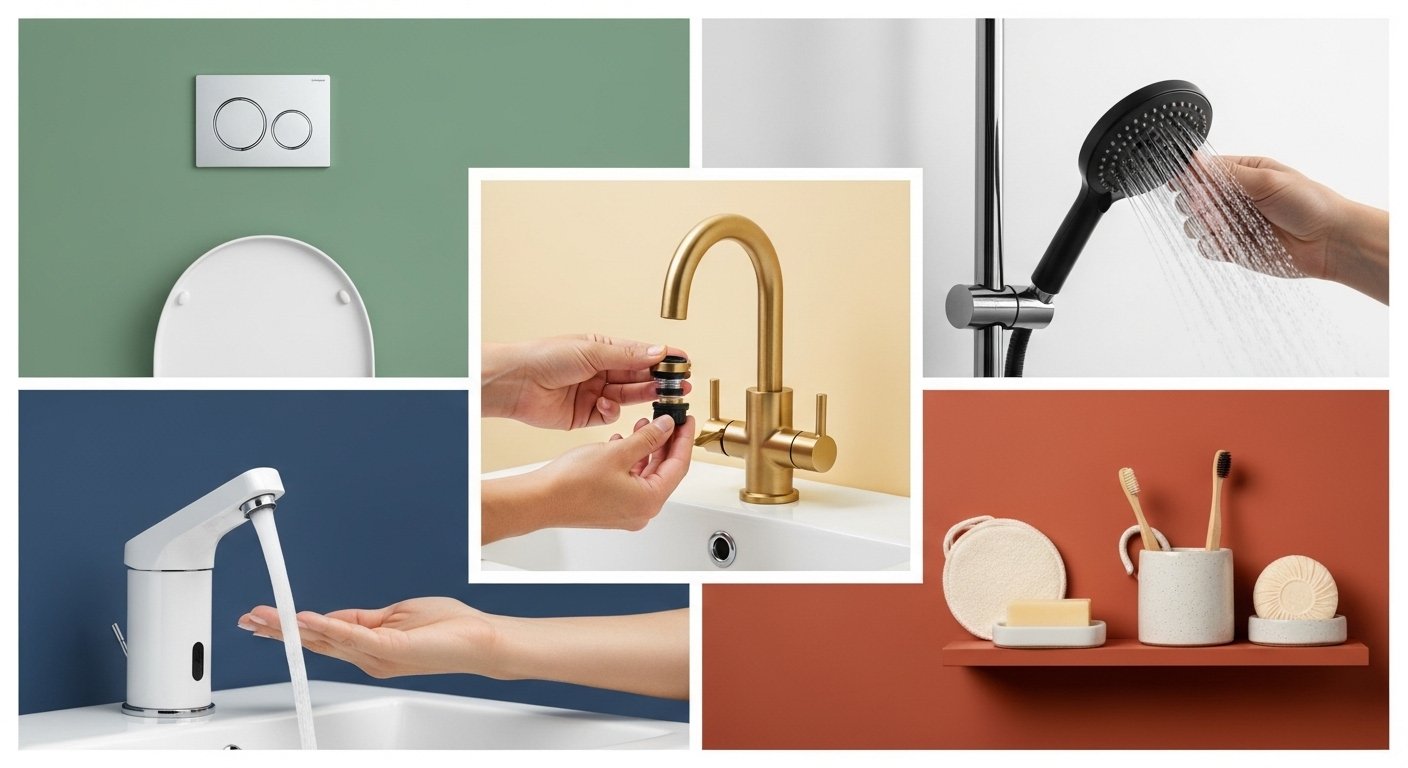
The bathroom is one of the most water-intensive rooms in any home, yet it is also one of the most overlooked when it comes to making eco-friendly improvements.
Two thirds of the average household’s water consumption happens right there, between showers, toilet flushes, running taps, and leaking fixtures that nobody gets around to fixing.
The good news is that sustainable bathroom upgrades do not require a full renovation, a massive budget, or any technical expertise to make a genuine difference.
Some of the most impactful water-saving changes cost less than $20 and take under 10 minutes to install.
Whether you are planning a complete bathroom overhaul or simply want to swap out a few fixtures for smarter alternatives.
This guide covers every sustainable bathroom upgrade worth knowing about in 2026, from dual-flush toilets and low-flow showerheads to greywater recycling systems and touchless faucets. Your wallet and the planet will both feel the difference.
Table of contents
Why the Bathroom Deserves Your Attention First?
Most people start their eco-friendly home improvements in the kitchen or the living room. The bathroom gets left for last, yet the data consistently points to it as the highest-impact starting point.
The Numbers Are Hard to Ignore
A standard showerhead uses between eight and twelve liters of water per minute. A leaking tap can waste up to four liters per day, every single day, without anyone noticing.
A traditional single-flush toilet uses up to nine liters per flush, and most households flush between five and eight times per day per person. Add all of that up across a year and the figures become staggering.
According to environmental research, the average household could reduce its water consumption by thirty to fifty percent simply by upgrading key bathroom fixtures to water-efficient alternatives. That reduction translates directly into lower utility bills, less strain on municipal water systems, and a meaningfully smaller environmental footprint.
The Financial Case for Upgrading
Sustainable bathroom upgrades are often framed as a cost, but the reality is they are an investment with a measurable return. A low-flow showerhead pays for itself within weeks. A dual-flush toilet upgrade reduces water bills year after year.
Faucet aerators cost just a few dollars and can cut sink water usage by up to fifty percent. The upfront investment is small and the ongoing savings are real and consistent.
Top Sustainable Bathroom Upgrades That Save Water
1. Install a Dual-Flush Toilet
If there is one single sustainable bathroom upgrade that delivers the highest water savings for the widest range of households, it is replacing a standard toilet with a dual-flush model.
Traditional single-flush toilets use between 6 and 9 liters of water per flush, regardless of what is being flushed. Dual-flush toilets address this inefficiency by offering two separate flushing options.
A half-flush using three to four liters for liquid waste and a full-flush using approximately six liters for solid waste. This distinction alone reduces toilet water consumption by an average of sixty seven percent for households that use the half-flush consistently.
What to Look For in a Dual-Flush Toilet:
- A clear two-button flush mechanism that is intuitive for all household members
- A WaterSense or equivalent water efficiency certification
- A rimless bowl design for easier cleaning and reduced water use during cleaning
- Compatibility with your existing waste pipe configuration
For those not ready to replace the full toilet, a dual-flush conversion kit is available for most standard cisterns and achieves a similar result at a fraction of the cost.
2. Switch to a Low-Flow Showerhead
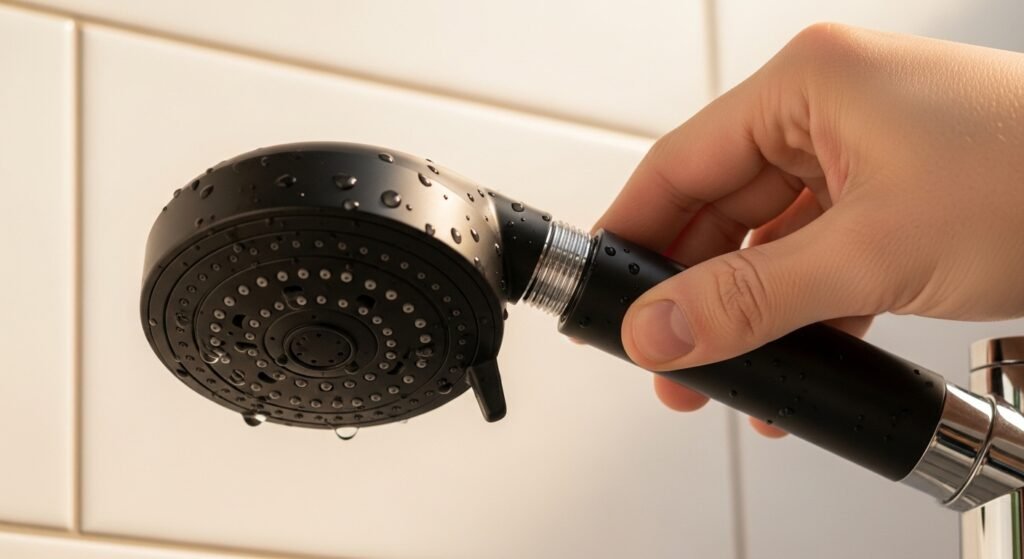
Showers account for a significant portion of bathroom water consumption, and upgrading to a low-flow showerhead is one of the fastest and most affordable water-saving bathroom ideas available.
Standard showerheads typically deliver eight to twelve liters per minute. Low-flow showerheads reduce this to six liters per minute or less, sometimes as low as four liters per minute on the most efficient models, without reducing the pressure or experience of the shower.
Modern low-flow showerheads achieve this through two main technologies. Aerating models mix air into the water stream to maintain pressure while using less water overall. Laminar flow models produce individual streams of water that feel full and consistent without the wasteful spray of older designs.
Low-Flow Showerhead Benefits at a Glance:
- Reduces shower water usage by thirty to fifty percent
- Lowers water heating costs alongside water consumption
- Easy DIY installation with no tools required in most cases
- Available in a full range of styles and finishes to match any bathroom aesthetic
- Pays for itself within the first month of use in most households
A household of four people taking average-length showers can save thousands of liters of water per year by making this single switch.
3. Add Faucet Aerators to Every Tap
Faucet aerators are small mesh attachments that screw onto the end of your existing taps and mix air into the water flow, creating a full, consistent stream that uses significantly less water than a standard tap.
This is one of the most cost-effective water saving bathroom ideas available, with most aerators costing between two and ten dollars per tap. Despite the minimal cost, the impact is substantial. A standard bathroom tap flows at around eight liters per minute. A quality aerator reduces this to as little as four liters per minute, a fifty percent reduction in sink water consumption with absolutely no change in how the tap feels to use.
Aerators are available in different flow rates to suit different applications. A lower flow rate works well for handwashing basins where rinsing and lathering are the primary activities. A slightly higher flow rate suits a tap used for filling cups or cleaning.
Installation takes under two minutes and requires no tools, making this one of the most accessible sustainable bathroom upgrades for renters and homeowners alike.
4. Upgrade to a Sensor or Touchless Faucet
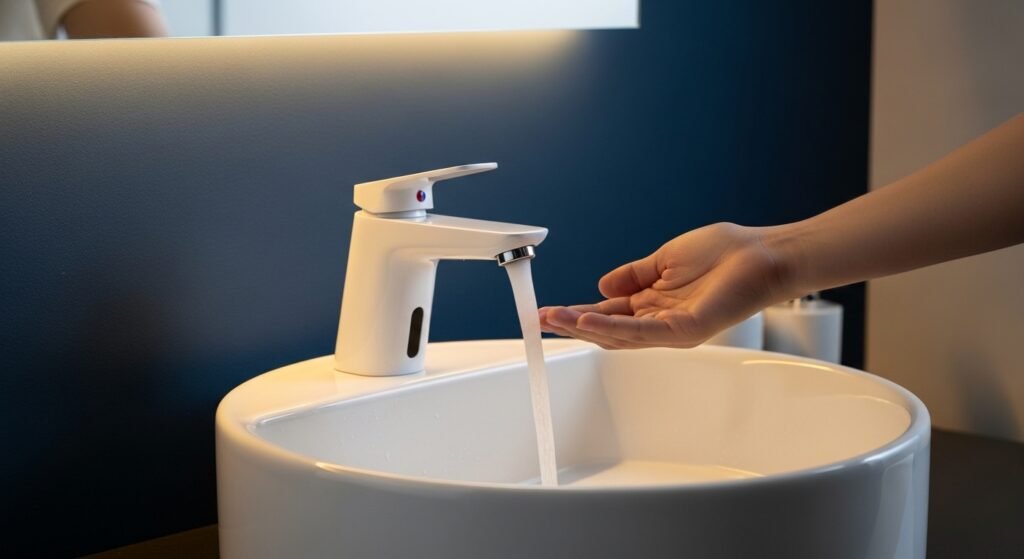
Sensor faucets and touchless taps represent a step up in both technology and water savings. Rather than leaving the tap running while soaping hands, brushing teeth, or performing other tasks that do not actually require a running water flow, a sensor tap delivers water only when hands are directly beneath the sensor.
Studies on public restroom sensor faucets have shown water savings of up to seventy percent compared to standard taps. In a home bathroom setting, the savings are more modest but still meaningful, particularly in households with children who tend to leave taps running unattended.
Sensor faucets are now available in a wide range of styles, including wall-mounted, deck-mounted, and retrofit battery-powered models that attach to existing basin cutouts without plumbing modifications. This makes them a practical option for sustainable bathroom upgrades without the need for professional installation in many cases.
Additional Benefits of Sensor Faucets:
- Reduce cross-contamination by eliminating the need to touch handles with dirty hands
- Ideal for households with young children or elderly family members
- Many models include temperature memory settings so water reaches the preferred temperature immediately
- Available in finishes including chrome, brushed nickel, matte black, and brushed gold
5. Fix Leaks Promptly and Permanently
This is the most unglamorous item on this list and the one most consistently ignored. A dripping tap. A slow toilet leak. A showerhead that never quite stops after being turned off. These are not minor inconveniences. They are sources of continuous, invisible water waste that compound into significant loss over time.
A single dripping tap wastes up to four liters of water per day. A toilet with a faulty flapper valve can lose up to two hundred liters per day without any visible sign of leaking. These are not edge cases. They are common faults in bathrooms that have not been recently serviced.
How to Check for Hidden Leaks:
- Place a few drops of food coloring into your toilet cistern without flushing. If color appears in the bowl within fifteen minutes without flushing, the flapper valve is leaking
- Check all visible pipe connections under sinks and around the toilet base for moisture or discoloration
- Listen for the sound of running water after all taps are closed and the toilet has finished refilling
Fixing a leaking tap or toilet typically costs very little and can be done as a straightforward DIY repair in most cases. The water and money saved immediately afterward make it one of the highest-return actions on this entire list.
6. Install a Greywater Recycling System
For those ready to take sustainable bathroom upgrades to a more advanced level, a greywater recycling system is one of the most impactful changes available.
Greywater is the relatively clean wastewater that drains from showers, baths, and bathroom sinks. Unlike blackwater from toilets, greywater can be treated and reused for non-potable purposes such as toilet flushing and garden irrigation without posing a health risk.
A basic greywater recycling system diverts water from your shower or bath drain into a holding tank before filtering and redirecting it to your toilet cistern or outdoor irrigation points. This dramatically reduces the volume of fresh water required for toilet flushing, which accounts for up to thirty percent of household water consumption on its own.
Types of Greywater Systems:
- Gravity-fed systems are the simplest and require no pumps or electricity. They work best when the shower is directly above or adjacent to the toilet.
- Pumped systems use a small pump to move water from collection point to use point, offering more flexible installation options.
- Filtration and treatment systems include additional filtering stages and are suitable for use in garden irrigation as well as toilet flushing.
Installation typically requires a licensed plumber for anything beyond the most basic divert-and-collect setups, but the long-term water savings justify the investment for most homeowners planning a significant renovation.
7. Switch to an Efficient Water Heater
Water heating is a major contributor to both energy consumption and water waste in the bathroom. Every time you wait for a cold shower to run warm, that water is going straight down the drain.
Upgrading to a tankless or on-demand water heater eliminates the standby heat loss of traditional tank-based systems and delivers hot water almost immediately to the point of use, meaning far less cold water is wasted during the wait.
For bathrooms located far from the main water heater, a point-of-use tankless heater installed directly under the sink or in the bathroom wall is an even more efficient solution. It reduces both water waste during the warm-up wait and energy lost from hot water traveling through long pipe runs before reaching the tap.
8. Choose Sustainable Materials in Your Bathroom Design
Sustainable bathroom renovation ideas extend beyond the fixtures and fittings. The materials you choose for surfaces, cabinetry, and accessories contribute to the overall environmental footprint of your bathroom.
Sustainable Material Choices for Bathrooms:
- Reclaimed wood for vanity units and shelving adds warmth and character while reducing demand for new timber
- Bamboo is a fast-growing, highly renewable material suitable for bathroom accessories, flooring, and cabinetry
- Recycled glass tiles for splashbacks and feature walls use post-consumer glass waste and require less energy to produce than standard ceramic tiles
- Natural stone from local quarries has a lower transport footprint than imported materials and lasts considerably longer than synthetic alternatives
- Low-VOC paints and sealants reduce indoor air pollution and are safer for household occupants and the environment
These choices complement your water-saving fixtures and create a bathroom that is genuinely sustainable in both function and form.
9. Shorten Shower Time With a Simple Timer
Technology aside, one of the most effective and completely free water saving bathroom ideas is simply spending less time in the shower.
Every minute saved reduces water consumption by up to fifteen liters depending on your showerhead. A household of four reducing shower time by just two minutes each per day saves roughly forty-four thousand liters of water per year. That is a meaningful reduction achieved with no equipment, no installation, and no cost.
A waterproof shower timer, a playlist timed to your target shower length, or even a simple mental commitment to quicker showers can be surprisingly effective. Pair this habit with your new low-flow showerhead and the combined savings are substantial.
10. Replace Plastic Bathroom Products With Sustainable Alternatives
Completing your sustainable bathroom upgrades means looking beyond fixtures and plumbing at the everyday products that fill the space.
Single-use plastic packaging in the bathroom is one of the most visible and unnecessary sources of waste. Shampoo bottles, shower gel containers, liquid soap dispensers, cotton pads, and wet wipes all contribute to plastic pollution and environmental harm.
Simple Product Swaps That Make a Real Difference:
- Switch from liquid shampoo and conditioner in plastic bottles to solid shampoo and conditioner bars
- Replace liquid hand soap with a bar soap in a bamboo or ceramic dish
- Swap disposable cotton pads for washable bamboo pads
- Choose toilet paper made from one hundred percent recycled material or bamboo
- Use a bamboo toothbrush instead of a plastic one
- Buy bathroom cleaning products in concentrated refillable formats to reduce packaging waste
These swaps require no tools, no installation, and no planning. They are simply better versions of products you are already buying, and they reinforce the broader commitment to a more sustainable bathroom.
Short Takeaways
If you are ready to start making sustainable bathroom upgrades today, here is the quick version of everything covered:
- Replace or convert your toilet to a dual-flush model for the biggest single water saving
- Install a low-flow showerhead for immediate and ongoing savings with no sacrifice in pressure
- Add faucet aerators to every tap in your bathroom for under ten dollars total
- Fix any leaking taps or toilet flappers before investing in anything else
- Consider a greywater recycling system if you are planning a larger renovation
- Choose reclaimed, bamboo, or recycled materials when updating surfaces and fittings
- Shorten shower times and switch to sustainable everyday products to complete the picture
Frequently Asked Questions
Q: What is the most cost-effective sustainable bathroom upgrade for water savings?
Faucet aerators are the most affordable option, typically costing two to ten dollars per tap and reducing sink water usage by up to fifty percent immediately after installation. A low-flow showerhead is the next best value upgrade for most households.
Q: Can renters make sustainable bathroom upgrades?
Yes. Faucet aerators, low-flow showerheads, and touchless faucet attachments are all non-permanent and can be removed when moving out. These are the most renter-friendly water-saving options and require no landlord permission in most cases.
Q: How much water does a dual-flush toilet save compared to a standard toilet?
A dual-flush toilet can reduce toilet water consumption by up to sixty seven percent when the half-flush is used consistently for liquid waste. Over a year for an average household, this represents thousands of liters of water saved.
Q: Is a greywater recycling system worth installing?
For homeowners planning a renovation or new build, yes. The upfront installation cost is recovered through long-term water bill savings, and the environmental impact of redirecting shower and bath water away from the sewer system is significant. For renters or those doing minor updates, simpler fixtures offer better value.
Q: How do I know if my toilet has a hidden leak?
Add a few drops of food coloring to the cistern without flushing. If color appears in the bowl within fifteen minutes, the flapper valve is leaking and needs replacing. This is a simple DIY repair that costs very little and immediately stops the water waste.

Welcome to Homeblesh! I'm a professional content writer with over five years of experience creating well-researched, practical, and reader-focused content for clients on Upwork and Fiverr. Now, I've dedicated my expertise to building Homeblesh, where I share helpful guides, honest recommendations, and actionable tips based on careful research and industry knowledge. My goal is to provide accurate, trustworthy information to help you make informed decisions while delivering clear, useful, and easy-to-understand content.
- Muhammad Imran

- Muhammad Imran

- Muhammad Imran

- Muhammad Imran




3 Comments
Pingback: Easy Rainwater Harvesting Ideas for Home Gardens - Home Blesh
Pingback: 10 Best Indoor Gardening Systems for Fresh Produce Year-Round - Home Blesh
Pingback: 10 Budget Friendly DIY Home Improvement Projects