

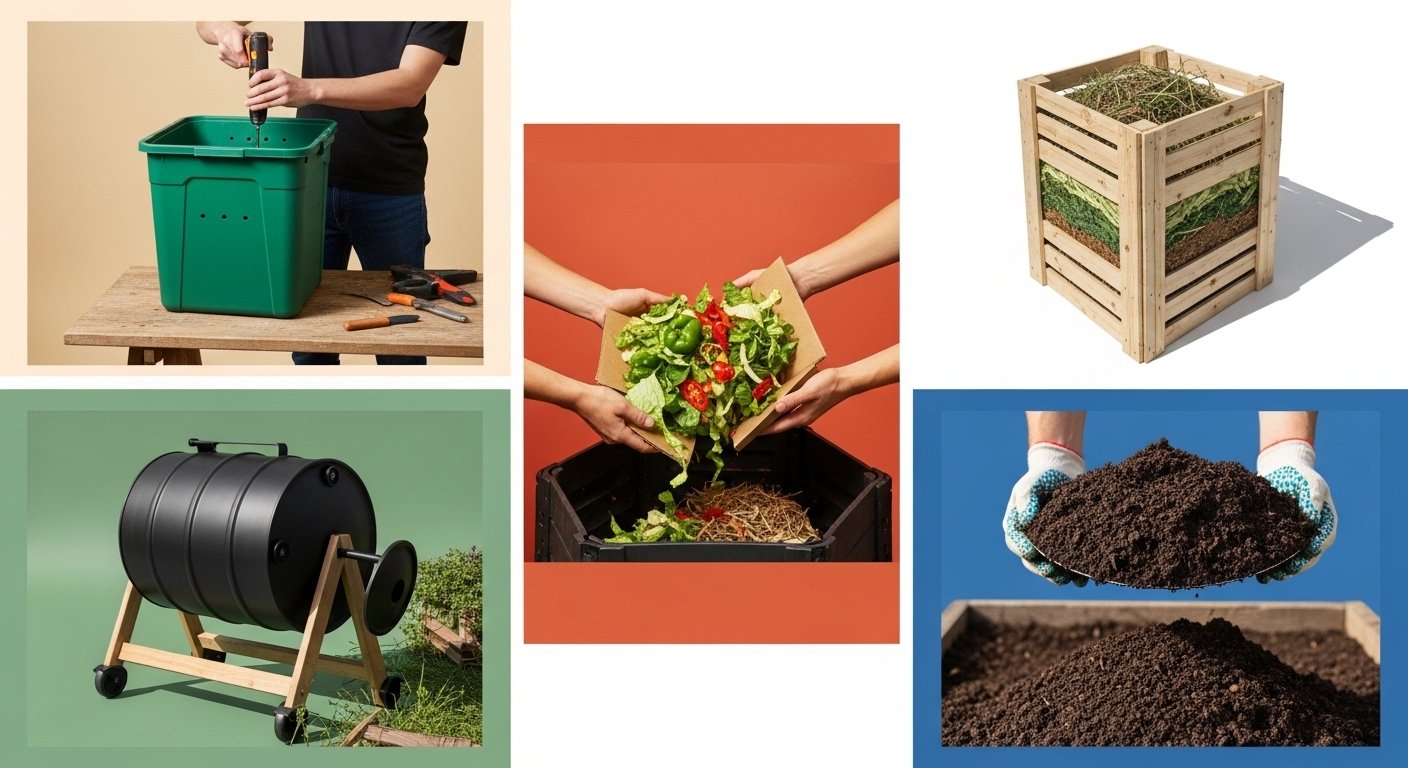
Composting is one of the most practical, planet-friendly habits any household can adopt, and you do not need a fancy system or expensive equipment to get started. If you have a plastic bin, a handful of wooden pallets, or even an old trash can lying around.
You already have everything you need to build a DIY compost bin and start turning your kitchen and garden waste into rich, nutrient-packed fertilizer. Whether you live in a small apartment with a balcony, a house with a modest garden, or a larger property with plenty of outdoor space.
There is a composting setup that fits your situation perfectly. This step-by-step guide walks you through exactly how to build a DIY compost bin from scratch.
Which design suits your space and lifestyle, what materials to add, and how to maintain your bin so it produces usable compost quickly and efficiently? No experience needed. Let’s dig in.
Table of Contents
Why Composting at Home Is Worth It?
Before getting into the build itself, it helps to understand why composting is genuinely one of the best habits you can add to your household routine.
The Environmental Case
Food and yard waste make up a significant portion of what ends up in landfills every year. When organic matter breaks down in a landfill without oxygen.
It produces methane, a greenhouse gas far more potent than carbon dioxide. Composting at home diverts that waste from landfills and converts it into something genuinely useful instead.
The Garden Case
Finished compost is sometimes called black gold by gardeners, and for good reason. It improves soil structure, feeds beneficial microorganisms, retains moisture, and reduces the need for chemical fertilizers. Whether you use it in raised beds, potted plants, or a lawn, homemade compost is one of the most effective soil amendments available.
The Financial Case
Buying bags of compost or soil amendment from a garden center adds up quickly. A home compost bin turns waste you were already generating into a free, ongoing supply of rich organic material. Over a single growing season, the savings are real and measurable.
Choosing the Right DIY Compost Bin Design for Your Space
The most important step before you start building is choosing the right design for your specific situation. There is no single best option. The right compost bin depends on how much space you have, how much waste you generate, and how hands-on you want to be with the process.
Option 1: Plastic Storage Bin Composter (Best for Beginners and Small Spaces)
This is the easiest, cheapest, and most beginner-friendly way to build a DIY compost bin. All you need is a plastic storage tote or large trash can, a drill, and about 20 minutes. It fits on a balcony, in a corner of a small garden, or inside a garage.
Best for: Apartment dwellers, beginners, households with primarily kitchen scraps, anyone with limited outdoor space.
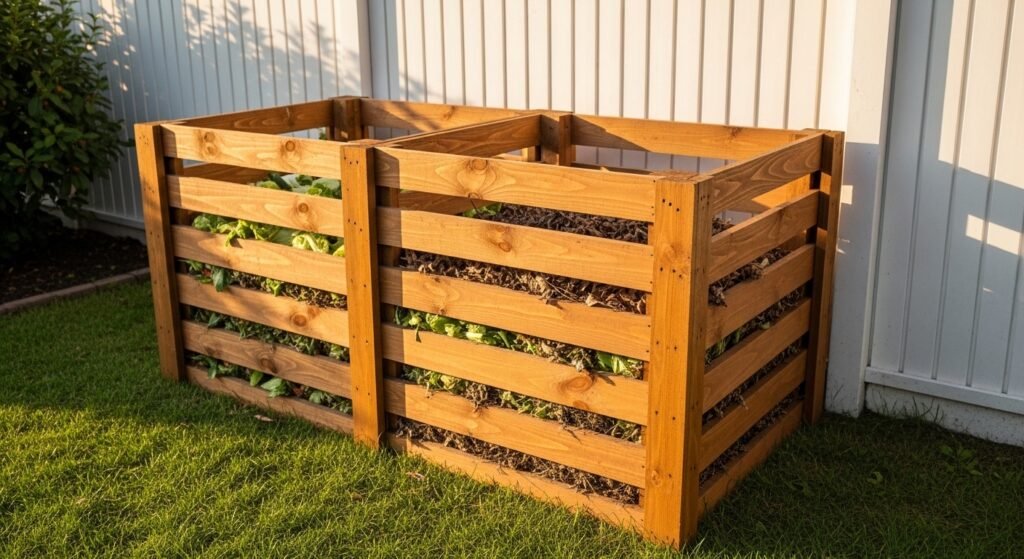
Option 2: Wooden Pallet Compost Bin (Best for Larger Yards and Garden Waste)
If you have outdoor space and generate a larger volume of yard waste, leaves, and grass clippings, a pallet bin is the better choice. It holds significantly more material, allows excellent airflow, and costs almost nothing if you can source free pallets from local businesses or building sites.
Best for: Homeowners with garden space, larger families, those with significant yard waste alongside kitchen scraps.
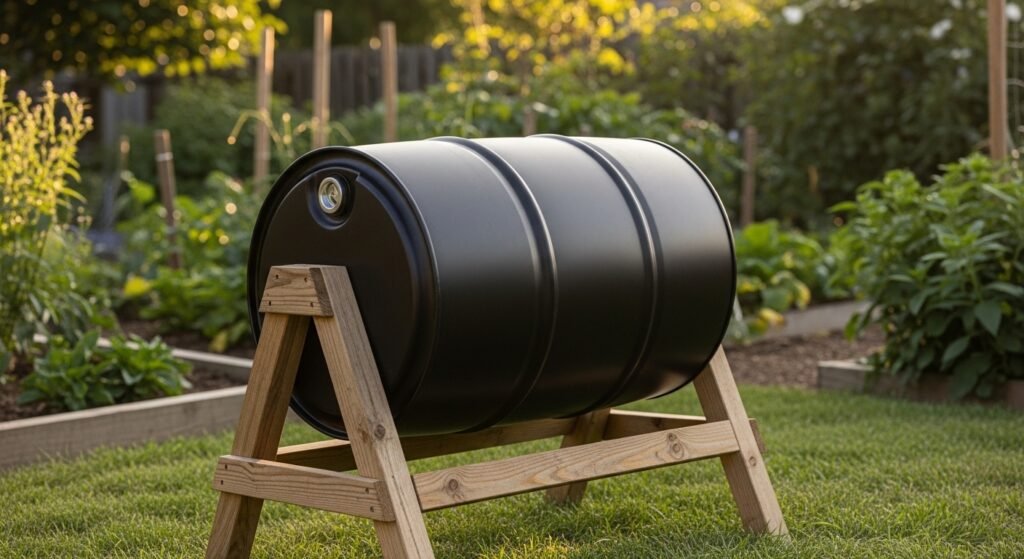
Option 3: Rolling Barrel Composter (Best for Speed and Convenience)
A rolling barrel composter sits on a frame and can be rotated to mix the contents without lifting or turning with a fork. This dramatically accelerates the decomposition process and can produce finished compost in as little as four to six weeks. It is also completely enclosed, which keeps pests out and odors in.
Best for: Anyone who wants faster results, people who prefer a low-effort turning method, households in areas where wildlife or pests are a concern.
How to Build a DIY Compost Bin: Step-by-Step Instructions
Method 1: Plastic Storage Bin Composter
This is the simplest build and the ideal starting point for anyone new to composting.
What You Need:
- One plastic storage tote or large trash can with a lid (20 to 30 gallon capacity works well)
- A drill with a 1/4 inch or 1/2 inch drill bit
- A few bricks or wooden blocks for elevation
- Optional: a tray or shallow container to catch drainage
Step 1: Choose and Prepare Your Bin
Select a plastic tote or trash can with a secure, fitting lid. Dark colored plastic is preferable as it absorbs heat and speeds up decomposition. The container does not need to be new. A secondhand bin works just as well.
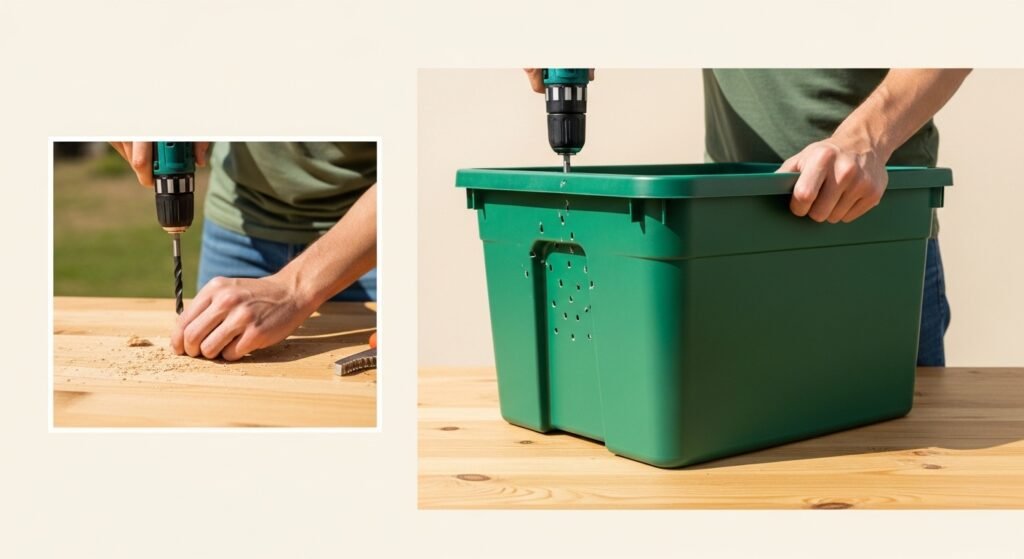
Step 2: Drill the Aeration Holes
This is the most important step. Compost needs oxygen to break down properly. Using your drill, create holes approximately 7 centimeters apart across all four sides, the bottom, and the lid of the bin. Aim for consistent spacing so air can circulate evenly throughout the pile.
The holes serve a dual purpose: ventilation through the sides and drainage through the bottom. Without drainage, excess moisture accumulates and creates a smelly, anaerobic mess rather than healthy compost.
Step 3: Elevate the Bin
Place your bin on a few bricks, wooden blocks, or a small wooden platform. This allows air to flow underneath and helps drainage escape freely. If you prefer, you can place the bin directly on soil, which allows earthworms and beneficial microorganisms to move in from the ground, accelerating decomposition naturally.
Step 4: Add Your Base Layer
Before adding food scraps, start with a base layer of brown material: torn cardboard, dried leaves, or small twigs. This layer is approximately 5 to 10 centimeters deep and provides the carbon foundation that balances the nitrogen-rich food scraps you will be adding on top.
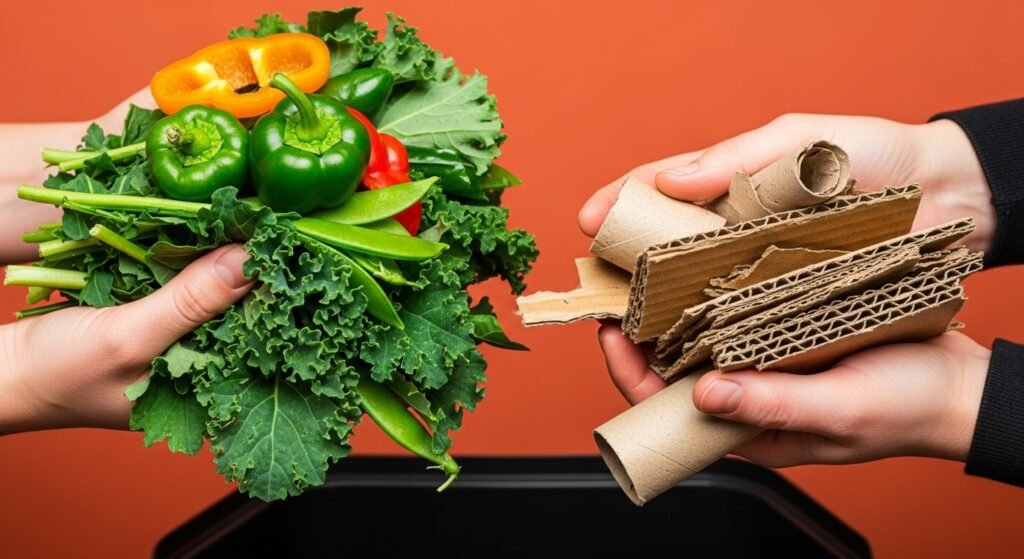
Step 5: Layer Green and Brown Materials
This is the heart of composting and the step that determines how quickly and efficiently your bin produces finished compost. The key is balance between two categories of material.
Green materials (nitrogen-rich):
- Fruit and vegetable scraps
- Coffee grounds and paper filters
- Tea bags (without staples)
- Fresh grass clippings
- Plant trimmings
Brown materials (carbon-rich):
- Dry leaves
- Torn cardboard or newspaper
- Paper bags
- Straw or hay
- Small dry twigs
The general ratio to aim for is roughly two to three parts brown material for every one part green. Too many greens without enough browns creates a wet, smelly pile. Too many browns without enough greens slows decomposition significantly.
Step 6: Add Moisture
Your compost pile should feel damp, like a wrung-out sponge, not soaking wet and not dry. After adding layers of material, sprinkle water lightly over the contents. If you live in a rainy climate, the lid helps manage moisture levels. If your area is dry, you may need to add water every week or two.
Step 7: Maintain and Turn Regularly
Every one to two weeks, use a garden fork, a compost turning tool, or simply tip the bin on its side and roll it to mix the contents. Turning introduces fresh oxygen into the pile, redistributes moisture, and dramatically speeds up decomposition. The more frequently you turn, the faster your compost will be ready.
Your compost is finished when it looks, smells, and feels like dark, crumbly soil with an earthy scent. This typically takes two to four months with regular turning and the right material balance.
Method 2: Wooden Pallet Compost Bin
If you want to build a DIY compost bin with more capacity, the pallet bin is the classic choice for backyard composting.
What You Need:
- 3 to 4 wooden pallets of similar size
- Screws or heavy-duty wire for securing corners
- Optional: staple gun and chicken wire to line the inside
Step 1: Source Your Pallets
Look for free pallets at local hardware stores, garden centers, furniture shops, or warehouses. Check that the pallets are stamped HT (heat-treated) rather than MB (methyl bromide-treated). HT pallets are safe for garden use. MB pallets should be avoided.
Step 2: Choose Your Location
Pick a level spot in your yard that receives some shade and is close enough to your garden to make hauling finished compost easy. Avoid placing the bin directly against a wooden fence or structure.
Step 3: Assemble the Structure
Stand three pallets on their sides in a U-shape: two parallel sides and one back panel. Secure the corners together using heavy-duty screws or by tying them tightly with wire. If you want a fully enclosed bin, add the fourth pallet as a front panel that can be removed for easy access when turning or harvesting compost.
Step 4: Line the Inside (Optional)
Staple chicken wire or landscape fabric to the interior of the pallets to keep fine material from falling through the gaps. This is optional but helps retain smaller particles as the compost breaks down.
Step 5: Fill and Manage Exactly Like the Plastic Bin
The same layering principles apply: alternate green and brown materials, keep moisture consistent, and turn regularly. The larger volume means you can add more material at once, and the open wooden structure naturally provides excellent airflow without needing to drill holes.
Method 3: Rolling Barrel Composter
What You Need:
- A plastic barrel or large drum with a secure lid (50 to 55 gallon capacity works well)
- A length of PVC pipe or a metal rod to act as an axle
- Two wooden or metal end supports to hold the axle and elevate the barrel
Step 1: Prepare the Barrel
Drill aeration holes across the entire surface of the barrel, similar to the plastic bin method. Cut a rectangular hatch in the side of the barrel, large enough to add materials and remove finished compost. Attach it back with a hinge and latch so it stays secure during rotation.
Step 2: Build the Frame
Construct two A-frame or rectangular side supports from timber or metal pipe. The axle passes through the center of the barrel and rests in notches or brackets on each side support, allowing the barrel to spin freely.
Step 3: Load and Rotate
Add materials through the hatch using the same green-and-brown layering method. Close and latch the hatch securely before rotating. Spin the barrel 5 to 10 times every 2 to 3 days. This constant mixing dramatically accelerates decomposition by consistently aerating the pile and redistributing moisture.
A well-managed rolling barrel can produce finished compost in as little as four to six weeks, making it the fastest of the three designs.
What to Add and What to Avoid
Always Add:
- Vegetable and fruit scraps
- Eggshells
- Coffee grounds and tea leaves
- Grass clippings and plant trimmings
- Dry leaves, cardboard, and newspaper
- Straw, wood chips, and small twigs
Never Add:
- Meat, fish, or bones (attracts pests)
- Dairy products (attracts pests, creates odors)
- Oils and fats
- Diseased plants
- Pet waste
- Anything treated with pesticides
Common Composting Problems and How to Fix Them
- Problem: The pile smells bad. Cause: Too many green materials or too much moisture. Fix: Add more brown materials and turn the pile to introduce air.
- Problem: Nothing is breaking down. Cause: Too dry, too many browns, or not enough turning. Fix: Add moisture, add fresh green materials, and turn more frequently.
- Problem: Pests are getting into the bin. Cause: Meat, dairy, or cooked food in the bin, or gaps in the structure. Fix: Remove any problem materials and switch to a fully enclosed design.
- Problem: The pile is too wet and soggy. Cause: Too much rainfall or too many wet food scraps. Fix: Add dry browns like cardboard or leaves and ensure the bin has adequate drainage.
Short Takeaways
If you are ready to build a DIY compost bin and start composting at home, here is the quick version of everything covered:
- Beginners and small spaces: start with a plastic storage bin and drill
- Larger yards: build a three-sided pallet bin for greater capacity
- Fastest results: build or buy a rolling barrel composter
- Always balance green (nitrogen) and brown (carbon) materials
- Keep moisture levels like a damp sponge, not soaking wet
- Turn your pile regularly to speed up decomposition
- Finished compost looks and smells like dark, crumbly earth
Frequently Asked Questions
Q: How long does it take to make compost at home?
With regular turning and a balanced mix of materials, a plastic bin or pallet bin typically produces finished compost in two to four months. A rolling barrel composter can produce results in as little as four to six weeks.
Q: Can I build a DIY compost bin if I only have a balcony?
Yes. A small plastic storage bin with drilled aeration holes fits easily on a balcony and works well for composting primarily kitchen scraps like fruit peels, vegetable trimmings, and coffee grounds.
Q: Do I need worms to compost?
Not necessarily. Worms accelerate the process significantly, but regular composting without worms works well if you maintain the right moisture and turn the pile regularly. If you want to add worms, look into vermicomposting as a complementary method.
Q: What is the best spot to place a compost bin?
Choose a level spot with partial shade. Full sun dries the pile out too quickly. Full shade slows decomposition. A spot close to your garden makes applying the finished compost easier.
Q: Can I compost during winter?
Composting slows significantly in cold temperatures but does not stop entirely. Insulating your bin with straw bales or bubble wrap and continuing to add material will keep the process moving through winter months.

Welcome to Homeblesh! I'm a professional content writer with over five years of experience creating well-researched, practical, and reader-focused content for clients on Upwork and Fiverr. Now, I've dedicated my expertise to building Homeblesh, where I share helpful guides, honest recommendations, and actionable tips based on careful research and industry knowledge. My goal is to provide accurate, trustworthy information to help you make informed decisions while delivering clear, useful, and easy-to-understand content.
- Muhammad Imran

- Muhammad Imran

- Muhammad Imran

- Muhammad Imran


7 Comments
Pingback: Easy Rainwater Harvesting Ideas for Home Gardens - Home Blesh
Pingback: DIY Floating Shelf: A Step-by-Step Tutorial and Cost Breakdown - Home Blesh
Pingback: 10 Budget Friendly DIY Home Improvement Projects
Pingback: Smart Home Security: Installing DIY Camera Systems - Home Blesh
Pingback: Beginner’s Guide to Smart Thermostat Installation - Home Blesh
Pingback: DIY Accent Wall Ideas: Paint, Shiplap & Wallpaper - Home Blesh
Pingback: How to Build a DIY Chicken Coop? - Home Blesh