




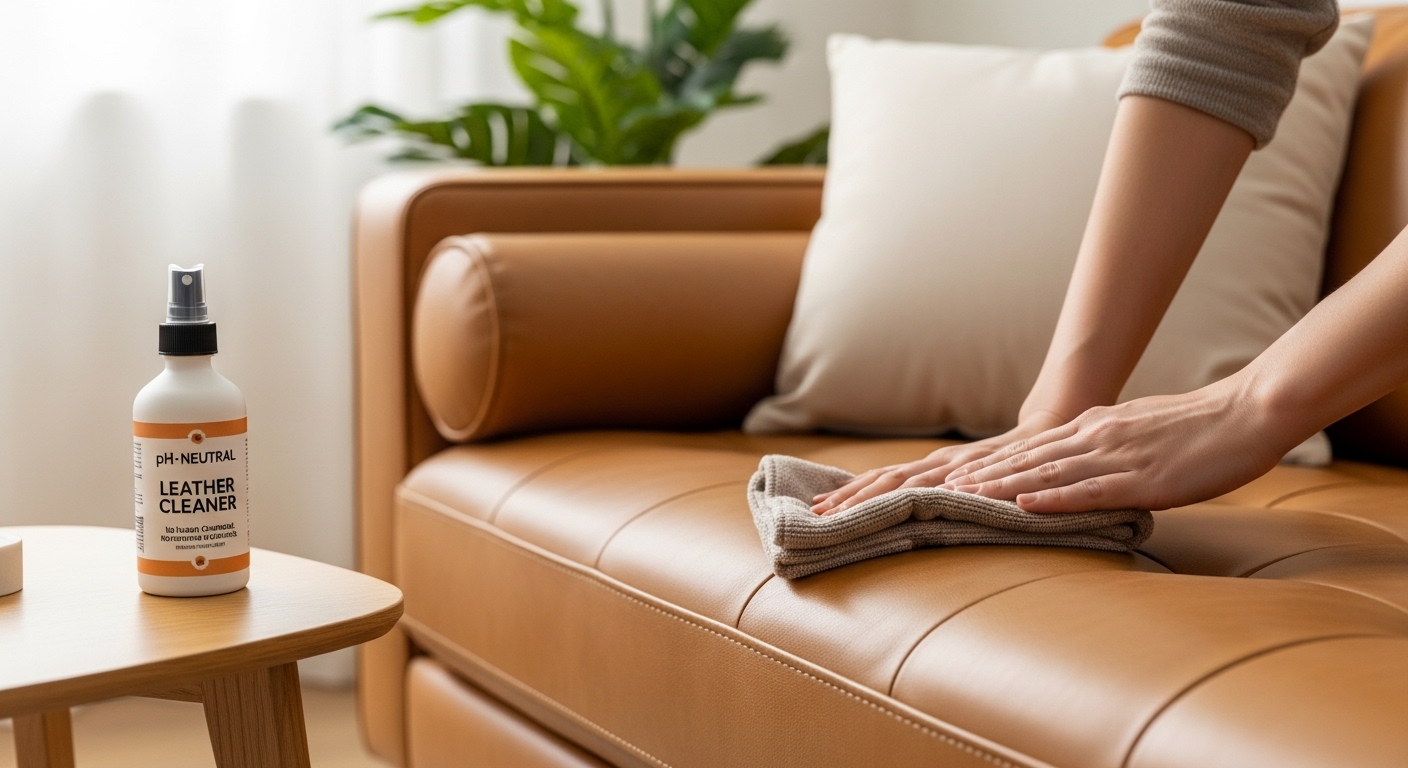
A leather sofa is more than just seating, it’s a statement piece that adds elegance and comfort to your home. But without the right care, its finish can quickly lose its charm. Learning how to clean a leather sofa safely is essential to maintaining the delicate balance between durability and beauty.
Unlike fabric, leather contains natural oils that keep it supple, and the wrong cleaning methods can strip them away, leaving cracks and dullness. Whether you want to clean leather couch surfaces after daily use or perform a deeper cleaning, the right approach makes all the difference.
With the right cleaning tips, you can gently clean your leather couch, preserve its finish, and extend its lifespan. This guide will show you how to clean your leather the right way, keeping your couch looking timeless and inviting.
Know Your Leather: Why Finish Matters

Cleaning leather is not “one product fits all.” Finishing the protective topcoat over the leather surface determines the safest way to clean and how often to clean a leather sofa.
Using the wrong cleaning product can damage the leather, lifting color, dulling sheen, or dehydrating the hide’s natural oils. Before you clean the couch, identify the leather type so your cleaner and method preserve the finish and keep the leather looking its best.
Protected/Pigmented vs. Aniline vs. Nubuck/Suede
Protected (Pigmented/Coated) Leather
- Visual: More uniform color; slight sheen; consistent grain.
- Feel: Smooth; less absorbent; spills tend to sit on top.
- Care: Most forgiving. You can clean and condition using a light cleaning solution and a dedicated leather cleaner. It’s the most common finish for a family leather couch or grain leather sofa that gets daily use.
Aniline & Semi-Aniline (Dyed, Lightly Finished) Leather
- Visual: Gorgeous color depth; visible natural markings; matte to satin sheen.
- Feel: Supple, “buttery,” and warm; more absorbent than protected.
- Care: Treat with extra caution and minimal moisture. Use an aniline-safe leather cleaner and thin, frequent leather conditioning to keep the hide nourished.
Nubuck/Suede (Buffed Surface)
- Visual: Velvet-like nap; rich matte appearance.
- Feel: Soft, slightly fuzzy; shows shading when stroked.
- Care: Dry clean only with a nubuck brush/eraser; water can stain and flatten the nap. Protect with nubuck protector sprays labeled for upholstery.
Note on Faux Leather (PU/Bi-cast): Faux leather is a leather item in look only. It’s polyurethane on fabric, not genuine leather. Many real-leather methods and conditioners should never be used on leather alternatives. Use manufacturer-approved products only.
30-Second “Water-Drop” Indicator
A quick indicator helps determine types of leather:
- If water beads on contact and wipes away cleanly, the piece is likely protected/pigmented.
- If water darkens/absorbs immediately, it’s likely aniline or nubuck both require extra-gentle methods.
- If unsure, treat as delicate and proceed with the gentlest method described here. Always patch-test on a hidden area with a clean cloth first.
What Not to Use (Finish-Risk List)
The following can strip the finish, alter the color, or roughen the leather’s surface. They should never be used on leather sofas unless explicitly specified by the manufacturer:
- Vinegar or aggressive acids/alkalis (including baking soda pastes)
- Bleach or ammonia
- Baby wipes and sanitizing wipes (surfactants, fragrances, and pH shifts)
- Alcohol-heavy sprays (risk of dye lift and dryness)
- Essential oils or “homemade oil polishes” (attract soil; leave residues)
- Steam cleaners (blistering risk)
- Abrasive pads, stiff brushes, or scouring powders
- Heat guns/hair dryers (finish blistering and dehydration)
Tools & Products That Are Safe for Leather Finishes

Essentials
- Soft microfiber cloths (3–4 minimum): One for wet application, one for buffing, one for drying, and a spare for emergencies with stains on your leather couch.
- Soft-bristle vacuum brush: For seams/crevices, won’t scratch your leather.
- Distilled water: Minerals in tap water can spot white leather and delicate finishes.
- pH-neutral leather cleaner: Designed for upholstery (not leather shoes care products unless labeled safe for furniture).
- Leather conditioner (non-silicone, non-waxy): To apply leather nourishment thinly, maintaining suppleness.
- Cotton swabs: Precise work on small marks or along stitching.
Nice-to-Have
- Nubuck brush/eraser (nubuck/suede only).
- Leather protectant/UV guard: reduces fading, helpful for leather car interiors and sunny rooms.
- Small spray bottle: to mist the cloth evenly (never spray directly on the sofa).
Safety First
- Patch-test every new cleaning solution—hidden area, wait for full dry.
- Follow the sofa manufacturer’s leather care tag.
- Work out of direct sunlight or heat; shade prevents rapid drying that can cause streaks.
The Finish-Safe Cleaning Method (Protected/Pigmented Leather)

This procedure is the best way to clean a leather sofa that is coated/protected. It’s designed to retain the finish, prevent deep-cleaning saturation, and keep your leather nourished.
Step 1: Dry Dust & Vacuum (2–3 minutes)
- Remove throws or pillows and lift cushions where possible.
- Use a soft-bristle vacuum brush to collect grit from seams and tight areas.
- Keep the nozzle slightly off the surface to avoid friction that can scratch your leather.
Step 2: Mix Cleaner
- If you have a dedicated leather cleaner spray or gel, dilute per label.
- In a pinch, mix 1–2 drops of mild soap (pH-neutral dish soap) with 1 cup of distilled water. This backup solution is for light soil only on protected finishes.
- Avoid strong detergents or anything marketed as “all-purpose” that doesn’t specify leather.
Step 3: Lightly Wipe
Lightly mist the cloth, not the sofa. Excess moisture can damage your leather.
Work in small sections (about 30×30 cm).
Wipe with gentle, overlapping strokes “with the grain.”
For the top of the couch, arms, and headrests where people sit on the leather, be meticulous; body oils accumulate here and shorten finish life.
Step 4: Immediate Dry
- Follow each cleaned section with a second clean cloth to remove moisture and residues.
- This prevents “tide lines” and helps the finish flash evenly.
Step 5: Condition
- After the sofa is fully dry, apply leather cleaner and conditioner according to the label, or use separate products: first a cleaner (already done), then a leather conditioner.
- Apply a leather conditioner as a thin, even film. Wait the recommended dwell time; buff with a dry, soft cloth.
- Do not chase a high gloss, glossy build-up traps soil. Aim for a uniform, low-sheen “hydrated” look.
Step 6: Protect
- Optional but beneficial: a UV/light protectant that’s safe for upholstery finishes.
- Re-position the leather furniture away from direct sunlight or HVAC vents.
- Keep indoor RH around 40–55% to help leather last longer.
Pro Tip: Work top-to-bottom, left-to-right. This disciplined pattern minimizes re-wetting clean areas and reduces tide lines, especially on white leather or high-contrast shades.
Extra-Gentle Method for Aniline & Semi-Aniline
Aniline leathers are premium and natural-looking, but their open pores demand a minimal-moisture approach and more frequent leather conditioning.
Minimal-Moisture Approach
- Select an aniline-safe leather cleaner.
- Use a barely damp microfiber—think “kiss of moisture,” not wet.
- Work in micro-sections (10–15 cm) and dry with a clean microfiber immediately after wiping.
- If you see color transfer on the cloth, stop and switch to a professional.
Conditioning for Aniline
- Use conditioners labeled for aniline or full grain leather.
- Expect a slightly richer tone after you apply a leather conditioner—this is normal and helps keep the leather from drying.
- Thin, frequent coats are safer than heavy applications. Over-oiling attracts soil and can make the leather couch feel tacky.
Nubuck & Suede Leather (If Applicable)
Dry Clean Only
- Never wipe nubuck/suede with water.
- Use a nubuck brush to lift the nap and a nubuck eraser to remove stains from leather without introducing liquid.
- For a stubborn stain from a leather nap, consult a professional cleaner.
Protectors
- After dry cleaning, apply a nubuck protector spray recommended for upholstery.
- Reapply periodically to reduce stains on leather and UV fade.
Safe Stain-Removal Playbook (Spot-Clean Matrix)
Golden Rule: Address spills immediately; blot, don’t rub. Always patch-test the cleaning supplies you use. If at any point dye begins to lift or the finish feels “grabby,” stop and consider calling a pro.
Ink/Pen
- Blot fresh marks; do not smear.
- For protected leather only: try a leather-approved ink remover; as a last resort, a cotton swab with the barest touch of isopropyl alcohol. Stop at the first sign of improvement.
- Avoid alcohol, aniline, and nubuck, they can damage your leather.
- Re-hydrate the area with a small amount of leather conditioner after successful removal.
Grease/Oil
- Blot, don’t rub; rubbing pushes oil deeper into the leather.
- On protected leather, sprinkle a small amount of talc or cosmetic-grade absorbent powder. Let it sit briefly, then brush off.
- Follow with a gentle clean and a tiny amount of conditioner to rebalance.
Food/Wine/Juice
- Blot with a clean cloth first.
- Use a lightly dampened microfiber with a pH-neutral leather cleaner.
- Dry with a clean towel instantly; condition sparingly.
Pet Accidents
- Blot thoroughly; avoid saturating seams or cushion cores.
- Use an enzyme cleaner formulated for leather/protected finishes.
- Dry thoroughly in moving air; follow with a conditioner.
Mold/Mildew
- Increase ventilation. Wear gloves and a mask.
- Wipe with a cloth lightly dampened with distilled water and a leather-safe cleaner with mild biocidal claims.
- Dry with airflow no heat. Condition once the odor is gone and the surface is dry.
Adhesive/Gum
- Chill the spot with an ice pack in a bag to harden residue.
- Lift carefully with a fingernail or plastic edge.
- Clean remaining tackiness with a leather cleaner; avoid harsh solvents unless specifically leather-approved.
Stop immediately if color transfers during any step. That’s your cue to move to professional cleaning to protect the finish.
Conditioning & Long-Term Finish Protection
Why Condition
- Replenishes flexibility and reduces micro-cracking in the finish.
- Preserves the look of your leather and helps the sofa resist everyday friction.
- Keeps old leather couch upholstery from feeling brittle and keeps a leather couch looking healthy.
How Often
- Protected leather: every 3–6 months.
- Aniline: every 2–3 months (thin coats).
- High-sun/low-humidity rooms: increase frequency (monthly light touch can help).
- For a leather couch to keep its feel in hot climates or where people frequently sit on the leather, condition more often.
Choosing a Conditioner
- pH-balanced, non-silicone, non-waxy, non-oily.
- Avoid olive/coconut or generic “leather oil,” which can darken, oxidize, or attract dust.
- A good conditioner lets you use a leather conditioner to restore suppleness without leaving shine or sticky residues.
UV & Environment
- Draw curtains or install UV film on sunny windows to keep your leather from fading.
- Keep the sofa 12–24 inches from heat sources.
- Maintain 40–55% RH indoors to balance indoor moisture levels.
Maintenance Schedule (Cheat Sheet)
- Weekly: Dust and lightly vacuum seams with a soft brush; quick dry with a clean wipe where hands rest.
- Monthly: Lightly clean the surface with pH-neutral leather cleaner; wipe the leather dry immediately.
- Seasonally: Clean and condition thoroughly; inspect for loose stitching, dryness, or finish scuffs.
- After Spills: Blot immediately; follow the spot-clean matrix above to remove stains from leather without over-wetting.
Common Mistakes That Damage Leather Finishes
- Over-wetting during cleaning; moisture wicks color and weakens finish.
- Skipping the dry wipe stage (leaves rings/tide lines).
- Using vinegar, baby wipes, or all-purpose cleaners can damage your leather.
- Scrubbing with abrasive pads or stiff brushes.
- Heat drying with hair dryers.
- Heavy wax/silicone buildup that traps soil and dulls the finish.
- Applying “leather using” shoe creams on furniture (different chemistries).
- Treating raw leather like finished upholstery requires very different care requirements.
When to Call a Professional?
- Large dye transfer (e.g., from dark jeans on a white leather or light leather couch).
- Deep ink or marker saturation.
- Widespread mold or musty odor from cushions.
- Finish cracks/peeling, color loss, or obvious abrasion.
- Aniline water rings that reappear after drying.
- If the sofa is under warranty or a high-value original leather or full-grain leather piece.
- For legacy items, heirlooms, or when you’re unsure of the couch’s type.
FAQs
Can I use vinegar to clean leather?
Vinegar should never be used on leather furniture. It is highly acidic and can damage the leather finish, dull the color, and strip away protective topcoats. While vinegar is often recommended for household cleaning, it is not a safe option for genuine leather surfaces.
Is dish soap safe on leather?
Dish soap can be used only as an emergency backup on protected finishes. Mix just 1–2 drops of mild, pH‑neutral dish soap in distilled water for light soil. Always patch‑test first to ensure it doesn’t damage the surface. However, a dedicated leather cleaner is the preferred and safer choice.
Can you steam clean a leather sofa?
Steam cleaning is not safe for leather. The combination of heat and moisture can blister, cloud, or even separate the finish from the leather surface, causing permanent damage.
How do I remove dye transfer from jeans?
For protected leather, use leather‑approved dye removers. If the sofa is made of aniline leather, avoid DIY attempts, as they often make the stain worse. In such cases, professional cleaning is the safest option.
How often should you clean a leather sofa and condition it?
Leather sofas should be cleaned monthly with a pH‑neutral leather cleaner. Conditioning is recommended every 3–6 months for protected leather and every 2–3 months for aniline leather. In sunny or dry environments, increase the frequency to prevent drying and cracking.
Are baby wipes safe for leather?
Baby wipes should not be used on leather. They often contain additives and an imbalanced pH that can degrade finishes and leave behind residues that harm the leather over time.
What’s the best cloth for leather?
A soft, lint‑free microfiber cloth is the best choice for cleaning and conditioning leather. Always use a clean cloth for drying and buffing to avoid transferring dirt or oils back onto the surface.
Can I use the same products on a leather car interior?
In many cases, yes—if the products are labeled for automotive or trim finishes. Most car leathers are protected, but it’s still important to patch‑test first to ensure compatibility.
Can I condition a leather couch too much?
Yes, over‑conditioning can make the leather surface tacky and attract soil. Stick to light, even applications on the recommended schedule to keep the leather supple without buildup.
What about faux leather?
Faux leather, such as PU, requires manufacturer‑approved cleaners. Conditioners designed for real leather should never be used on synthetic substitutes unless the label explicitly states they are safe.
Conclusion
A clean leather sofa doesn’t require complicated chemistry, just a disciplined, finish-safe process. Identify the leather type, keep moisture low, and use a pH-neutral leather cleaner, followed by a thin, even leather conditioner. Address spills fast, dry with a clean cloth, and steer clear of aggressive home remedies that can damage your leather.
With a simple monthly wipe-down and seasonal conditioning, you’ll keep your leather couch resilient, comfortable, and looking its best for years.
Whether your leather furniture is full-grain leather, genuine leather, or a delicate aniline showpiece, the steps here make it easy to clean a leather sofa safely, remove stains from leather carefully, and keep your leather investment looking and feeling the way you love it.


