


Ready to refresh a room without a full remodel? Explore these DIY accent wall ideas that prove a single surface can steal the show. From a change in paint color to layered wall panels, a feature wall adds personality and polish. Try a classic wood accent wall for warmth, modern slats for rhythm, or board-and-batten for architectural charm.
Prefer pattern? Peel-and-stick wallpaper makes it easy to create an accent wall in an afternoon. For renters, removable wall art and wood panels offer impact without commitment. Not sure where to start? A bedroom accent wall behind the headboard frames the space, while living rooms benefit from wall decor around a focal point.
Whether you lean rustic or contemporary, each wood accent, painted stripe, or papered motif can add texture, define zones, and elevate rooms. Grab a roller, a level, and imagine your next DIY accent wall is a weekend away.
What Is an Accent Wall?

An accent wall is a single wall in a room designed to stand out from the rest, instantly becoming a focal point in interior design. Unlike painting the entire wall space the same shade, an accent wall introduces contrast through color, texture, or pattern, making the room feel more dynamic. It’s a versatile and affordable DIY project that can transform plain spaces into stylish statements.
From board and batten or wall paneling to wall tiles, geometric designs, or even a curated gallery wall, there are endless diy accent wall ideas to explore. A batten accent wall adds structure, while a modern accent wall with bold tones or textures can add depth and character.
The beauty of an accent wall lies in its flexibility, it can be subtle or dramatic, rustic or sleek. With the right design ideas, it’s a simple yet powerful way to refresh any room and showcase your personal style.
How to Pick the Right Focal Point?

Choosing the right focal point is the first step in creating an impactful accent wall design. A focal point draws the eye, anchors the room, and sets the tone for your home decor. The key is to highlight one wall that naturally stands out and enhance it with creative design ideas that add depth and personality.
Tips to pick the perfect focal point:
• Select the wall behind a bed, sofa, or fireplace for maximum impact.
• Use board and batten or batten accent wall styles for timeless structure.
• Try wall paneling or wall tiles to introduce texture.
• Create a gallery wall for a personal, artistic touch.
• Experiment with geometric designs for a bold, modern accent wall.
• Highlight an entire wall with dramatic color or pattern.
• Match your focal point with existing home decor for harmony.
• Explore diy accent wall ideas that balance creativity with budget.
Paint Accent Wall Ideas (Fast & Budget‑Friendly)

An accent wall is a great way to refresh your living space without spending much time or money. With a few creative ideas, you can transform a blank wall into a focal point that reflects your personal style and enhances your modern interior.
If you are painting, using wood, or trying temporary wall treatments, the right wall can completely change how your room feels. Here are some fast and budget-friendly diy accent wall ideas to inspire your next home design project:
- Bold Solid Color: Paint a single wall in a deep shade to make a bold statement.
- Geometric Shapes: Use tape to create a striking, modern pattern.
- Stenciled Accent: Mimic wallpaper with stencils for a custom wall treatment.
- Ombré Effect: Blend tones for a calming gradient.
- Gallery Wall: Affordable frames add personality and a modern touch.
- Mirrors or Wall Decals: Easy to install, brighten the space, and create a striking effect.
- Shiplap Accent Wall: Using wood adds texture and warmth, and it is easy to clean.
- Floating Shelves: Combine storage and style in any room design.
- Kitchen or Bathroom Accent: Even a single wall behind a sink or tub can transform the room’s feel.
Textured Paint & Plaster Looks

Textured paint and plaster finishes are making a strong comeback in modern home decor, offering depth, warmth, and character that flat paint simply can’t achieve. If you are refreshing a plain wall or planning a full accent wall design.
These creative ideas can transform walls in your home into striking focal points. From subtle limewash to bold faux concrete, textured wall treatments pair beautifully with other elements like wall paneling, wood slats, or even a gallery wall, giving you endless design ideas for your space.
1. Limewash / Roman Clay for Subtle Movement
Limewash and Roman Clay are perfect for those who want soft, natural movement on an entire wall without overwhelming the room. Application involves layering thin coats with a brush or trowel, creating a cloudy, organic finish.
Best colors include earthy neutrals, warm grays, and soft whites that add depth to a modern accent wall. Sealing is optional, leaving it matte enhances the old-world charm, while a protective seal makes it easier to clean in high-traffic areas like kitchens or bathrooms.
2. Venetian Plaster or Skim Coat for Luxe Texture
For a more polished look, Venetian plaster or a skim coat delivers a luxe, marble-like finish. Tools such as a steel trowel or spatula are used to apply and smooth the plaster in layers.
Burnishing the surface creates a subtle sheen, while applying protective wax enhances durability and adds a modern touch. This wall treatment works beautifully on a single wall behind a fireplace or as part of a board-and-batten accent, elevating your home design with timeless elegance.
3. Faux Concrete or Microcement Feel
If you love industrial or modern wall aesthetics, faux concrete or microcement is a bold choice. It shines on fireplace walls, modern lofts, or paired with reclaimed wood, stone, or brick accent wall features. The finish creates a raw, urban vibe that complements geometric designs, slat wall details, or even wall tiles.
Callouts:
- Time: Limewash (1–2 days), Venetian plaster (2–3 days), Microcement (3–4 days).
- Cost: Limewash (low), Venetian plaster (medium), Microcement (higher).
- Difficulty: Limewash (easy DIY), Venetian plaster (moderate), Microcement (advanced).
- Safety: Always ensure good ventilation when working with plasters, sealants, or waxes.
Would you like me to expand this into a full blog draft with FAQs and decor ideas? Such as batten accent walls, wood planks, and stone finishes, for SEO optimization?
Shiplap, Batten & Wood Slat Walls

Shiplap, batten, and wood slat walls are the backbone of farmhouse-to-modern interiors, offering timeless ways to create an accent wall that adds depth, texture, and personality.
These wall treatments are versatile, working equally well in a bedroom accent wall, kitchen, or bathroom, or even the wall behind a sofa in your living space.
If you are drawn to rustic reclaimed wood or sleek modern wall paneling, these diy accent wall ideas can transform a blank wall into a feature wall that makes a bold statement in your home design.
1. Classic Shiplap (Horizontal & Vertical)
A shiplap accent wall is a great choice for both farmhouse charm and modern interiors. Horizontal shiplap with MDF or pine planks creates a clean, linear look, while vertical installation can make your home’s walls feel taller.
Nickel-gap spacers ensure consistent lines, and caulk-and-fill techniques give a polished finish. Painted in crisp white or a bold color, shiplap wall panels are easy to clean and add a modern touch to any room.
2. Batten (Board-and-Batten & Picture-Frame Molding)
Board and batten accent walls are classic diy accent wall ideas that add texture and structure. By laying out a grid with proper spacing, you can create geometric designs that elevate a plain wall into a modern accent wall.
Chair-rail-height battens are perfect for dining rooms, while full-height board-and-batten accents can transform an entire wall. Painted in a monochrome scheme, this wall treatment feels sleek and contemporary, blending seamlessly with other wall decor like gallery walls or wall art.
3. Modern Wood Slat / Fluted Wall
For a modern look, wood slats or fluted wall panels are a striking choice. Even spacing is key, and adding acoustic felt backing can improve sound absorption while enhancing the space feel.
Proper top and bottom termination ensures a clean finish, making this wood accent wall easy to install yet impactful. Slat walls pair beautifully with stone, brick, or reclaimed wood accent walls for layered home decor.
4. Step‑by‑Step Mini‑Guide: Board‑and‑Batten
- Plan layout: Sketch your accent wall design and measure carefully.
- Find studs: Mark them for secure installation.
- Cut & install boards: Attach vertical boards to the wall behind.
- Add battens: Space evenly for balance.
- Fill/caulk: Smooth gaps for a seamless look.
- Prime/paint: Choose a paint color that complements your modern interior.
Callouts:
- Time: 4–10 hours
- Cost: $150–$800+ (depending on wood panels, wood planks, or coverage)
- Difficulty: Intermediate (requires measuring & cutting)
These creative ideas prove that adding an accent wall is a great way to create a striking feature wall, add depth, and reflect your personal style in any modern interior.
Rustic & Natural Material Wall Ideas (250–300 words)
Looking to add soul and texture without losing a clean, stylish vibe? Rustic, natural materials bring warmth, character, and a lived-in charm that machine-made finishes rarely match.
They are also fantastic for diy accent wall ideas, most options install with approachable tools, offer tactile variety, and instantly create a memorable focal point.
If you are aiming for cabin-cozy or modern-organic, these wall treatments layer texture and tone to make your space feel grounded, welcoming, and uniquely yours.
1. Reclaimed Wood / Pallet Wall (the rustic route)
Nothing says rustic like weathered boards with stories in their grain. For a polished-but-authentic look, plan staggered joints think brickwork for wood, so seams don’t line up and the wall reads as intentional rather than patchwork. Mix varied tones and widths: oak next to pine, honey beside charcoal, a few graywashed pieces in the blend.
The tonal variety adds natural texture and prevents the surface from looking flat. Before installation, clean, denail, and lightly sand to remove splinters, then acclimate boards to the room.
After nailing or adhesive-mounting to furring strips, seal with a matte water-based polyurethane or a penetrating oil; this helps preserve the patina while protecting against dust and fingerprints. The result is a stylish, durable backdrop that elevates everything in front of it, art, shelving, or a media console, into a relaxed focal point.
2. Cork, Bamboo, or Rattan Panels
If you love warm texture with a serene, spa-like feel, cork, bamboo, and rattan are brilliant, sustainable angles. Cork tiles or rolls provide gentle sound absorption perfect behind a desk or in a nursery, while their speckled surface adds visual softness.
Bamboo panels (horizontal, vertical, or woven) offer clean lines with a subtle sheen, slotting easily into modern rooms that want an organic twist. Rattan cane or reed sheets introduce airy pattern and tactile depth without heaviness, ideal for headboard walls or inset panels.
Most systems glue up or mount with narrow battens, and many are finish-ready. Keep edges crisp with thin trim, and finish with a clear, low-sheen topcoat to deepen color while preserving that natural, hand-touched character.
3. Thin Brick or Stone Veneer (Feature Fireplace)
For an instant hearth-centric focal point, thin brick or stone veneer delivers rugged texture in a lighter, easier-to-handle package than full masonry. Check weight ratings for your substrate and confirm you’re within the limits for drywall (often with a cement backer or metal lath).
Spread polymer-modified mortar or use manufacturer-approved adhesive, buttering each piece to ensure full contact. Work from the center out, keeping joints consistent with spacers, and strike/grout once the set is firm. Expect a dusty phase, mask adjacent surfaces, cover floors, and keep a damp sponge handy for haze cleanup as you go.
A final vacuum and soft-brush wash reveal layered color and shadow that feels both timeless and stylish. This durable, textural finish anchors the room and pairs well with wood mantels, iron accents, and other diy accent wall ideas.
Wallpaper & Wall Murals
When it comes to transforming a room without major renovations, wallpaper and wall murals are among the most versatile tools in interior design. They can instantly shift the mood of a space, add depth, or create a bold focal point.
If you are exploring diy accent wall ideas or planning a full-room makeover, the right wallcovering can elevate your home with personality and style. Below, we’ll explore the main types, design choices, and practical considerations to help you make an informed decision.
1. Peel‑and‑Stick vs. Traditional Paste
Peel‑and‑stick wallpaper is a renter’s dream. It’s removable, repositionable, and requires minimal tools, perfect for temporary updates or experimenting with bold patterns.
The downside is durability, adhesive may weaken in humid areas like bathrooms, and seams can lift over time. Traditional paste wallpaper, on the other hand, offers a more professional, long‑lasting finish. It adheres firmly, making it ideal for high‑traffic spaces, but removal is labor‑intensive.
For both types, surface prep is crucial: walls should be smooth, clean, and primed. Renters often lean toward peel‑and‑stick for flexibility, while homeowners may prefer paste for permanence.
2. Pattern Picking: Geometric, Botanical, or Faux Textures
Choosing the right pattern is as much about scale as it is about style. Geometric prints bring modern energy but can overwhelm small rooms if the repeat is too large. Botanical motifs add freshness and work beautifully in bedrooms or living rooms, while faux textures like brick or marble create depth without the cost of real materials.
Always check the repeat and match numbers on rolls these indicate how often the pattern repeats and how edges align. Larger repeats may require extra material, so factor that into your budget. For compact rooms, smaller patterns or subtle textures often feel more balanced.
3. One‑Wall Murals for Drama (Maps, Landscapes, Abstracts)
Murals are the ultimate statement for diy accent wall ideas. A single wall featuring a sweeping map, serene landscape, or bold abstract design can anchor the entire room.
The challenge lies in seam alignment, panels must be carefully matched to avoid disrupting the image. Trimming inside corners with a sharp blade ensures a clean finish and prevents peeling. Murals work especially well in living rooms, offices, or bedrooms, where one dramatic wall can set the tone.
4. Textural Wallcoverings (Grasscloth, Linen, Sisal)
For those who crave tactile richness, natural fiber wallcoverings like grasscloth, linen, or sisal add warmth and sophistication. However, they come with quirks, panel shading is common since fibers are hand‑woven, and seams will remain visible.
Instead of hiding them, embrace these irregularities as part of the organic charm. These coverings are best suited for low‑moisture, low‑traffic areas where their delicate beauty can shine.
- Time: 3–8 hours
- Cost: $2–$12+/sq ft (wide range)
- Difficulty: Intermediate
With the right choice of wallpaper or mural, your walls can become more than just a backdrop they can tell a story, set a mood, and transform your space into something unforgettable.
Best Accent Wall Ideas by Room
Accent walls are one of the most effective ways to add personality and depth to your home without overwhelming the entire space. From bold murals to subtle textures, they can transform a plain wall into a stylish focal point. If you are experimenting with diy accent wall ideas or planning a professional makeover, the right choice depends on the room’s function, mood, and overall interior design style.
1. Living Rooms
In living rooms, the wall behind the sofa or TV is the natural choice for an accent. A shiplap wall painted white or soft gray creates a breezy coastal vibe, perfect for relaxed family spaces. For a more contemporary look, consider a large‑scale mural abstract patterns or cityscapes can instantly modernize the room. Accent walls here not only anchor the seating area but also add visual balance to open‑concept layouts.
2. Bedrooms
The headboard wall is the star of any bedroom. Painting it in a deep, moody hue with batten detailing adds architectural interest and a cozy atmosphere. For a softer, more romantic effect, limewash finishes bring subtle texture and depth, ideal for serene retreats. These approaches highlight the bed as the focal point while keeping the rest of the room calm and inviting.
3. Home Office
A home office benefits greatly from a well‑designed accent wall, especially since it often doubles as a Zoom backdrop. An arched painted design behind the desk adds creativity and focus, while vertical wood slats provide a sleek, professional look.
For a more functional twist, a pegboard wall can serve as both an organizer and a design feature, stylish yet practical. These ideas prove that productivity and aesthetics can go hand in hand.
4. Dining Rooms & Entryways
In dining rooms and entryways, accent walls set the tone for gatherings and first impressions. Picture‑frame molding painted in a contrasting color adds timeless elegance, while bold wallpaper makes a dramatic statement. These spaces are perfect for experimenting with daring patterns since they’re transitional areas where visual impact matters most.
5. Bathrooms & Powder Rooms
Small spaces like bathrooms and powder rooms are ideal for adventurous diy accent wall ideas. Moisture‑smart paints and wallcoverings ensure durability, while half‑height tile paired with paint above creates a stylish, layered look. Because these rooms are compact, even a single accent wall can make a big design statement without overwhelming the space.
Tools, Materials, Cost & Time
Every great wall transformation begins with the right preparation. Whether you’re painting, hanging wallpaper, or installing wood slats, having the proper tools and understanding the time and money investment ensures a smooth process. For anyone exploring diy accent wall ideas, knowing what to expect before you start can save frustration and help you achieve a polished, professional look.
1. Universal Toolkit
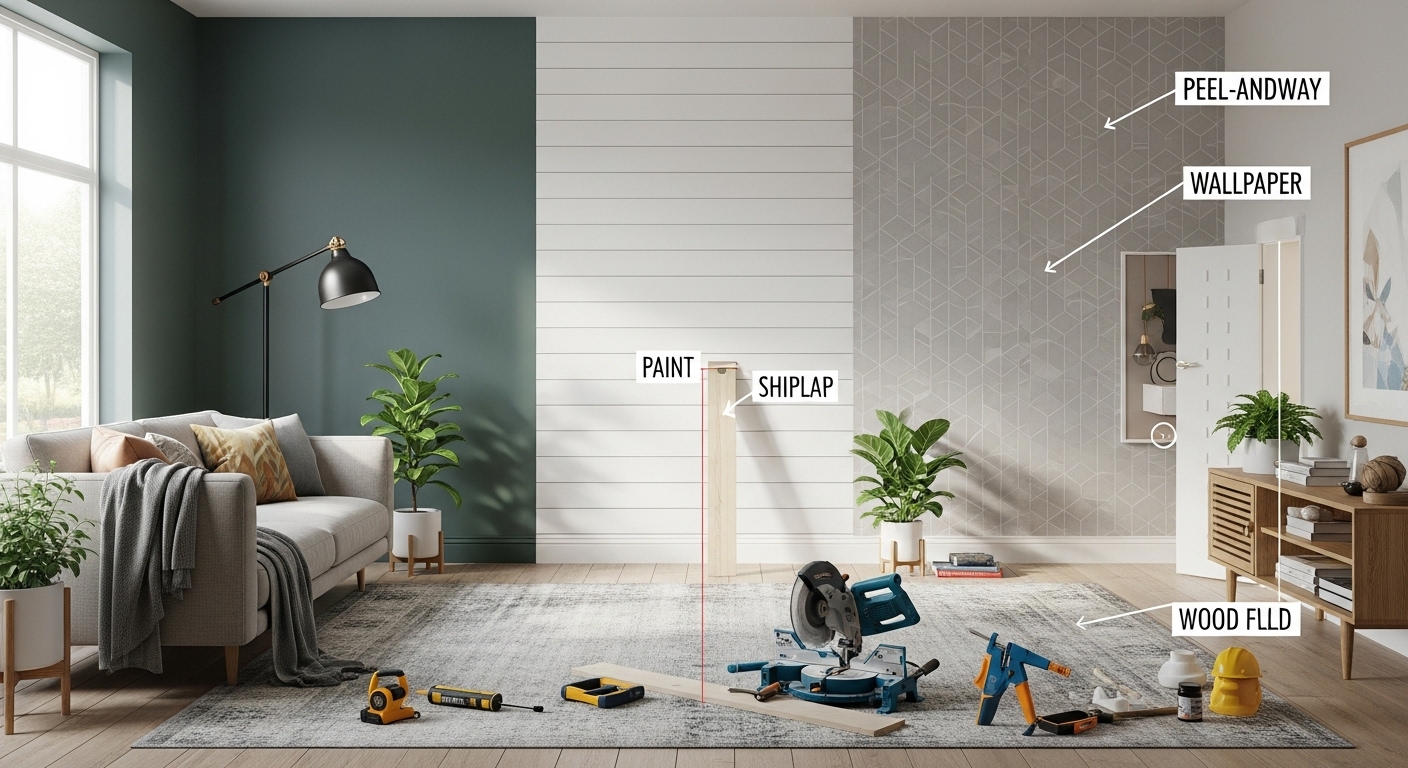
No matter which wall treatment you choose, a few essential tools will make the job easier and more precise. A stud finder helps locate framing for secure installations, while a level or laser ensures straight lines, critical for shiplap, battens, or wallpaper alignment. For cutting materials, a miter saw or handsaw is indispensable, especially when working with wood slats or trim.
A caulk gun and filler are useful for sealing gaps and smoothing imperfections, giving your wall a flawless finish. Don’t forget PPE (personal protective equipment), such as safety glasses, gloves, and a dust mask, to keep the process safe. With these basics, you’ll be ready to tackle projects ranging from simple paint jobs to more advanced wall treatments.
2. Quick Comparison Table
Different wall treatments vary in cost, time, and skill level. Here’s a quick breakdown to guide your choice:
| Idea | Cost Range | Time Estimate | Skill Level |
|---|---|---|---|
| Paint | Low cost | Fast | Beginner |
| Wallpaper | Mid cost | Medium | Intermediate |
| Shiplap/Batten | Mid‑high cost | Medium | Intermediate |
| Slats/Veneer | High cost | Longer | Intermediate–Advanced |
Paint remains the most budget‑friendly and time‑efficient option, perfect for quick updates. Wallpaper offers more personality and pattern but requires careful alignment. Shiplap or batten walls add architectural depth, demanding more tools and precision. Slats or veneer panels create a high‑end, stylish look but require advanced measuring and cutting skills.
Note: Prices vary widely depending on region, material grade, and finish. On average, projects can take anywhere from a few hours for paint to several days for intricate woodwork.
By weighing cost, time, and skill, you can choose the right approach for your space. Whether you’re aiming for a bold mural, textured wood, or a simple painted feature, these insights will help turn your diy accent wall ideas into reality with confidence and creativity.
FAQs
Which wall should be the accent wall in a living room?
The best accent wall in a living room is usually the one behind the sofa or TV, since it naturally draws the eye. Choosing a wall without doors or windows helps the design stand out. This placement creates balance and anchors the main seating area.
Are accent walls out of style?
Accent walls are not out of style they’ve simply evolved. Instead of bold single colors, today’s trends lean toward textured finishes, murals, or natural materials. They remain a stylish way to add depth and personality without overwhelming a room.
What paint finish works best for an accent wall?
A satin or eggshell finish is ideal for accent walls because it reflects just enough light to highlight color without showing flaws. Matte finishes work well for deep, moody tones, while semi‑gloss is better for high‑traffic areas. The finish should complement both the color and the room’s function.
Is peel‑and‑stick wallpaper safe for renters and will it damage paint?
Yes, peel‑and‑stick wallpaper is designed with renters in mind. It’s removable and typically won’t damage walls if applied to smooth, properly primed surfaces. Always test a small section first to ensure compatibility with your paint.
How high should board‑and‑batten go?
Board‑and‑batten usually covers one‑third to two‑thirds of the wall height, depending on the room’s proportions. In dining rooms, chair‑rail height is common, while bedrooms may benefit from taller panels. The goal is to create balance without overwhelming the space.
Can I put shiplap in a bathroom?
Yes, shiplap can work in bathrooms if you use moisture‑resistant materials and proper sealing. Painted MDF or PVC versions are better suited for humid environments. Good ventilation is key to preventing warping or mold.
How do I choose a geometric pattern that won’t date quickly?
Opt for simple, timeless shapes like chevrons, grids, or subtle hexagons in neutral tones. Avoid overly trendy colors or oversized repeats that may feel dated fast. Classic geometry blends well with evolving interior design styles.
What’s the easiest DIY accent wall idea for beginners?
Painting a single wall in a bold or contrasting color is the simplest starting point. It requires minimal tools, low cost, and can be completed in just a few hours. This beginner‑friendly project instantly transforms a space with little risk.
Final Thoughts
A standout wall doesn’t need a contractor, just a plan, a few tools, and confidence. Paint remains the fastest, most flexible route: one bold hue can anchor a room and refresh it in a weekend. Wallpaper adds pattern and personality, with peel-and-stick options perfect for renters or commitment-shy decorators.
Shiplap (or board-and-batten) brings texture and architectural interest, elevating even builder-basic spaces. Start with surface prep, map your focal wall, and choose finishes that suit traffic and light. If you favor crisp millwork or moody color, these diy accent wall ideas scale to your skill level and budget, transforming blank walls into intentional design.


