


Drywall damage happens to the best of us, whether it’s a tiny nail hole from hanging a picture, a small hole from a doorknob bump, or even a large hole caused by an accidental slip. The good news? A quick drywall repair can save you time, money, and the headache of calling in a pro.
Even a stubborn hole in drywall can be fixed with the right drywall patch, a piece of drywall, and a few simple tools. From filling a nail hole with spackle to tackling larger holes with a drywall screw, joint compound, and drywall tape, the process is easier than you think.
The trick is knowing which method to use because the steps depend on the size of the hole, the wall stud placement, and what’s going on inside the hole.
In this guide, you’ll learn how to use a drywall saw, utility knife, and putty knife to patch up damage in just three simple steps, whether you’re dealing with a quick fix or a more serious repair.
Why DIY Drywall Repair?

Got a hole in your wall? No problem, you can patch it in no time! Many homeowners face small holes in drywall from nails, screws, or the occasional bump, but you don’t need to call a pro.
With a few basic tools and materials, you can patch and repair drywall yourself and save both time and money. For small drywall holes, simply use a putty knife to apply spackle or joint compound, smooth it out, and let it dry.
If you need to fix small holes that are a bit bigger, you might cut a piece of drywall to fit, secure it, and blend it in with a new piece of drywall for a seamless finish.
Patching holes is straightforward, and most hole repair jobs take less than an afternoon. Whether it’s tiny nail holes in the wall or something slightly larger, DIY drywall repair is quick, budget-friendly, and surprisingly satisfying.
Step 1: Gather Tools & Prepare the Hole

1. Tools & Materials Needed
Repairing drywall holes doesn’t have to be intimidating with the right tools and materials, you can handle everything from small dents to larger damage without calling in a pro.
If you are using a simple repair kit for quick fixes or cutting a new drywall piece for a section that’s bigger than the hole, the process is straightforward. The key is matching your approach to the size of the hole and making sure the surface of the drywall is smooth and ready for finishing.
Tools & Materials You’ll Need
For Small Holes (nail holes, dings, small dents):
- Tools: Putty knife, sandpaper, dust mask.
- Materials: Self‑adhesive mesh patch or repair kit, spackling paste or lightweight drywall mud.
For Larger Holes:
- Tools: Utility knife, drywall saw (or reciprocating saw), drywall knife, putty knife, sandpaper, dust mask, straight edge.
- Materials: Scrap piece of new drywall, furring strips for backing, drywall screws, drywall tape, joint compound or drywall mud, primer, paint.
Extra Helpful Items:
- Drill or power drill for securing furring strips and driving screws.
General Steps:
- Prepare the hole: Remove debris, smooth the side of the hole, and cut drywall edges clean.
- Apply the patch: For small repairs, use a mesh patch, for larger holes, cut a new drywall piece slightly bigger than the hole, secure it, and align the edge of the patch.
- Finish: Apply drywall mud with a putty knife, feather edges, sand smooth, then prime and paint the surface of the drywall.
2. Preparing the Hole
Think of drywall repair like a master chef prepping ingredients the final dish is only as good as the prep work. Getting the hole ready is the secret sauce for a patch that blends in perfectly, making the damage disappear for good.
- Clean & Square Up: First, clear out all loose debris from the hole. For a truly professional fix, especially if you’re inserting new drywall, you might cut drywall to make the hole a clean square, giving the patch a solid foundation.
- Scuff for Grip: Yank out any old anchors, then lightly sand the surface of the drywall around each side of the hole. This creates a rough texture that helps the drywall mud grip tightly for a lasting repair.
- Size Up Your Patch: Your patch, whether from a repair kit or a custom piece of new drywall, should always be slightly bigger than the hole itself. This allows the edge of the patch to be feathered seamlessly, a perfect trick to repair small holes or even small dents.
Step 2: Patch the Hole

1. Patching Small Holes (Spackling)
For tiny openings such as drywall nail holes or pinholes, apply a small amount of spackling compound directly into the hole using a putty knife. Smooth the surface flush with the wall and scrape away excess to avoid ridges.
For best results in wall repair, it’s better to start with less material you can always add more after the first coat dries. Allow the joint compound to dry per product instructions (typically 1–2 hours). If needed, apply a second thin coat to fully fill the hole and blend with the whole wall surface.
2. Patching Medium Holes (Using a Patch Kit)
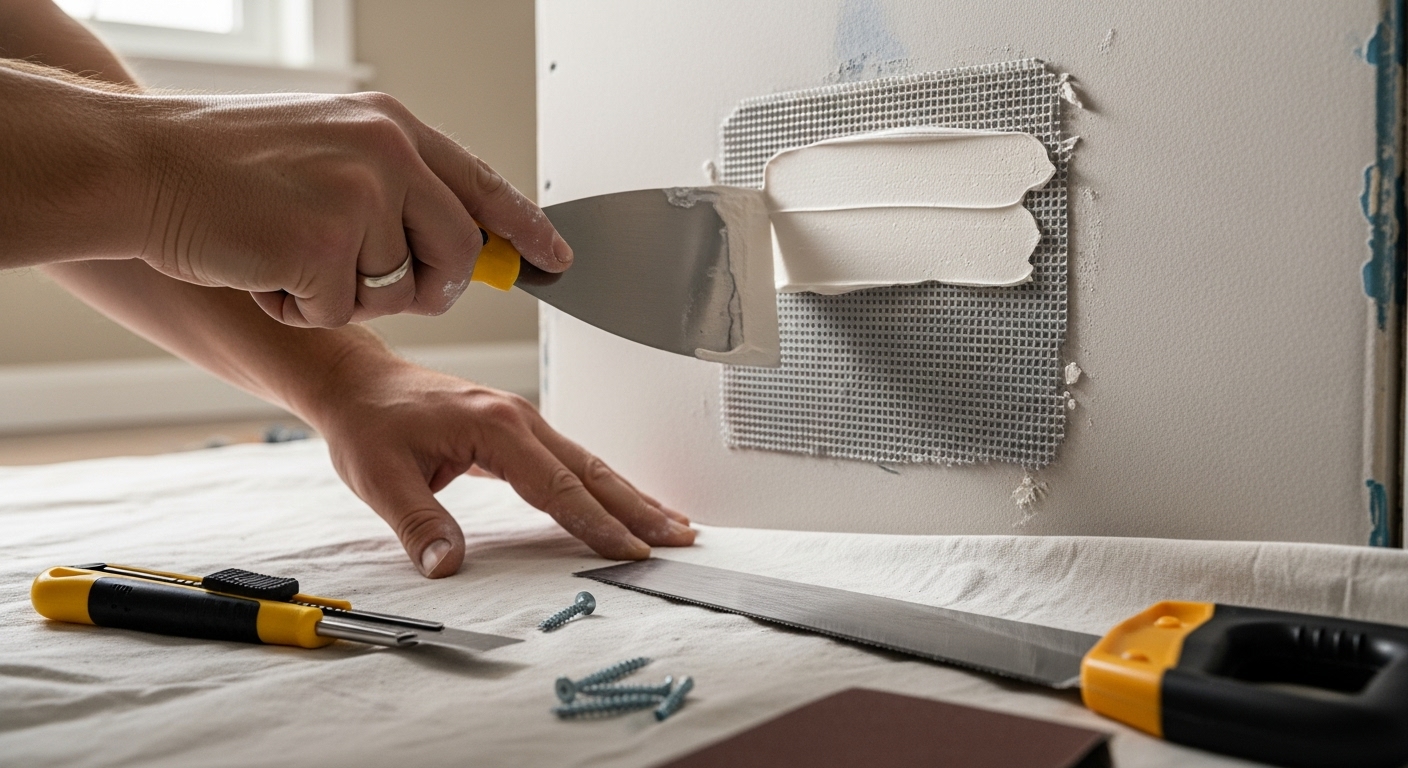
For larger holes in drywall (1–6 inches), secure the patch by centering a self‑adhesive mesh or metal patch around the hole. Press firmly to cover the entire patch.
Apply a thin layer of lightweight joint compound over the mesh, feathering the edges so the repair blends seamlessly with either side of the hole. Once dry, add a second coat if necessary to cover the patch completely.
Pro Tip: Use a stud finder before starting your repair project to avoid hidden wiring or framing. For a cleaner finish, lightly tape around the repair area before applying compound.
Step 3: Sand & Paint (Finishing Touches)

1. Sanding the Patch
Once the drywall and patch compound is fully dry, it’s time to smooth it out. Start with medium‑grit sandpaper to level the borders of the patch, then switch to fine (180–220 grit) for a seamless finish.
Sand only until the patch to the wall is flush over‑sanding can damage the surrounding type of drywall or expose the mesh. For textured drywall, match the texture before painting. Wipe away dust with a damp cloth or sponge and allow the surface to dry completely.
2. Painting for a Perfect Blend
If you’ve repaired screw holes, fix large holes, or inserted a drywall patch into the hole, apply primer first especially on bare compound. This step ensures even paint absorption.
Once dry, paint starting from the center of the patch and feather outward to blend with the surrounding wall. For best results, cut the patch cleanly during repair and locate the wall studs before you cut drywall patch pieces.
If the color still looks uneven after drying, apply a second coat. In cases of noticeable mismatch, repaint the whole wall for uniformity.
Pro Tip: When tightening screws during repairs, avoid over‑driving to prevent “skin the screw head” damage.
Pro Tips & Common Mistakes (Drywall Repair Tips)

When you learn how to fix damaged drywall, the difference between a flawless finish and a visible repair often comes down to technique and patience. If you are working on larger drywall sections or a small patch area. These tips will help you achieve a smooth, professional result without redoing the entire wall.
Key Tips & Mistakes to Avoid
- Patience First: Always allow each coat of compound to dry fully before sanding or recoating. Rushing can cause the patch to sink or crack.
- Thin Layers Win: Apply multiple thin coats rather than one thick layer when you patch drywall. This keeps the surface level with the wall and reduces shrinkage.
- Controlled Sanding: Sand only until smooth. Over‑sanding can expose the borders of the patch onto surrounding drywall.
- Quality Materials: Use a reliable drywall patch kit, good spackle, and tape with joint compound for seams. Cheap fillers may fail.
- Large Hole Strategy: For an entire hole over ~6 inches, cut drywall patch pieces and secure them to studs, or call a pro.
- Texture Matching: For textured drywall, replicate patterns across the hole using spray texture or sponge dabbing.
- Fastener Care: Don’t sink the screw head too deep when securing patches; it weakens the hold.
Conclusion
Repairing drywall holes doesn’t have to be a daunting task by gathering the right supplies, securing the patch in place, and finishing with a smooth sand and fresh coat of paint, you can restore your wall’s appearance in just three simple steps.
If you are dealing with tiny nail marks or more noticeable damage, the process is straightforward and beginner‑friendly. With these steps, you’ll have a flawless wall in no time!